

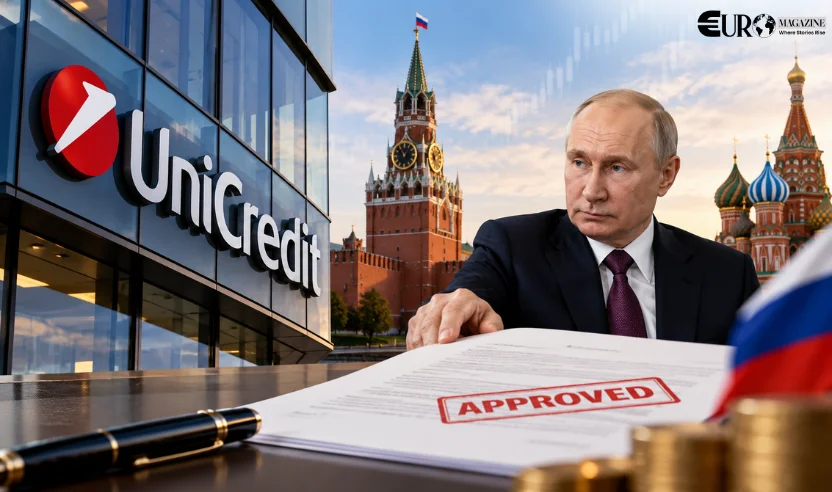
UniCredit has received approval from Russian President Vladimir Putin to sell part of its business in Russia, marking another step in the Italian bank’s efforts to reduce its exposure to the country.
Approval Clears Way for Partial Sale
The authorization allows UniCredit to proceed with a transaction involving part of its Russian operations. The move comes as Western financial institutions continue to face regulatory and political hurdles when trying to reduce their presence in Russia.
Since Russia’s invasion of Ukraine, many international banks have sought to scale back their operations in the country. However, exiting the Russian market has proved difficult because of restrictions imposed by Moscow on the sale of foreign-owned assets.
UniCredit Has Been Reducing Its Russian Exposure
UniCredit, one of Europe’s largest banking groups, has been working for several years to reduce its activities in Russia. The bank has previously said that its Russian business is no longer a strategic priority and has taken steps to limit its exposure.
The latest approval could help the lender move closer to its goal while allowing it to comply with the rules governing foreign companies seeking to sell Russian assets.
Why the Sale Matters
The transaction is significant for UniCredit because Russia remains a complicated market for European banks. Leaving the country can involve lengthy negotiations, government approval and financial restrictions.
For European financial institutions, reducing Russian operations is also part of a wider effort to manage geopolitical, regulatory and financial risks following the war in Ukraine.
Deal Still Faces Conditions
Although Putin’s approval removes an important hurdle, the sale may still be subject to other regulatory and transaction requirements. The final outcome will depend on the terms of the deal and the conditions attached to the authorization.
UniCredit’s move reflects the broader trend among Western companies that are seeking to reduce their Russian presence while navigating Moscow’s increasingly strict rules on foreign asset sales.
Read more news:-























Comments
Be the first to share your thoughts.
Leave a comment
Join the conversation. Your email address will not be published.