

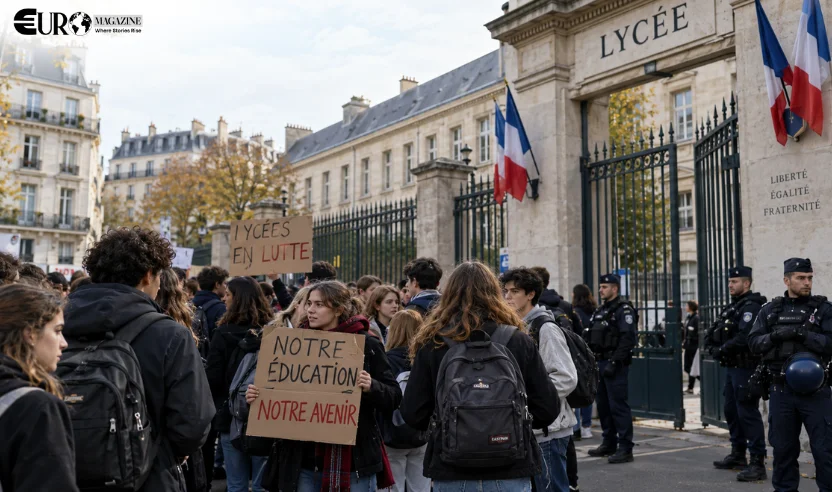
Up to 500 high schools across France are fully or partially closed on Monday as a growing student protest movement over education conditions continues to disrupt schools and put pressure on the government. French Education Minister Édouard Geffray said between 400 and 500 schools would suspend classes because adequate security conditions were not in place. The figure is similar to the number affected on Friday, although authorities expect some schools to gradually resume classes during the day.
Protests Spread Across France
The demonstrations began in September in the Paris region before spreading to cities across the country.
Students have been protesting against teacher shortages, overcrowded classrooms, poor school facilities and long school days. Some also oppose restrictions on mobile-phone use in schools. Student representatives say they want concrete government action to improve learning conditions.
What started as a movement focused on education has increasingly become a wider confrontation involving police, political groups and trade unions.
Violence Raises Security Concerns
The government says some demonstrations have turned violent, with property damage and clashes between protesters and police.
Geffray said 24 schools had been burned or ransacked, while 78 education workers had been injured since the movement began. French authorities have also reported nearly 5,000 arrests, most of them involving teenagers, as unrest spread to more parts of the country.
Paris police chief Patrice Faure has described the movement as having become difficult to control and urged students to return to peaceful demonstrations. Authorities have warned against violence while acknowledging that students have legitimate concerns about conditions in schools.
Students Say Education System Needs More Support
For many protesters, the dispute goes beyond individual school problems.
Students have highlighted classrooms that are too crowded, buildings in poor condition and frequent teacher absences that are not always covered by substitutes. They argue that these problems are directly affecting the quality of education and creating unequal conditions for students in different areas.
The movement has also gained support from some teacher organisations, which say the students' concerns overlap with their own long-running demands for more staff and resources.
More Protests Planned This Week
The protests are not expected to end with Monday's school closures.
Student organisations have called for another major mobilisation on Tuesday, while teachers' and other public-sector unions are also preparing industrial action. That could broaden the demonstrations beyond schools and create additional pressure on President Emmanuel Macron's government.
The government is now facing the difficult task of addressing concerns over education funding and working conditions while maintaining security around schools and preventing further violence.
France Faces Growing Pressure
The scale of Monday's closures underlines how quickly the student movement has grown. Hundreds of schools are disrupted, while clashes and property damage have added a security dimension to what began as a campaign for better education conditions.
For now, officials are aiming for a gradual return to classes where security allows it, but with another national mobilisation planned for Tuesday, the dispute is likely to remain a major challenge for France in the days ahead.
Read more news:-






























Comments
Be the first to share your thoughts.
Leave a comment
Join the conversation. Your email address will not be published.