

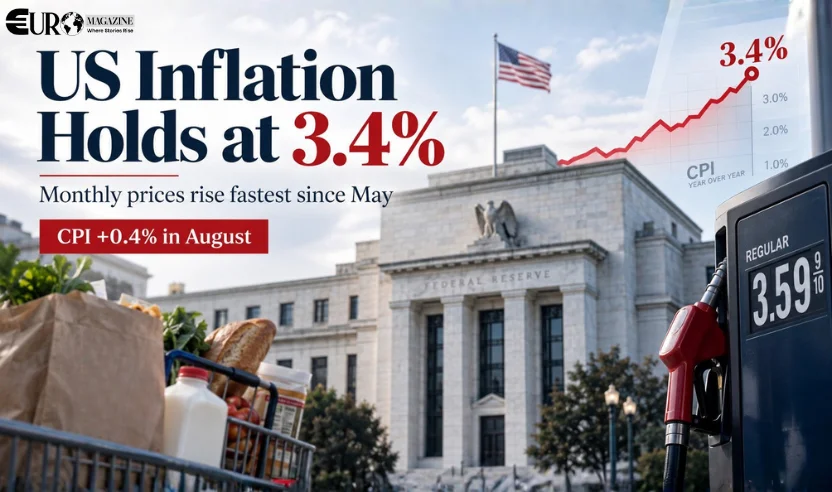
U.S. inflation remained at 3.4% in August, unchanged from July, but a sharper monthly increase in consumer prices is giving the Federal Reserve a fresh reason to remain cautious about inflation.
The Consumer Price Index (CPI) rose 0.4% from July, marking the fastest monthly increase since May. The annual figure matched economists’ expectations, but the acceleration in monthly prices highlights renewed pressure on American households, particularly from rising fuel costs.
Energy Prices Drive the August Increase
A significant part of August’s increase came from gasoline.
Gasoline prices climbed 3.9% during the month, accounting for more than one-third of the overall monthly increase in consumer prices. Other motor fuels, including diesel, rose even more sharply, increasing 9.6% in August.
The jump comes as global oil prices have moved substantially higher amid escalating tensions in the Middle East. Brent crude has traded above $100 a barrel, increasing transportation and energy costs across the U.S. economy.
Core Inflation Shows Continued Pressure
Even after excluding volatile food and energy prices, inflation remained persistent.
Core CPI increased 0.3% in August, above the 0.2% increase economists had expected. On an annual basis, core inflation stood at 2.4%, indicating that price pressures are still present across parts of the services economy.
Airfares, education, mobile phone services, rents and other services contributed to the monthly increase, showing that the inflation problem is not limited to fuel.
Food Prices Remain Relatively Calm
Food prices offered some relief to consumers.
Food prices increased just 0.1% in August, while grocery prices were unchanged. Prices for fruits and vegetables declined during the month, although eggs and dairy products became more expensive.
Food prices were still 2.7% higher than a year earlier, meaning households continue to face higher grocery bills despite the modest monthly increase.
Inflation Outpaces Wage Growth
The latest figures also point to pressure on household purchasing power.
Inflation-adjusted average hourly earnings fell 0.3% from a year earlier in August, marking the fifth consecutive month in which real wages declined. That means consumers are continuing to face a squeeze even as overall inflation remains well below its 2022 peak.
The situation could become more difficult if higher energy costs spread into transportation, food and other goods and services.
Fed Rate Hike Expectations Increase
The inflation report has strengthened expectations that the Federal Reserve will raise interest rates at its September 15–16 meeting.
Financial markets increased the probability of a quarter-point rate hike to roughly 85%–90% following the report. The Fed's benchmark rate is currently in the 3.50% to 3.75% range.
The central bank faces a difficult balancing act. Economic activity and employment have shown resilience, but inflation remains well above the Fed's 2% target.
Oil Could Keep Inflation Elevated
The biggest uncertainty for the coming months may be energy prices.
If oil remains above $100 a barrel because of continued geopolitical disruptions, higher fuel costs could feed into wider consumer prices. That would make it harder for the Fed to bring inflation down without keeping monetary policy restrictive for longer.
Some economists therefore expect the September rate increase could be followed by additional tightening later in the year if inflation does not show clearer signs of cooling.
A Complicated Outlook for the US Economy
August's CPI report presents a mixed picture.
The annual inflation rate has stopped accelerating, and food prices remain relatively contained. However, the faster monthly increase, higher energy costs and persistent core inflation suggest that the inflation battle is not over.
For the Federal Reserve, that could mean a more cautious approach to monetary policy. For American households, continued increases in fuel and essential services could keep the cost of living elevated.
With the next Fed decision just days away, the August inflation figures have given policymakers an increasingly difficult question: how aggressively should they fight inflation without putting unnecessary pressure on the broader economy?
Read more news:-