

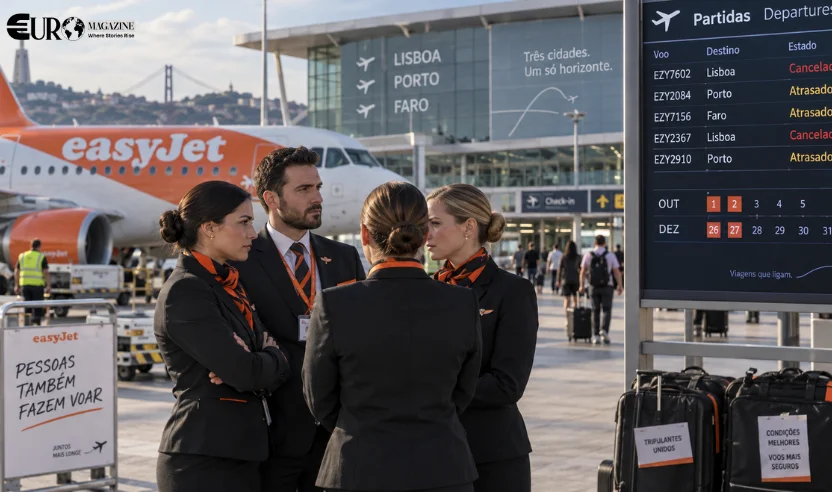
easyJet cabin crew based in Portugal have voted to hold two strikes later this year, raising the prospect of significant disruption at Lisbon, Porto and Faro airports during both the October holiday period and the busy Christmas season.
The strikes are planned for October 2 to 6 and again from December 19 to 23, with the cabin crew seeking improvements in pay and working conditions. The action was approved unanimously by the 188 easyJet employees who took part in a meeting organised by the National Union of Civil Aviation Flight Personnel (SNPVAC).
Around 500 Flights Could Be Affected
The first strike is expected to have a substantial impact on easyJet's Portuguese operations.
SNPVAC estimates that around 500 scheduled flights could be affected between October 2 and 6, although the final number could be lower depending on minimum-service requirements established by Portuguese authorities. The affected airports include Lisbon, Porto and Faro.
The timing is particularly significant because October 5 is Portugal's Republic Day public holiday, creating a long weekend when demand for flights is typically higher.
Christmas Strike Could Cause Greater Disruption
The second walkout is scheduled for December 19 to 23, just before Christmas.
That period is traditionally one of the busiest times of the year for leisure and family travel, meaning a prolonged cabin crew strike could create difficulties for passengers travelling for holidays or returning home for Christmas.
SNPVAC has warned that the December action could have an even greater operational impact than the October stoppage.
Workers Cite Pay and Working Conditions
The dispute centres on several labour issues.
The union says cabin crew are unhappy with frequent changes to duty rosters, alleged breaches of the collective labour agreement, operational planning problems and pressure to work overtime because of staffing shortages.
SNPVAC also argues that easyJet's Portuguese cabin crew receive lower salaries than some workers at other airlines operating in Portugal and lower pay than easyJet employees in some other countries. The airline has disputed the union's position, saying its Portuguese cabin crew are paid above the national average.
Union Says Talks Have Stalled
According to SNPVAC, the decision to strike followed what it described as repeated attempts to resolve the labour and pay disputes through negotiations.
The union says tensions have increased because of what it considers a prolonged failure to reach agreements with the airline. It has also criticised easyJet for using managers and crew members from other countries to operate flights during previous strikes, arguing that the practice weakens the impact of industrial action.
Portugal's labour authorities have been involved in mediation efforts, leaving open the possibility that negotiations could still prevent or reduce the planned disruptions.
easyJet Calls Demands ‘Unworkable’
easyJet has expressed disappointment over the strike plans and rejected the characterisation of its employment conditions presented by the union.
The airline said it remains committed to discussions with cabin crew representatives and stressed that employees in Portugal receive competitive compensation. easyJet also said it would work to minimise disruption to passengers should industrial action take place.
The company now faces the challenge of managing its schedule while negotiations continue, particularly during periods when demand is expected to be high.
Airlines Face Growing Labour Pressure
The dispute comes at a time when European airlines are dealing with rising operating costs, complex schedules and strong competition for skilled aviation workers.
Cabin crew disputes can quickly affect thousands of passengers because staffing levels are directly connected to how many aircraft an airline can operate. Even when most flights are running normally, cancellations caused by crew shortages can create knock-on delays across an entire network.
For easyJet, the Portuguese dispute therefore has implications beyond individual flights, particularly if the planned action coincides with periods of peak travel demand.
What Passengers Should Expect
The strikes have been announced, but the final effect on passengers is still uncertain.
Negotiations between easyJet and the union could produce an agreement before either strike begins, while Portuguese authorities may also establish minimum services that allow some flights to operate.
For now, passengers travelling through Lisbon, Porto or Faro between October 2 and 6, or December 19 and 23, face the possibility of disruption.
With two separate strike periods planned and the second coinciding with the Christmas rush, the dispute has become an important issue for easyJet and travellers using Portugal's airports
Read more news:-































Comments
Be the first to share your thoughts.
Leave a comment
Join the conversation. Your email address will not be published.