

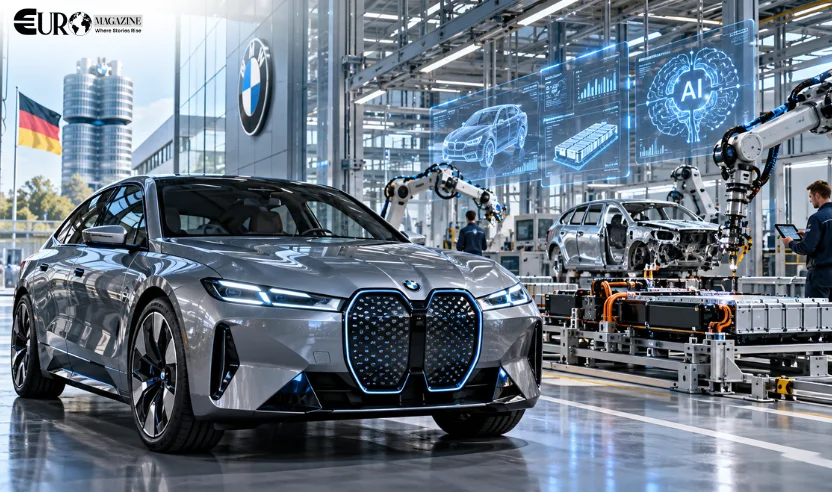
BMW is reshaping its business as it faces weaker profitability, tougher competition from Chinese automakers and the rising cost of the shift toward electric vehicles. The German luxury carmaker has unveiled a new strategy combining management cuts, greater use of artificial intelligence and around €2 billion in investment in German vehicle and battery production.
The plan was presented during BMW's two-day Capital Market Day under CEO Milan Nedeljkovic, who took over in May. The company is aiming to simplify its operations and product range while strengthening its manufacturing base in Germany and adapting production more closely to regional markets.
BMW Plans Leaner Management Structure
One of the most visible parts of the strategy is a reduction in management.
BMW plans to cut the number of divisions and related management positions by 20% by mid-2027, with a comparable reduction expected at lower organisational levels. The company is also preparing to reduce its model variants as it attempts to lower complexity and speed up decision-making.
The restructuring comes after BMW agreed to a voluntary redundancy programme expected to reduce its global workforce by around 8,000 positions, primarily through cuts to white-collar jobs in Germany. The company has said its German production workforce is not the target of the latest job-reduction programme.
AI Moves Deeper Into BMW's Business
Artificial intelligence is another major part of BMW's turnaround strategy.
The company plans to use AI across areas including vehicle development, purchasing, sales and aftersales. BMW says AI-based tools can help shorten development cycles, improve decision-making and make production processes more efficient.
BMW is also expanding the use of AI in vehicle development, including applications such as crash simulations and driver-assistance systems. The company has already begun testing physical AI and humanoid robotics in manufacturing, including a pilot project at its Leipzig plant.
€2 Billion Goes Into German Production
Despite the workforce restructuring, BMW is continuing to invest heavily in Germany.
The company plans to spend about €2 billion on vehicle production and battery manufacturing, including around €1 billion for a new battery plant in Irlbach-Straßkirchen, Bavaria. The facility is expected to supply high-voltage batteries for the electric BMW i3 beginning in October.
BMW's Munich plant, which has been operating for more than a century, is also being transformed to produce only electric vehicles from 2027, including the new i3. Meanwhile, combustion-engine and plug-in hybrid versions of the BMW 3 Series will be produced at the Dingolfing plant.
BMW says the investment will support regional suppliers, skilled employment and local industrial capacity.
China Remains a Major Challenge
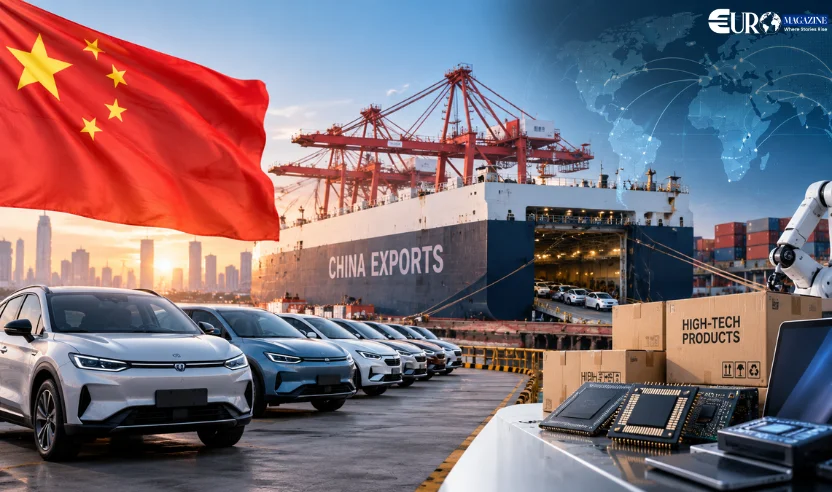
BMW's restructuring comes as the company faces particularly strong pressure in China.
BMW's vehicle sales in China fell 19%, according to an EY analysis cited by Euronews, while sales rose 6% in Europe and 4% in the United States during the first half of 2026. The company's operating profit also fell 37% to €3.64 billion, while revenue declined 8%.
To respond, BMW plans to increase local production in China and develop more vehicles specifically for Chinese consumers. It is also reducing imports to the market and increasing the use of locally sourced components.
New Targets for Profitability
BMW expects the recovery to take several years.
The company is targeting an automotive operating margin of 3% to 5% by 2028, before returning to its longer-term goal of 8% to 10% at the beginning of the next decade. It also expects automotive free cash flow to exceed €5 billion in 2028 and €7 billion in the early 2030s.
The targets reflect the pressure BMW is facing from high production costs, tariffs, energy prices, changing consumer demand and competition from Chinese manufacturers.
A More Focused BMW
BMW's new strategy combines two seemingly different approaches: cutting costs and management layers while continuing to invest heavily in future technologies and German production.
The company is reducing organisational complexity, using AI to improve efficiency and concentrating its vehicle range, while at the same time putting billions of euros into electric vehicles and batteries at home.
For BMW, the challenge will be turning those changes into stronger profitability while maintaining its position as the automotive industry moves toward a more electric, digital and regionally competitive future.
Read more news:-





















Comments
Be the first to share your thoughts.
Leave a comment
Join the conversation. Your email address will not be published.