

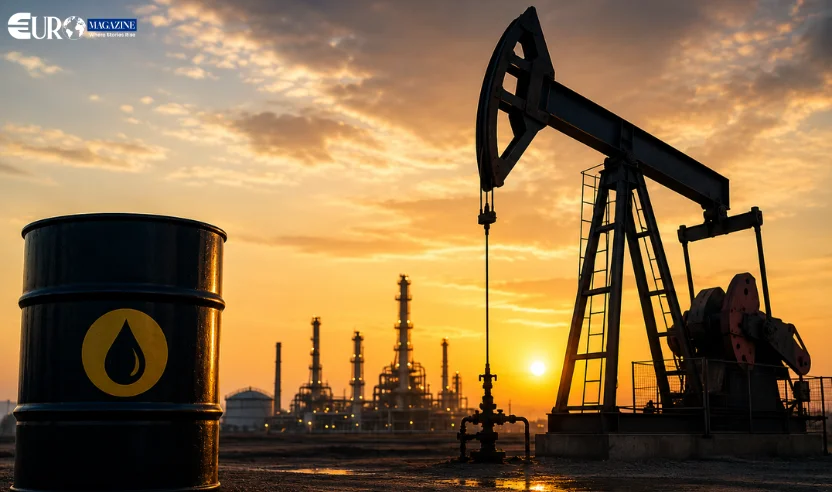
Global oil prices moved lower on Monday as investors locked in some recent gains and waited for details of a sweeping new U.S. sanctions package targeting Iran.
International benchmark Brent crude fell about 1.5% to $93.02 a barrel, while U.S. West Texas Intermediate (WTI) crude declined roughly 1.6% to $85.64 a barrel during early trading.
The pullback followed strong gains in the previous week, when heightened tensions between Washington and Tehran and continued uncertainty over shipping through the Strait of Hormuz pushed crude higher.
Markets are now focused on an announcement expected later Monday from U.S. Treasury Secretary Scott Bessent, who has signalled that Washington intends to dramatically increase economic pressure on Iran.
Washington Prepares New Pressure Campaign
The Trump administration has described the planned measures as an unprecedented financial offensive designed to further isolate Iran from international trade and financial networks.
Bessent has characterised the campaign as an economic “D-Day,” while President Donald Trump has warned that countries helping Iran avoid U.S. restrictions could face significant financial consequences.
The exact scope of the new measures had not been formally announced as of early Monday.
That uncertainty has left oil traders assessing two competing forces: the possibility that tougher restrictions could reduce Iranian crude reaching international markets, and the risk that escalating tensions could trigger a broader disruption to Middle Eastern energy supplies.
Recent U.S. measures have already targeted companies, vessels and financial networks accused of helping Tehran sell petroleum or move revenue outside conventional banking channels. The U.S. Treasury has previously sanctioned shipping groups, oil-trading networks and entities linked to Iran's so-called shadow fleet.
Iran Rejects U.S. Threats
Iran has dismissed Washington's latest pressure campaign and argues that further sanctions will fail to achieve their intended objectives.
Iranian officials have maintained that the country can continue building commercial relationships despite U.S. restrictions. Foreign Minister Abbas Araqchi has criticised the latest sanctions threat while calling for negotiations based on what Tehran considers mutual respect.
The confrontation intensified further after Iranian officials warned that continued economic pressure could have consequences for oil exports from the Persian Gulf.
The possibility of additional disruption around the Strait of Hormuz remains one of the biggest concerns for energy markets.
The narrow waterway connecting the Persian Gulf with the Arabian Sea has historically been one of the world's most important energy transit routes. Any prolonged reduction in tanker traffic through the area can quickly affect expectations for global supply.
Strait of Hormuz Remains Key Market Risk
Oil traders have been closely tracking movements through the Strait amid months of regional tension.
Even limited improvements in shipping volumes could ease fears of a severe supply shortage. Conversely, another deterioration in security or restrictions on tanker movements could place renewed upward pressure on crude prices.
That uncertainty has contributed to unusually wide forecasts for oil prices during the remainder of 2026.
The Commonwealth Bank of Australia expects Brent crude to remain volatile in the second half of the year as investors assess the effectiveness of U.S. attempts to isolate Iran and Tehran's potential response.
The bank sees Brent trading within a broad $70 to $100 per barrel range, reflecting the unusually large geopolitical risks surrounding the market.
A meaningful recovery in oil traffic through Hormuz could push prices toward the lower end of that range by reviving expectations of abundant global supply.
Further disruption, however, could produce the opposite result.
Investors Take Profits After Recent Rally
Monday's decline also appears to reflect some profit-taking after oil prices recorded another strong week.
Both major crude benchmarks gained more than 5% in the previous week amid uncertainty surrounding U.S.-Iran relations and concerns about Middle Eastern oil flows.
Rather than signalling that geopolitical concerns have disappeared, the latest decline suggests investors are adjusting positions before receiving more clarity on Washington's next move.
The market reaction could change quickly once the details of the sanctions package become known.
Traders will be looking closely at whether the U.S. directly targets major buyers of Iranian crude, expands restrictions on shipping and financial networks, or introduces penalties intended to discourage third countries from maintaining commercial links with Tehran.
China will also remain an important part of the equation because of its role in global energy demand and trade with Iran.
Oil Market Faces Another Period of Volatility
The confrontation leaves global energy markets in a delicate position.
Tougher sanctions could limit Iranian exports and tighten supply, which would normally support oil prices. But if investors believe the measures will have limited practical impact or if shipping conditions improve, prices could retreat further.
At the same time, an aggressive response from Tehran could rapidly shift sentiment back toward supply concerns.
That combination means Monday's decline may offer little indication of where crude prices ultimately settle.
For now, investors are waiting for Washington to reveal the details of its new sanctions strategy, with the effectiveness of those measures and Iran's response, likely to determine the next major move in global oil markets.
Read more news:-





























Comments
Be the first to share your thoughts.
Leave a comment
Join the conversation. Your email address will not be published.