

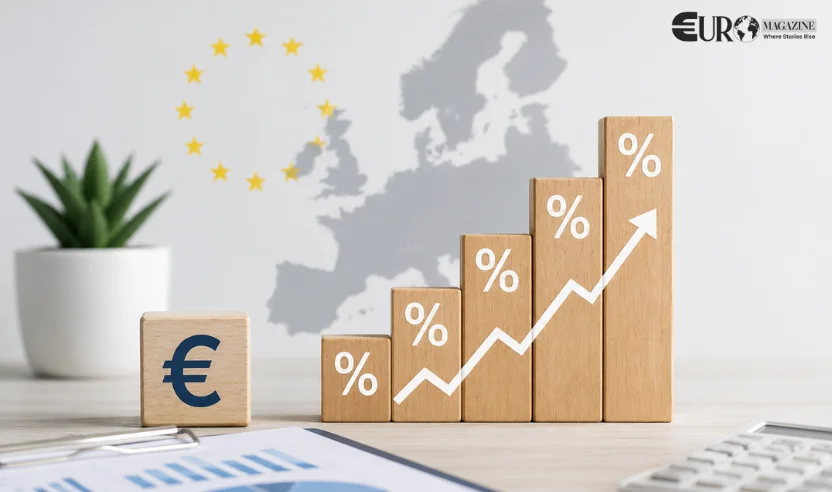
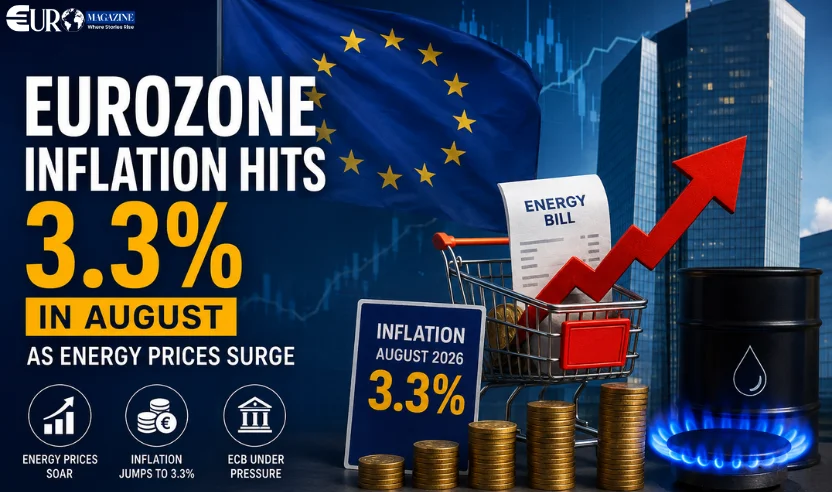
Annual inflation across the eurozone accelerated to 2.9% in July, reversing June's slowdown as higher energy prices pushed consumer costs higher, according to preliminary data released by Eurostat on Friday.
The inflation rate increased from 2.8% in June, matching economists' forecasts, while core inflation, which excludes volatile food and energy prices—rose to 2.5% from 2.4%, indicating that underlying price pressures remain persistent across the 20-member currency bloc.
Energy prices were the biggest driver of inflation, rising 10% year-on-year, while services inflation stood at 3.3%, reflecting continued demand and elevated operating costs.
The latest figures came a day after stronger-than-expected second-quarter economic growth, suggesting the eurozone economy has remained resilient despite geopolitical uncertainty and tighter financial conditions.
Inflation, however, continued to vary significantly among member states. Lithuania recorded the highest annual inflation rate at 5.6%, followed by Bulgaria at 4.1%, Cyprus at 4.0%, Spain at 3.8%, and Croatia at 3.6%.
Estonia posted the lowest inflation rate at 2.0%, ahead of Malta (2.1%), France (2.4%), Latvia (2.5%), Austria (2.6%), and Finland (2.6%). Germany's inflation accelerated to 2.8%, while Italy matched the eurozone average of 2.9%.
Monthly inflation trends painted a mixed picture across Europe. Consumer prices increased most sharply in the Netherlands, rising 1.5% from June, followed by Germany (0.9%) and France (0.6%). In contrast, prices declined in Greece, Italy, Latvia and several other member states.
Economists said higher energy costs remain the primary risk to the inflation outlook.
"The ongoing conflict and a spike in energy costs remain key risks to growth, given that the eurozone is a net importer of energy," market strategist Matthew Ryan said, adding that elevated natural gas prices continue to create inflationary pressures despite some easing in oil markets.
Pantheon Economics expects headline inflation to remain above 2.5% over the coming months, increasing the likelihood that the European Central Bank will maintain a cautious approach to monetary policy.
Financial markets reacted positively to the data. The euro strengthened slightly against the U.S. dollar, while Germany's DAX 40 and the Euro Stoxx 50 climbed to fresh record highs, supported by strong corporate earnings and gains in technology stocks.
The latest inflation figures reinforce the challenge facing policymakers as they seek to balance slowing price growth with continued economic expansion, while geopolitical tensions and energy markets remain key factors shaping the eurozone's outlook.
Read more news:-
























Comments
Be the first to share your thoughts.
Leave a comment
Join the conversation. Your email address will not be published.