

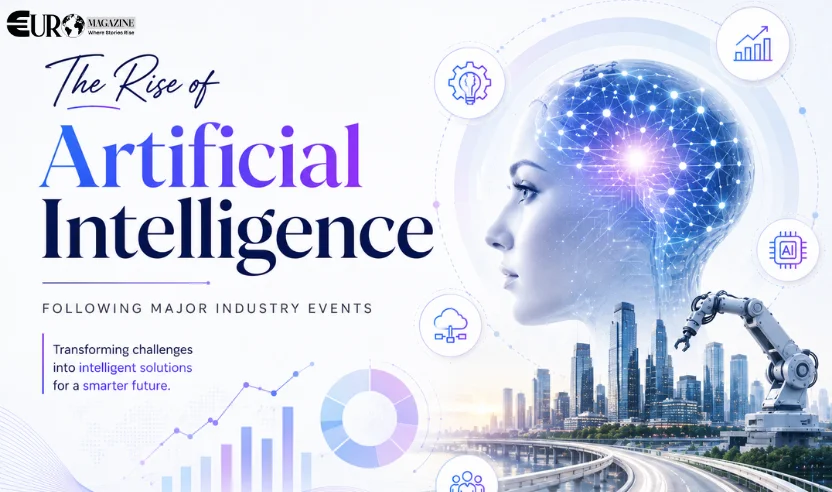
Artificial Intelligence (AI) has rapidly evolved from a futuristic concept into one of the most transformative forces shaping the modern business world. While AI has been under development for decades, recent years have witnessed an unprecedented surge in adoption, investment, and innovation. Much of this acceleration has been fueled by major industry events, global technology conferences, economic forums, and business summits where leaders, innovators, policymakers, and investors gather to discuss the future of technology and its impact on society.
These events have served as catalysts for AI adoption by showcasing real-world applications, highlighting emerging opportunities, addressing regulatory concerns, and demonstrating how artificial intelligence can create measurable business value. From international technology expos and innovation conferences to economic forums and industry-specific gatherings, discussions surrounding AI have moved beyond theoretical possibilities to practical implementation strategies.
Today, organizations across virtually every sector are investing in artificial intelligence to improve efficiency, enhance customer experiences, optimize operations, and create competitive advantages. Businesses that once viewed AI as an experimental technology are now treating it as a strategic priority. As a result, the rise of artificial intelligence has become one of the most significant business transformations of the twenty-first century.
Understanding how major industry events have contributed to this shift provides valuable insight into where AI is heading and what it means for the future of business.
The Role of Industry Events in Accelerating AI Adoption
Industry events have long served as platforms for introducing new ideas, technologies, and business strategies. In the case of artificial intelligence, these gatherings have played a particularly important role in moving AI from research laboratories into mainstream business operations.
When global conferences showcase successful AI implementations, business leaders gain a clearer understanding of how the technology can be applied within their own organizations. Instead of viewing AI as a distant innovation, they begin to see practical use cases that address everyday business challenges.
Major events also create opportunities for collaboration. Technology companies, startups, investors, academic institutions, and corporate leaders come together to exchange ideas and explore partnerships. This environment accelerates innovation by connecting organizations with the expertise and resources needed to implement AI solutions effectively.
Furthermore, industry events often generate significant media attention, helping raise awareness about AI capabilities and encouraging broader adoption across industries. The discussions that take place during these gatherings frequently shape investment trends, strategic priorities, and future business decisions.
Artificial Intelligence Has Become a Business Priority
One of the most significant outcomes of recent industry events has been the shift in how businesses perceive artificial intelligence. A few years ago, many organizations viewed AI as an emerging technology that might become useful in the future. Today, AI is increasingly seen as a critical component of business strategy.
Executives attending major conferences often return with a greater appreciation for AI's ability to improve performance and create value. As case studies and success stories continue to emerge, organizations are recognizing that AI is no longer reserved for large technology companies.
Businesses of all sizes are exploring ways to use AI to:
- Improve operational efficiency
- Enhance customer engagement
- Strengthen decision-making
- Automate repetitive processes
- Reduce costs
- Support innovation initiatives
This shift in perception represents a major turning point. Artificial intelligence is no longer being discussed as a future possibility—it is being implemented as a present-day business solution.
The Impact of AI on Business Operations
One of the key themes emerging from major industry events is the growing impact of AI on day-to-day business operations. Organizations are increasingly using artificial intelligence to streamline processes and improve productivity.
AI-powered systems can analyze large volumes of data, identify patterns, and generate insights far more quickly than traditional methods. This capability allows businesses to make better-informed decisions while reducing the time required for analysis.
In operations management, AI is helping organizations optimize workflows, predict maintenance needs, improve resource allocation, and automate routine tasks. These improvements contribute to higher efficiency and lower operating costs.
Businesses that successfully integrate AI into their operations often gain advantages in speed, accuracy, and scalability. As a result, AI is becoming a key driver of operational excellence across industries.
Transforming Customer Experience Through AI
Customer experience has become one of the most competitive aspects of modern business, and artificial intelligence is playing a central role in its transformation.
Industry events frequently highlight how AI can help organizations understand customer behavior, personalize interactions, and provide more responsive service. AI-powered tools analyze customer data to identify preferences, anticipate needs, and deliver tailored recommendations.
Chatbots, virtual assistants, and intelligent customer support systems are improving service availability while reducing response times. At the same time, advanced analytics enable businesses to create more targeted marketing campaigns and improve customer engagement strategies.
Organizations that leverage AI to enhance customer experiences often achieve:
- Higher customer satisfaction
- Increased loyalty and retention
- More effective personalization
- Improved service efficiency
- Stronger brand relationships
As customer expectations continue to evolve, AI is becoming an essential tool for delivering meaningful and consistent experiences.
Artificial Intelligence and Industry-Specific Innovation
One reason AI has gained so much attention at major industry events is its versatility. Unlike many technologies that primarily affect a single sector, artificial intelligence is transforming industries across the global economy.
In healthcare, AI supports diagnostics, medical imaging, patient monitoring, and treatment planning. In finance, it assists with fraud detection, risk assessment, and investment analysis. Manufacturing companies use AI to improve quality control, predictive maintenance, and production efficiency.
Retail organizations leverage AI for inventory management, demand forecasting, and personalized shopping experiences. Logistics providers use AI to optimize delivery routes and improve supply chain visibility.
Industries Experiencing Significant AI Transformation:
- Healthcare and life sciences
- Financial services
- Manufacturing
- Retail and e-commerce
- Transportation and logistics
- Marketing and advertising
- Education and training
- Energy and utilities
The widespread applicability of AI explains why it has become such a prominent topic at business conferences and industry forums worldwide.
Investment in AI Continues to Accelerate
Major industry events often provide insight into investment priorities across the global business community. One clear trend emerging from recent gatherings is the growing level of investment in artificial intelligence.
Organizations are allocating significant resources toward AI research, infrastructure, talent acquisition, and implementation projects. Investors are increasingly supporting startups and technology companies developing innovative AI solutions.
This surge in investment reflects growing confidence in AI's long-term potential. Businesses recognize that artificial intelligence can improve efficiency, create new revenue opportunities, and strengthen competitive positioning.
Investment is also extending beyond technology itself. Companies are investing in data infrastructure, cloud computing, cybersecurity, and workforce development to support successful AI adoption.
The increasing flow of capital into AI-related initiatives demonstrates that businesses view artificial intelligence as a strategic priority rather than a temporary trend.
Workforce Transformation in the Age of AI
As artificial intelligence becomes more integrated into business operations, its impact on the workforce continues to attract attention. Industry events frequently address questions related to job transformation, skill development, and the future of work.
While AI can automate certain repetitive tasks, it is also creating opportunities for employees to focus on higher-value activities that require creativity, strategic thinking, and human judgment.
Business leaders increasingly recognize the importance of preparing employees for AI-enabled workplaces. This involves investing in training programs, digital literacy initiatives, and continuous learning opportunities.
Workforce Priorities for AI Adoption:
- Upskilling and reskilling employees
- Developing digital competencies
- Encouraging human-AI collaboration
- Strengthening leadership capabilities
- Promoting adaptability and innovation
- Supporting continuous learning
Organizations that successfully balance technology adoption with workforce development are often better positioned to maximize the benefits of AI.
The Growing Importance of Responsible AI
As enthusiasm for artificial intelligence grows, so does awareness of the responsibilities associated with its use. Ethical considerations have become a major topic of discussion at industry conferences and global business forums.
Business leaders are increasingly focused on ensuring that AI systems are transparent, secure, and fair. Concerns related to data privacy, algorithmic bias, cybersecurity, and accountability must be addressed to maintain trust among customers, employees, and stakeholders.
Responsible AI requires strong governance frameworks, clear policies, and ongoing oversight. Organizations that prioritize ethical implementation are more likely to achieve sustainable success while avoiding reputational and regulatory risks.
The discussions taking place at major industry events demonstrate that the future of AI will depend not only on technological advancement but also on responsible leadership.
What the Future Holds for Artificial Intelligence
The momentum behind artificial intelligence shows no signs of slowing. Industry events continue to reveal new applications, emerging technologies, and evolving business strategies that will shape the next phase of AI adoption.
Future developments are likely to include more advanced automation, greater integration of AI into everyday business processes, enhanced predictive capabilities, and deeper collaboration between humans and intelligent systems.
Businesses that remain informed about these developments and actively participate in industry discussions will be better positioned to capitalize on future opportunities.
The organizations that succeed in the AI era will not necessarily be those with the largest budgets or the most advanced technology. Instead, they will be the companies that combine innovation with strategic thinking, ethical responsibility, and a commitment to continuous learning.
Conclusion
The rise of artificial intelligence following major industry events represents one of the most significant business transformations of modern times. Conferences, summits, trade expos, and global forums have played a critical role in accelerating AI adoption by demonstrating its practical value, encouraging collaboration, and inspiring business leaders to embrace innovation.
Artificial intelligence is no longer a niche technology reserved for specialists. It has become a strategic capability influencing productivity, customer experience, operational efficiency, workforce development, and long-term competitiveness.
As organizations continue to explore the possibilities of AI, the insights emerging from major industry events will remain valuable sources of knowledge and inspiration. Businesses that stay informed, invest thoughtfully, and adopt AI responsibly will be better equipped to thrive in an increasingly technology-driven world.
The future of business will be shaped by those who understand how to harness the power of artificial intelligence while maintaining a focus on people, purpose, and sustainable growth. AI may be transforming industries, but its greatest impact will come from the leaders and organizations that use it wisely.
You can also read:-



































Comments
Be the first to share your thoughts.
Leave a comment
Join the conversation. Your email address will not be published.