

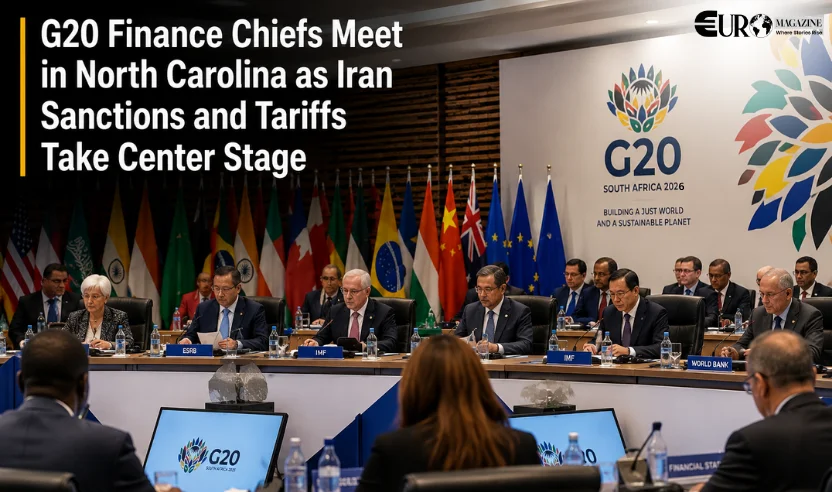
Finance ministers and central bank governors from the world's major economies are meeting in Asheville, North Carolina, this week as growing tensions over Iran, trade tariffs and the global economy put the G20 under pressure.
The United States is hosting the two-day meeting, with Treasury Secretary Scott Bessent and Federal Reserve Chair Kevin Warsh leading discussions on economic growth, global trade imbalances, sovereign debt, banking regulation and energy security.
However, the conflict between the United States and Iran is expected to dominate the talks. Washington is pushing other countries to increase economic pressure on Tehran and reduce business ties with Iran as the latest military escalation around the Strait of Hormuz threatens energy supplies and has pushed oil prices higher.
Bessent has also indicated that the United States could introduce further sanctions, including measures targeting financial institutions involved in transactions with Iran. The approach could create tensions with countries such as China and India, which maintain significant economic and energy links with Iran.
Trade is another major challenge facing the gathering. The United States continues to face disagreements with several of its trading partners over tariffs, while tensions with Canada have intensified following the breakdown of recent trade negotiations. These disputes are making it harder for G20 members to present a united economic position.
The meeting is also taking place against the backdrop of record levels of global debt. Bessent has urged countries to focus on economic growth, deregulation and increased energy production as ways to strengthen their economies and deal with rising debt burdens.
The presence of Russia has added another layer of tension. Russian Finance Minister Anton Siluanov is attending the G20 finance meeting in person for the first time since Russia's 2022 invasion of Ukraine, a move that has drawn criticism from some European governments.
For the G20, the challenge is to find common ground at a time when major economies are dealing with war, energy uncertainty, trade disputes and rising debt. The discussions in Asheville could therefore have implications well beyond the meeting itself, particularly for global markets, energy prices and international trade.
Read more news:-




























Comments
Be the first to share your thoughts.
Leave a comment
Join the conversation. Your email address will not be published.