

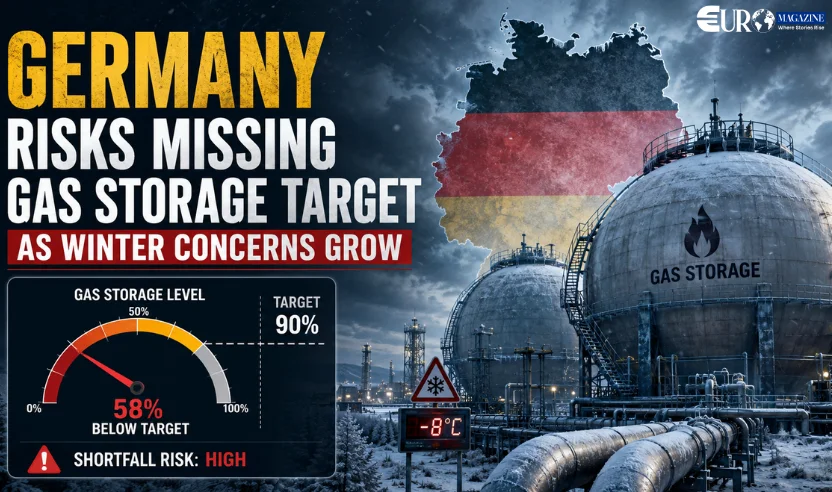
Germany is heading into the final months before winter with its gas storage facilities still well below the level seen at this time last year, raising concerns about higher energy costs and pressure on industries if the country faces a particularly cold winter.
German gas storage facilities were around 51.5% full on August 25, compared with roughly 69% a year earlier. The country is required to reach an overall storage level of 70% by November 1, but industry officials warn that Germany could miss the target if gas injections continue at their current pace.
The problem is not simply a lack of available gas. Higher market prices have made it less attractive for energy companies to buy gas and store it for winter. Normally, companies purchase gas during the cheaper summer months and sell it when demand rises in winter. This year, that price advantage has largely disappeared.
Germany's energy sector says the situation can still be brought under control if market conditions improve and companies receive stronger incentives to increase storage. Some operators remain confident that the 70% target can still be reached before November.
For German businesses, however, the concern is what could happen if a cold winter arrives while storage levels remain low. Industries such as manufacturing and pharmaceuticals rely heavily on gas, and a combination of tight supplies and sharply higher prices could force some companies to reduce production.
The German government has said there is no immediate threat of a gas shortage and points to supplies from Norway, LNG terminals and neighbouring European countries as additional sources of security. The country's energy regulator also says Germany has sufficient import and storage capacity for now.
Still, the warning is difficult to ignore. Germany has around 45 terawatt-hours less gas in storage than it did a year ago, according to the country's storage association. With winter approaching, energy companies and policymakers now face a race against time to build up reserves without pushing already high gas prices even higher.
For households, businesses and Europe's largest economy, the hope is simple: more gas in storage before temperatures fall. But if a severe winter arrives before reserves are rebuilt, Germany could face a much more expensive energy season.
Read more news:-





























Comments
Be the first to share your thoughts.
Leave a comment
Join the conversation. Your email address will not be published.