

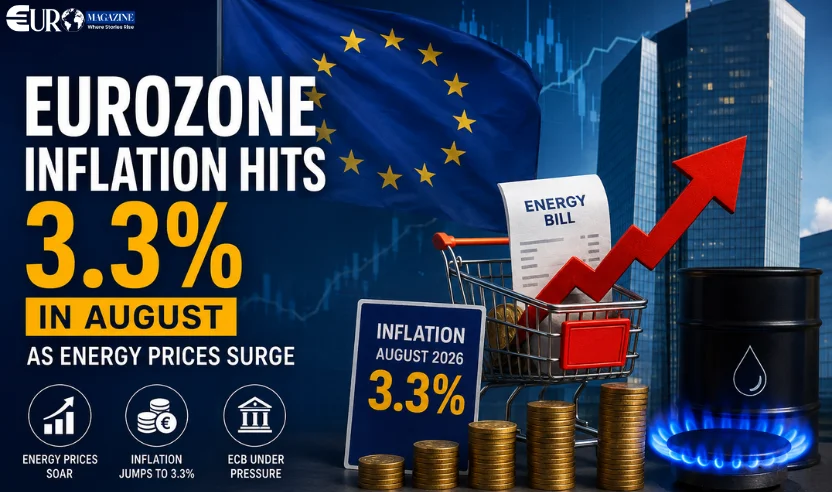
Inflation across the eurozone accelerated sharply in August, reaching 3.3%, as soaring energy costs pushed prices higher and added fresh pressure on the European Central Bank (ECB).
The latest flash estimate from Eurostat marks a significant increase from 2.9% in July and puts inflation at its highest level in around three years. The figure was broadly in line with economists' expectations, but the sharp rise highlights how quickly the energy shock is feeding into Europe's economy.
Energy Prices Drive the Latest Surge
Energy was the biggest factor behind August's increase. Energy prices were estimated to be 14.3% higher than a year earlier, compared with a 10.3% increase in July.
The renewed rise comes as the conflict involving Iran continues to disrupt energy markets and restrict oil shipments through the Strait of Hormuz. Higher crude and gas prices are raising costs for households and businesses across Europe.
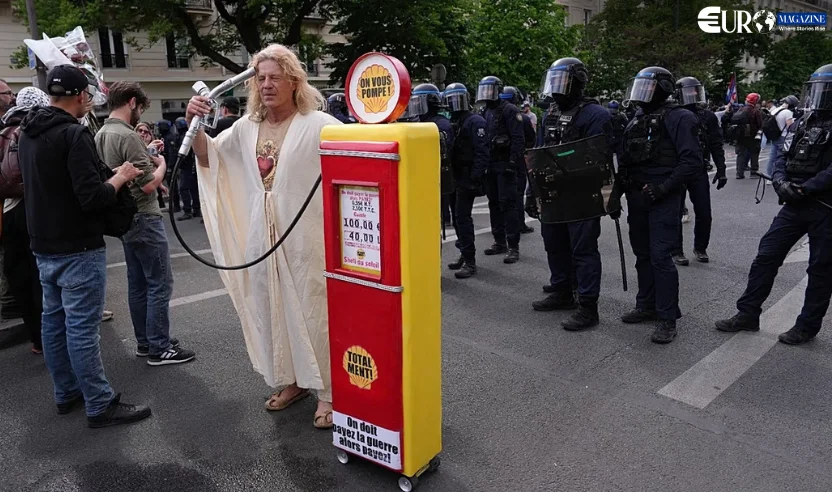
For consumers, the impact can be felt through higher fuel, heating and transportation costs. Businesses are also facing increased expenses, particularly in industries that depend heavily on energy.
Core Inflation Offers Some Relief
Not all parts of the inflation picture are worsening. Core inflation, which excludes volatile food and energy prices, edged down to 2.4% in August from 2.5% previously.
Services inflation also eased to 3.0% from 3.3%, suggesting that the latest jump in headline inflation is being driven primarily by the energy shock rather than a broad acceleration in underlying price pressures.
That distinction will be important for ECB policymakers as they decide how aggressively to respond.
ECB Faces Renewed Pressure on Interest Rates
The latest figures are likely to strengthen expectations that the ECB could raise interest rates at its September 10 meeting. Markets are increasingly pricing in a possible 0.25 percentage-point increase, which would take the deposit rate to around 2.5%.
However, the ECB faces a difficult balancing act. Higher interest rates could help contain inflation, but they could also put additional pressure on an economy already dealing with weak growth and uncertainty.
For now, much will depend on energy prices and the future of the conflict in the Middle East. If energy costs remain elevated, eurozone households and businesses could face continued price pressure in the months ahead.
The August figures therefore present a mixed picture for Europe: inflation is moving sharply higher, but underlying price pressures remain relatively contained. For the ECB, the challenge will be determining whether the latest surge is a temporary energy shock or the beginning of a longer period of renewed inflation.
Read more news:-
























Comments
Be the first to share your thoughts.
Leave a comment
Join the conversation. Your email address will not be published.