

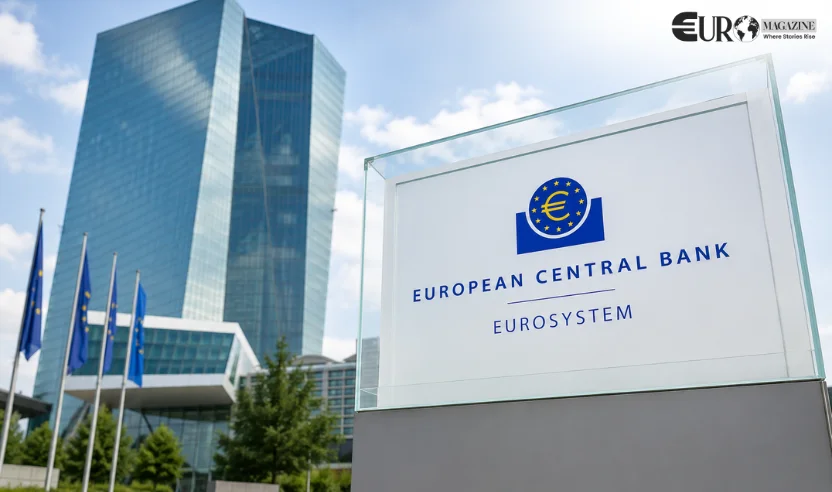
The European Central Bank (ECB) left its key interest rates unchanged on Thursday, maintaining the deposit facility rate at 2.25% as policymakers assessed the inflationary impact of renewed tensions in the Middle East and rising energy prices.
The ECB also kept its main refinancing rate at 2.40% and the marginal lending facility at 2.65%, choosing to pause after implementing its first interest rate increase in nearly three years in June.
In its latest monetary policy statement, the Governing Council said uncertainty surrounding energy prices remains elevated following renewed geopolitical tensions, adding that the full impact of higher energy costs on inflation has yet to materialize.
"The outlook for energy prices remains highly volatile," the ECB said, noting that current prices are broadly in line with its June projections but remain significantly higher than levels recorded before the Middle East conflict intensified.
The central bank said it will continue to monitor the duration and severity of the energy shock, as well as its potential indirect effects on inflation across the eurozone economy.
The decision follows encouraging inflation data released earlier this month. Eurozone annual inflation eased to 2.8% in June, down from 3.2% in May, marking the first decline this year. Core inflation, which excludes volatile food and energy prices, also moderated to 2.4%.
Despite the improvement, ECB President Christine Lagarde has repeatedly emphasized that the fight against inflation is not over. She recently stated that June's rate increase was a response to persistent inflationary pressures rather than a precautionary move, while reiterating that future policy decisions will remain dependent on incoming economic data.
Market expectations now increasingly point toward the ECB's September meeting, when updated economic forecasts will provide policymakers with a clearer picture of inflation trends. Analysts believe another rate increase remains possible if energy prices continue to climb.
Oil markets have become a key concern for central bankers. Brent crude, which retreated after a temporary ceasefire in late June, has moved higher again following renewed military tensions involving the United States and Iran, increasing concerns about energy-driven inflation during the second half of the year.
Compared with other major central banks, the ECB remains the only Western monetary authority to have raised interest rates during the current policy cycle.
The U.S. Federal Reserve is expected to announce its next policy decision next week, with financial markets largely anticipating no change to interest rates. The Bank of England is also widely expected to leave borrowing costs unchanged, although economists continue to debate the possibility of another rate increase later this year.
For now, the ECB has chosen to maintain its current policy stance while closely monitoring inflation risks, particularly those linked to global energy markets and geopolitical developments.
Read more news:-































Comments
Be the first to share your thoughts.
Leave a comment
Join the conversation. Your email address will not be published.