

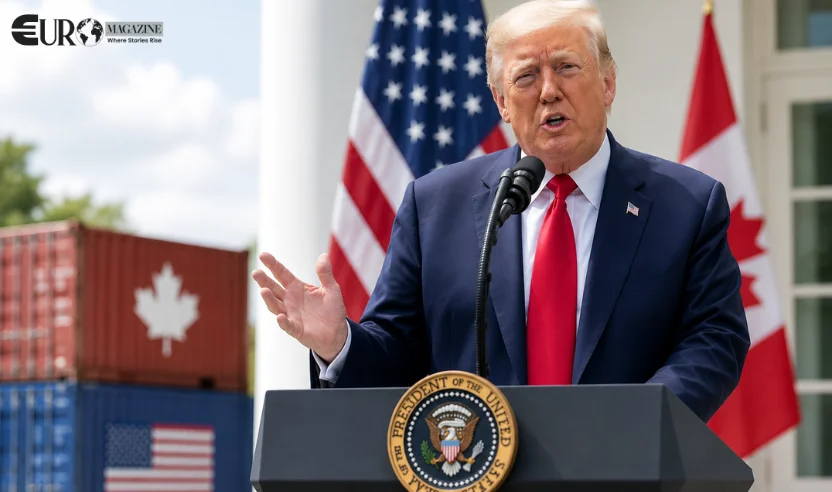
U.S. President Donald Trump has imposed 50% tariffs on most Canadian goods, significantly escalating trade tensions between the two neighboring countries over disputes involving automobiles, dairy products, and alcoholic beverages.
The White House announced that the tariffs will take effect 30 days from now, leaving a short window for negotiations before the measures are implemented.
According to the administration, the tariffs were introduced under Section 338 of the Trade Act of 1930, with officials arguing that Canada has discriminated against American products while retaliating against previous U.S. tariff measures.
The new tariffs will apply to a wide range of Canadian imports, including products that were previously protected under the United States-Mexico-Canada Agreement (USMCA). However, energy products, potash, fish, and critical minerals have been excluded from the new duties.
A White House fact sheet said the administration believes Canada has maintained unfair trade barriers against U.S. automobiles, dairy products, and alcoholic beverages, prompting the latest action.
Canadian Prime Minister Mark Carney said his government remains committed to free and fair trade and is prepared to negotiate with the United States.
"This trade dispute has raised costs for families, particularly in the U.S. Canada stands ready to engage intensively to address outstanding issues with the U.S. to the mutual benefit of our citizens," Carney said in a statement.
The announcement has triggered concerns over a possible escalation into a broader trade war.
Ontario Premier Doug Ford said Canada should respond with equivalent tariffs if the U.S. proceeds with the measures, while the Canadian Chamber of Commerce urged both governments to use the 30-day period to reach a negotiated settlement.
Business groups in the United States also called for dialogue, warning that prolonged trade barriers could affect industries dependent on cross-border commerce.
Economic experts cautioned that the new tariffs could increase prices for consumers, disrupt supply chains, and add uncertainty to North American trade. Several analysts also questioned the administration's use of a Depression-era law to impose the tariffs, warning it could create a precedent for broader trade actions.
The latest measures also carry political significance for President Trump ahead of the congressional midterm elections. Critics argue that higher import duties could fuel inflation, while the administration maintains that the tariffs will encourage domestic manufacturing and protect American industries.
Trump has repeatedly criticized Canada's trade policies, particularly regarding automobiles, dairy, and alcohol imports. The White House also accused Canada of maintaining retaliatory tariffs introduced after previous U.S. trade actions.
Despite the sharp escalation, the administration said negotiations remain possible before the tariffs take effect, leaving both countries with an opportunity to reach a new trade agreement and avoid a wider economic confrontation.
Read more news:-































Comments
Be the first to share your thoughts.
Leave a comment
Join the conversation. Your email address will not be published.