

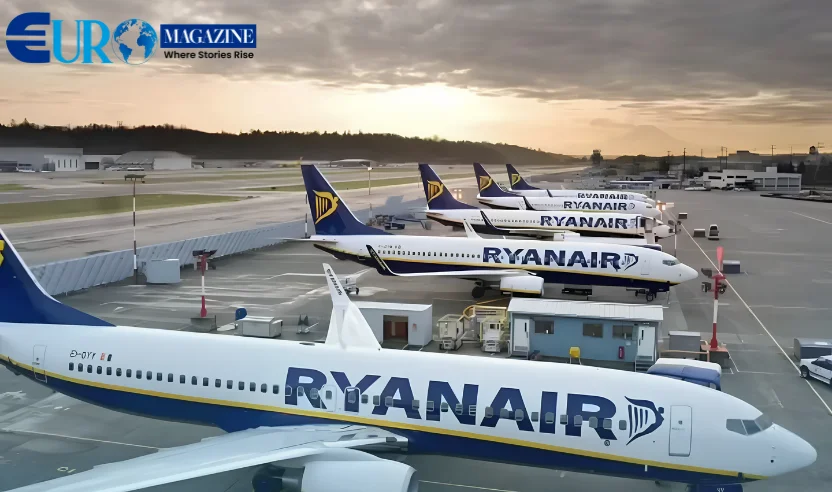
Ryanair reported a record annual profit of €2.26 billion for the financial year ending March 2026, marking a 40% increase compared to the previous year as strong travel demand and higher ticket fares boosted earnings despite mounting geopolitical and operational challenges.
Europe’s largest low-cost carrier said passenger traffic climbed 4% to 208.4 million travelers during the 2025–26 fiscal period, even as ongoing delays in Boeing aircraft deliveries limited expansion opportunities.
Total revenue rose 11% to €15.54 billion, supported by a 10% increase in average fares and a 7% rise in revenue per passenger. Operating costs increased by 6%, while unit cost growth remained relatively low at 1%, helping the airline maintain profitability.
Chief Executive Officer Michael O'Leary said the airline’s fuel hedging strategy has helped shield the company from the recent surge in oil prices linked to the Iran conflict and growing concerns surrounding shipping activity in the Gulf region.
Ryanair confirmed it has secured hedging coverage for approximately 80% of its fuel needs through April 2027 at an average price of around $67 per barrel, reducing short-term exposure to volatile energy markets.
The airline warned, however, that geopolitical instability in the Middle East and tensions surrounding the Strait of Hormuz continue to pose risks for the global aviation industry. Executives stated that prolonged high oil prices could place significant pressure on weaker European carriers.
Chief Financial Officer Neil Sorahan said Ryanair remains in a strong competitive position because of its fuel protection strategy and cost-efficient operating model. O’Leary also suggested that sustained fuel price spikes could lead to failures among European airlines, potentially benefiting Ryanair in the long term.
Despite the strong results, the airline declined to provide detailed profit guidance for the 2026–27 fiscal year, citing uncertainty around fuel costs, fare trends, and consumer spending patterns. The company noted that while summer travel demand remains healthy, many passengers are continuing to book flights closer to departure dates amid broader economic uncertainty.
Ryanair also stated that ongoing Boeing delivery delays continue to constrain growth across Europe’s short-haul aviation market. The airline expects passenger traffic to rise to approximately 216 million this year as additional Boeing 737 MAX aircraft gradually enter service.
The company added that aircraft shortages and wider supply chain disruptions are likely to continue affecting the aviation industry for several years, potentially supporting stronger fare pricing for large low-cost carriers with scalable operations and strong balance sheets.
Ryanair further confirmed that discussions are underway regarding an extension of Michael O’Leary’s leadership contract, which could keep him in the CEO role until 2032.



























Comments
Be the first to share your thoughts.
Leave a comment
Join the conversation. Your email address will not be published.