
Major European lenders reported strong first-quarter earnings, benefiting from heightened market volatility linked to geopolitical tensions in the Middle East, even as executives warned of growing economic risks. Deutsche Bank posted a record quarterly post-tax profit of €2.2 billion, marking an 8% increase from a year earlier. Pre-tax profit rose to €3 billion, while revenues edged up to €8.7 billion. The bank’s private banking division delivered particularly strong performance, with profit rising sharply amid increased client activity.
Assets under management climbed to €1.8 trillion, supported by solid inflows across wealth and asset management segments. However, the bank also increased provisions for credit losses, reflecting concerns over a more uncertain macroeconomic environment.
Banco Santander also reported robust results, with attributable profit rising 60% to €5.5 billion, supported by a one-time gain from asset sales. Excluding this, underlying profit growth remained strong, while revenues increased on the back of higher net interest income and fee growth. The bank continues to maintain a strong capital position and is progressing with its share buyback programme.
Meanwhile, UBS posted an 80% surge in net income to $3.04 billion, driven by strong performance in wealth management and trading divisions. Revenue growth and improved profitability underscore continued resilience in core operations despite broader uncertainty.
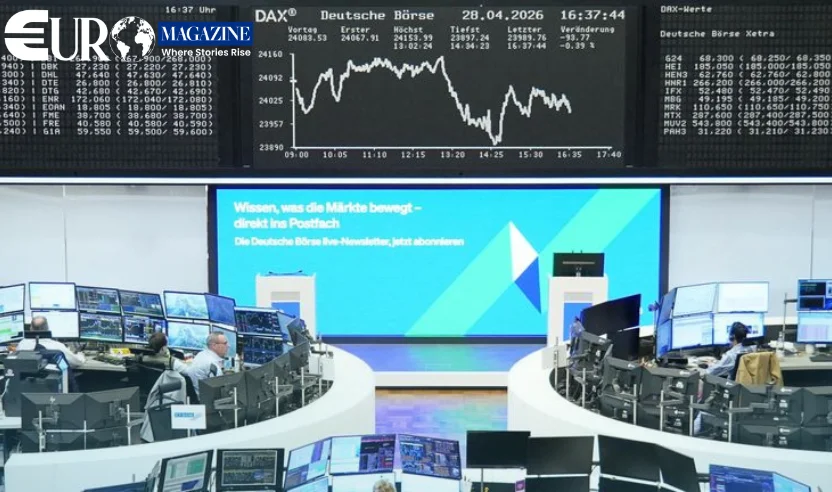
The earnings surge comes as market volatility linked to the Iran conflict boosts trading income across financial institutions. At the same time, higher energy prices have contributed to rising inflation in the eurozone, influencing expectations around future interest rate movements.
Analysts note that while short-term gains have supported bank performance, longer-term risks are building. Rising borrowing costs, combined with energy-driven inflation, could weigh on consumer spending and increase credit risk across sectors.
Executives across the banking sector have highlighted geopolitical uncertainty as a key concern, with the duration of the conflict seen as a critical factor shaping economic outcomes.
Beyond banking, TotalEnergies reported a 51% rise in net income, supported by strong oil and gas prices amid tightening global supply. In contrast, Mercedes-Benz Group flagged a more cautious outlook, reporting a decline in operating profit as weaker demand in China and cost pressures weighed on performance.
Despite mixed signals across sectors, analysts say European banks remain resilient for now, though close attention is being paid to credit quality and economic indicators as the global outlook evolves.