

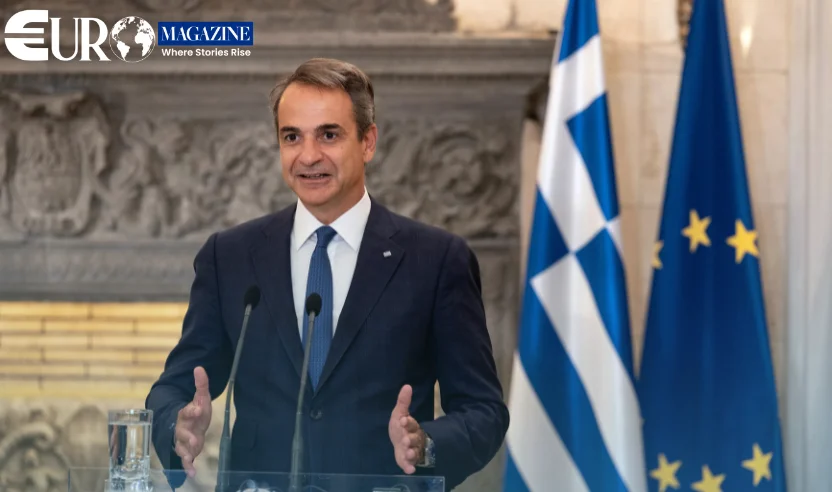
Greece recorded a significantly stronger-than-expected fiscal performance during the first quarter of 2026, posting a primary budget surplus of €5.175 billion, according to figures released by the country’s Ministry of National Economy and Finance.
The result exceeded the government’s original forecast of €2.298 billion by a substantial margin, highlighting continued resilience in Greece’s public finances despite broader economic uncertainty across Europe.
Officials noted, however, that the headline surplus was partly boosted by several one-off transactions and timing-related factors. These included advance receipts from European funding programs, early recovery fund payments, and transfers connected to investment and infrastructure projects.
After excluding those extraordinary items, the ministry estimated the underlying fiscal overperformance at approximately €358 million.
A major contributor to the improved figures was the earlier-than-expected arrival of the seventh tranche from the European Union Recovery Fund, valued at €884 million. Additional revenue also came from the European Investment Fund and infrastructure-related concession agreements, including transactions tied to the Egnatia Highway motorway project.
Government revenue collection remained strong during the January-to-April period. Net state budget revenues reached €25.165 billion, outperforming official targets by more than €2 billion. Tax revenues alone totaled €22.743 billion, although adjusted figures excluding exceptional items showed a slight shortfall compared with projections.
Public spending also remained under control. Total state budget expenditures reached €23.287 billion, coming in below official forecasts despite increases in funding for healthcare, transportation, and social welfare programs.
Large allocations were directed toward public hospitals, social support agencies, and transport operators, reflecting continued efforts to support public services and economic stability.
Investment expenditure totaled €2.938 billion during the period. While that figure remained below target, it still exceeded the equivalent level recorded during the previous year, signaling ongoing public investment activity within the Greek economy.
The stronger fiscal performance is expected to strengthen investor confidence in Greece’s economic outlook and reinforce the country’s efforts to maintain fiscal discipline while continuing strategic investment and recovery initiatives across key sectors.

























Comments
Be the first to share your thoughts.
Leave a comment
Join the conversation. Your email address will not be published.