

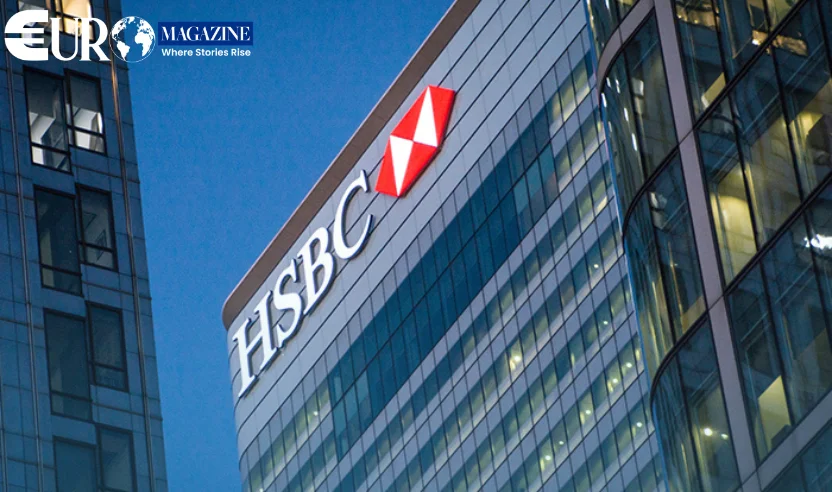
European banking giants have reported mixed financial results in the latest earnings season, with HSBC posting a decline in profits while UniCredit exceeded market expectations, reflecting a sector navigating ongoing geopolitical and economic challenges.
The results come as investors closely monitor how major lenders are responding to global uncertainties, including persistent high interest rates and the broader impact of geopolitical tensions.
HSBC, one of Europe’s largest banks and a key component of the UK’s FTSE 100 index, reported a slight drop in profitability. Pre-tax profit fell by 1.1 percent to $9.38 billion, below analyst projections of $9.59 billion. The decline was largely attributed to a rise in credit impairment charges, which climbed to $1.3 billion compared to $876 million during the same period last year.
Analysts suggest that these increased provisions reflect the broader global climate, particularly the financial impact of geopolitical instability. Despite the setback, HSBC recorded growth in key segments, including its wealth management business, where fee income rose significantly, and operations in Hong Kong and the UK, which posted steady revenue gains.
In contrast, UniCredit delivered a strong performance, reporting a net profit increase of more than 16 percent to €3.2 billion, surpassing market expectations. The Italian lender also saw earnings per share rise sharply, supported by consistent revenue growth and operational efficiency.
Quarterly revenues at UniCredit grew by 5 percent year-on-year to €6.9 billion, while net revenues increased by 3.3 percent, demonstrating resilience despite headwinds such as fluctuating interest rates and loan loss provisions.
Buoyed by this performance, UniCredit has upgraded its financial outlook for 2026, now expecting net profit to reach or exceed €11 billion, reinforcing its position among Europe’s most efficient and stable banking institutions.
Across the broader sector, other major lenders including Deutsche Bank, Santander, and UBS have also reported profit growth, indicating that the European banking industry remains fundamentally strong despite isolated challenges.
Market observers note that the current earnings cycle underscores a period of adjustment, as banks recalibrate strategies to balance growth opportunities with risk management in an increasingly uncertain global environment.
























Comments
Be the first to share your thoughts.
Leave a comment
Join the conversation. Your email address will not be published.