

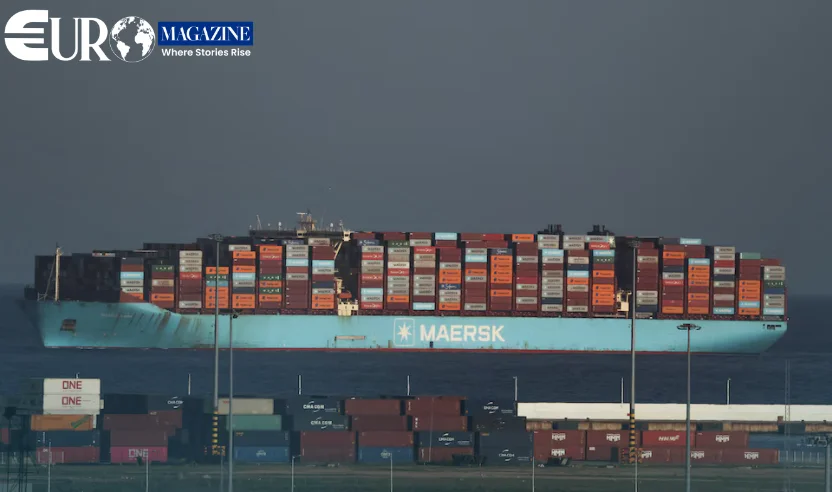
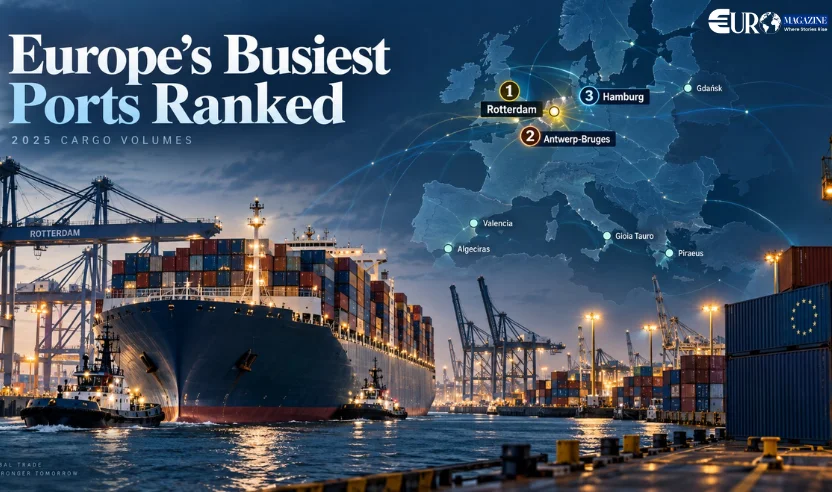
Global shipping leader Maersk has reported a significant decline in first-quarter earnings as ongoing geopolitical tensions in the Middle East and disruptions around the Strait of Hormuz continue to create uncertainty across global trade markets.
The Danish shipping giant announced that net profit for the January-to-March quarter fell to $100 million, marking a steep decline compared to the same period last year when exceptionally strong freight demand boosted earnings substantially.
Revenue for the quarter declined by 2.6 percent to just under $13 billion, while earnings per share dropped sharply from $74 to $4 year-over-year.
Maersk attributed the weaker financial performance mainly to declining freight rates within its Ocean division, although increased shipping volumes helped partially offset the impact. The company recorded a 9.3 percent rise in overall business volumes during the quarter, reflecting continued resilience in global shipping demand.
Despite the weaker results, Maersk maintained its full-year 2026 guidance and said it still expects global container demand to grow between 2 and 4 percent this year.
Chief Executive Officer Vincent Clerc stated that demand remained strong across most regions during the quarter, supporting healthy volume growth across the company’s core business segments.
However, the company cautioned that uncertainty remains elevated due to ongoing geopolitical tensions and continued pressure on freight rates caused by excess shipping capacity in the market.
Maersk said the conflict in the Middle East, which escalated earlier this year, has added another layer of unpredictability to the global economic outlook. Shipping activity through the Strait of Hormuz remains heavily disrupted, while weaker market sentiment has affected consumer confidence worldwide.
The Strait of Hormuz continues to be one of the world’s most strategically important trade routes, particularly for energy shipments. Prolonged disruptions in the region have left hundreds of vessels stranded inside the Persian Gulf, significantly increasing operating costs for shipping companies.
Industry reports indicate that thousands of seafarers remain aboard vessels unable to move freely through the affected waters. Cargo shipments including crude oil, refined petroleum products, and fertilisers have also experienced major delays.
Shipping operators are additionally facing rising insurance premiums and fuel costs as security risks in the region continue to intensify.
German shipping company Hapag-Lloyd recently estimated that disruptions around Hormuz are costing the firm approximately $60 million per week, driven largely by increased insurance and fuel expenses.
Market analysts believe that even if the Strait of Hormuz reopens fully in the near future, global shipping markets may take considerable time to stabilise due to continued geopolitical uncertainty and cautious industry sentiment.
Despite the challenging environment, Maersk emphasized that global container shipping demand remains relatively stable and that the company continues monitoring developments across key trade routes closely.
Investors reacted cautiously to the earnings report, with Maersk shares falling nearly 4 percent during trading on Nasdaq Copenhagen.

























Comments
Be the first to share your thoughts.
Leave a comment
Join the conversation. Your email address will not be published.