

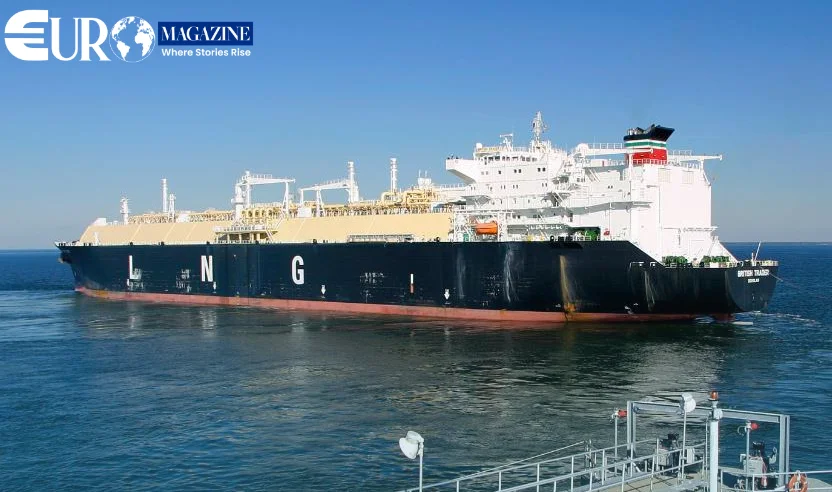
Europe is expected to source nearly two-thirds of its liquefied natural gas imports from the United States in 2026, according to a new report released by the Institute for Energy Economics and Financial Analysis (IEEFA).
The analysis highlights how Europe’s energy landscape continues to shift following Russia’s invasion of Ukraine and ongoing geopolitical instability in global energy markets. As European countries move to eliminate Russian fossil fuel imports, the United States has rapidly emerged as the continent’s dominant LNG supplier.
According to the report, the US already accounted for approximately 57 percent of Europe’s LNG imports during 2025. That share is expected to climb even higher next year as additional long-term supply agreements take effect and European nations continue diversifying away from Russian energy.
The European Union has committed to ending Russian gas imports by 2027 under its REPowerEU strategy, which was launched to strengthen regional energy security and reduce dependence on Moscow.
Since 2022, European countries have significantly increased LNG purchases, particularly from US exporters, to compensate for the sharp decline in Russian pipeline gas deliveries. The shift has accelerated investments in LNG terminals, storage facilities, and import infrastructure across the continent.
While the transition has helped stabilise short-term energy supplies, the IEEFA warned that Europe could be replacing one major dependency with another.
The organisation cautioned that relying heavily on a single alternative supplier may create future economic and geopolitical risks, especially if global energy markets face further disruptions or pricing volatility.
The report also pointed to the higher overall cost of imported LNG compared with traditional pipeline gas. LNG requires additional processing, transportation, and regasification infrastructure, increasing expenses for importing countries.
According to IEEFA estimates, European Union member states spent roughly €117 billion on US LNG imports between early 2022 and mid-2025.
Several European policymakers have previously raised concerns over excessive dependence on imported LNG supplies. Earlier this year, European Commission Executive Vice President Teresa Ribera stated that Europe should avoid replacing one energy dependency with another and instead accelerate investments in renewable energy and electrification.
The European Union Agency for the Cooperation of Energy Regulators has also expressed concerns regarding supply concentration risks linked to the growing role of US LNG in Europe’s energy market.
At the same time, overall European gas demand has declined in recent years due to high energy prices, industrial slowdowns, energy efficiency measures, and increased adoption of renewable energy technologies.
IEEFA data shows that LNG imports into Europe dropped during 2024 as gas consumption reached its lowest level in more than a decade. However, imports increased again in 2025 following colder weather conditions and efforts by governments to rebuild gas storage reserves.
Germany has emerged as one of the largest importers of American LNG in Europe after rapidly expanding its floating LNG terminal infrastructure. The country had previously relied heavily on Russian pipeline gas before the energy crisis reshaped Europe’s supply strategy.
Energy analysts also warned that Europe may eventually face excess LNG infrastructure capacity if long-term gas demand continues to decline during the transition toward cleaner energy systems.
Despite those concerns, LNG is expected to remain a critical component of Europe’s energy mix in the near term as governments continue balancing energy security, affordability, and climate transition goals.




























Comments
Be the first to share your thoughts.
Leave a comment
Join the conversation. Your email address will not be published.