

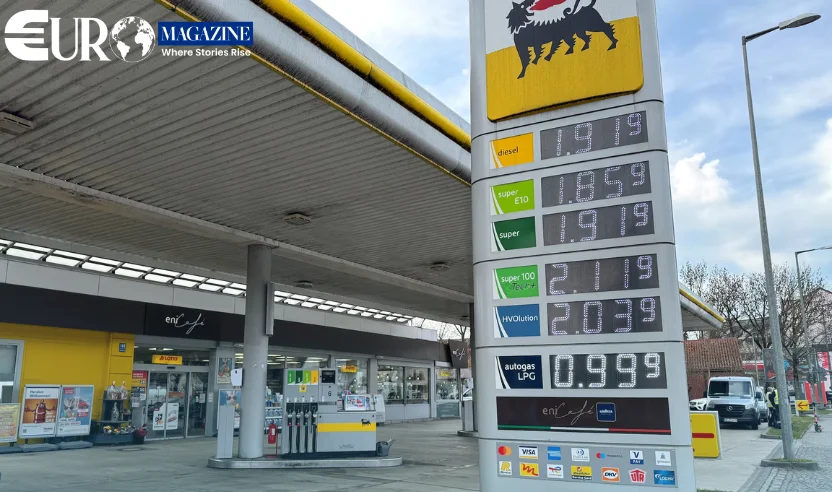
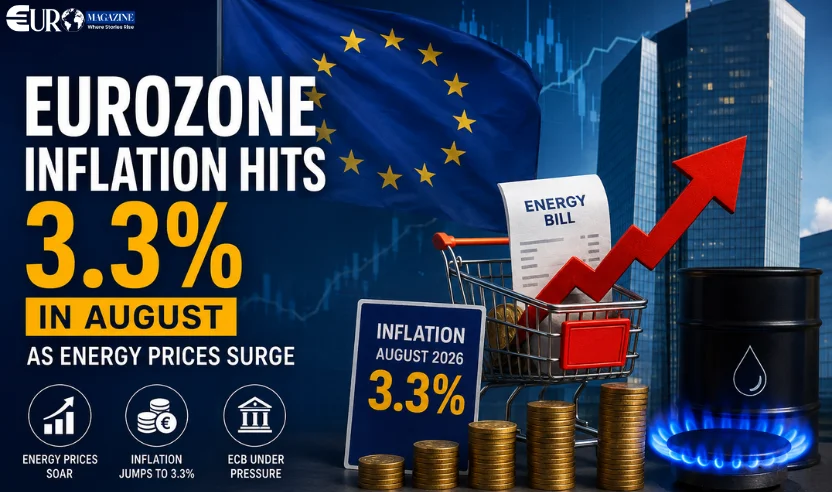
Brussels: Inflation across the eurozone rose to 3% in April, marking a sharp increase driven largely by soaring energy prices, while economic growth continued to lose momentum a combination that is raising concerns among policymakers and financial markets.
According to data released by Eurostat, inflation accelerated from 2.6% in March, with energy costs emerging as the primary contributor. Energy prices recorded a significant annual increase of 10.9%, reflecting the global surge in oil prices amid ongoing geopolitical tensions in the Middle East.
The impact of higher energy costs has extended across various sectors of the economy. Services inflation stood at 3.0%, slightly easing from previous levels, while food, alcohol, and tobacco prices rose modestly to 2.5%. Non-energy industrial goods also registered an increase, though at a slower pace.
The inflationary pressure comes at a time when economic growth in the euro area is weakening. Preliminary figures indicate that gross domestic product expanded by just 0.1% in the first quarter of 2026 compared with the previous quarter, reflecting a slowdown in economic activity across the region.
On an annual basis, the eurozone economy grew by 0.8%, highlighting a noticeable deceleration from the stronger growth recorded in late 2025. The broader European Union economy followed a similar trend, pointing to widespread softness in economic performance.
A major factor behind both rising inflation and slowing growth is the ongoing disruption in global energy markets. The blockade of key oil transit routes has significantly constrained supply, pushing crude prices to elevated levels and increasing costs for businesses and consumers alike.
This combination of high inflation and weak growth often described as stagflation presents a complex challenge for the European Central Bank (ECB). While inflation remains above the bank’s 2% target, tightening monetary policy could further suppress already fragile economic growth.
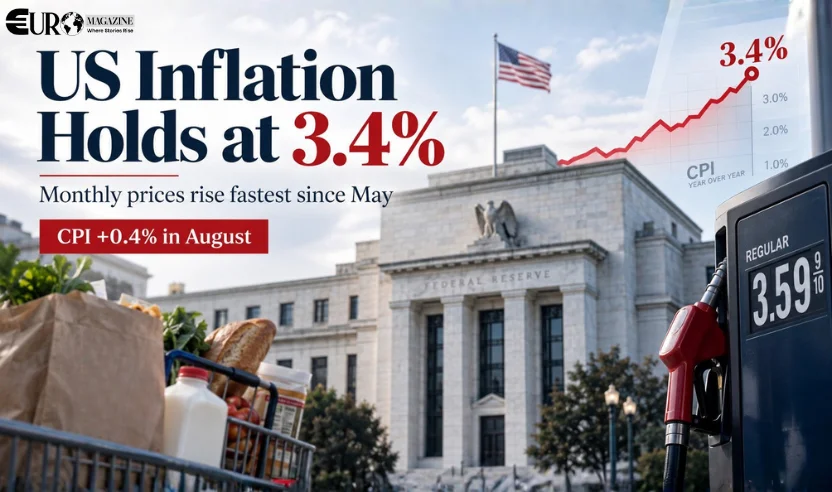
Central banks globally are facing similar dilemmas. The ECB, along with other major institutions such as the US Federal Reserve and the Bank of Japan, has opted to maintain interest rates for now, adopting a cautious approach as they assess the persistence of inflationary pressures.
Market expectations suggest that policymakers will continue to monitor incoming data closely before making any significant policy adjustments. The trajectory of energy prices and geopolitical developments will remain critical in shaping the eurozone’s economic outlook in the coming months.























Comments
Be the first to share your thoughts.
Leave a comment
Join the conversation. Your email address will not be published.