

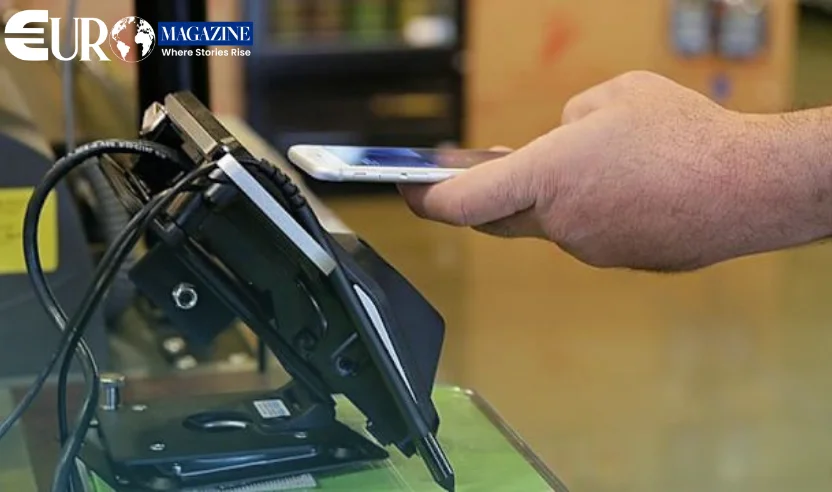
Spain’s homegrown digital payment platform Bizum is preparing to make its biggest expansion yet by entering physical retail payments, a move that could significantly challenge the dominance of global card giants Visa and Mastercard across Spain’s payment ecosystem.
Beginning May 18, Bizum Pay will allow consumers to make contactless in-store payments using NFC technology, enabling direct account-to-account transfers without relying on traditional international card processing networks.
The development marks a major shift in Spain’s payments landscape. Until now, most in-store digital transactions relied on Visa or Mastercard infrastructure, where merchants paid processing and interchange fees while transaction data moved through international networks.
Under the new system, payments made through Bizum Pay will move directly between customer and merchant bank accounts using instant transfer technology, significantly reducing dependence on foreign intermediaries and lowering transaction costs for businesses.
What began as a collaborative interoperability initiative between Spanish banks has evolved into one of Europe’s most successful domestic payment ecosystems. The platform now serves more than 30 million users across Spain, representing nearly the country’s entire adult banking population.
More than 111,000 businesses are already integrated into the Bizum ecosystem, while approximately 40 Spanish financial institutions currently support the platform.
In 2025 alone, Bizum processed an average of 3.4 million instant transfers daily, highlighting the growing consumer preference for real-time account-based payments.
The initial rollout of Bizum Pay in physical retail locations will involve major Spanish banks including CaixaBank, Banco Sabadell, and Bankinter, with broader participation expected before the end of 2026.
Industry analysts believe the move could significantly impact Spain’s retail payment sector over the next few years. If the platform’s success in e-commerce continues into physical retail, Bizum could capture between 25% and 35% of in-store payment volumes in Spain within the next two to three years.
One of Bizum’s strongest advantages remains its widespread consumer adoption. For many Spanish users, the platform has already become a default method for sending money instantly between bank accounts.
The company’s expansion into physical retail also aligns with Europe’s broader ambition to strengthen digital payment sovereignty and reduce reliance on non-European payment infrastructure.
Spain’s model is increasingly being viewed as a foundation for broader European payment integration initiatives, including the European Payments Initiative (EPI), which aims to simplify cross-border digital payments across the continent.
The success of domestic payment systems such as Pix in Brazil and UPI in India has already demonstrated how local instant-payment platforms can disrupt traditional card networks by offering faster transactions and lower processing costs.
However, Visa and Mastercard are still expected to maintain strong positions in areas such as deferred payments, rewards programmes, purchase protection, and credit-based transactions segments where direct-transfer systems like Bizum currently have limited offerings.
For merchants, the financial appeal remains significant. Bizum offers instant settlement and lower transaction fees compared with traditional card processing systems, where costs can range between 0.2% and 2% depending on the provider and payment structure.
As Europe continues investing in domestic digital payment infrastructure, Bizum’s rapid expansion may become one of the strongest examples of how local fintech innovation can reshape the future of financial transactions across the region.






















Comments
Be the first to share your thoughts.
Leave a comment
Join the conversation. Your email address will not be published.