

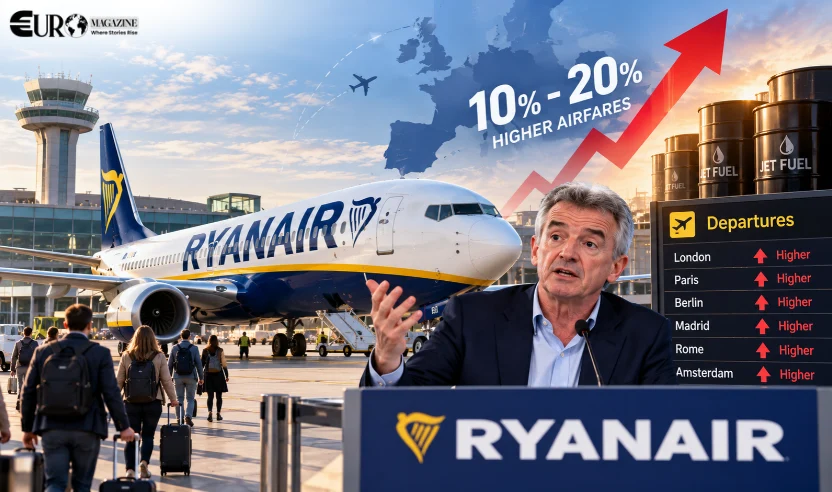
European airfares could rise by 10% to 20% in 2027, marking what Ryanair CEO Michael O’Leary predicts could be the largest increase in the region’s history. Speaking at a news conference in Brussels on October 20, O’Leary said soaring jet fuel prices, limited fuel-price protection and reduced airline capacity could push ticket costs higher over the next 12 months. The warning comes as the conflict in the Middle East continues to disrupt energy markets and increase pressure on the aviation industry.
Rising Jet Fuel Costs Put Pressure on Airlines
Jet fuel prices have climbed sharply amid disruptions to oil supplies linked to the Iran conflict and concerns surrounding the Strait of Hormuz. Higher fuel costs are putting pressure on airlines’ operating expenses, particularly carriers that have not secured fuel at fixed prices in advance.
O’Leary said Ryanair had substantial fuel-price protection through March 2027 but was much less protected beyond that period. The airline has reportedly secured only around 15% of its fuel requirements for 2027 at approximately $85 per barrel, leaving much of its future fuel needs exposed to market prices.
If fuel costs remain elevated, airlines may attempt to pass some of the additional expense on to passengers through higher ticket prices.
Fewer Available Seats Could Push Fares Higher
O’Leary also expects airline bankruptcies, restructuring and industry consolidation to reduce the number of seats available across Europe. Lower capacity could give surviving airlines greater scope to increase prices, particularly on routes where competition weakens.
The combination of higher operating costs and fewer available seats could make affordable travel harder to find during 2027. However, the extent of any increase will depend on fuel prices, passenger demand, airline capacity and competition across individual routes.
Ryanair Cuts Routes in Belgium Over Higher Taxes
The fare warning came as Ryanair announced plans to remove 20 routes and more than one million seats from its Belgian winter schedule. The airline blamed a planned increase in Belgium’s aviation tax from €2 to €7 per passenger, scheduled to take effect in January 2027.
Ryanair said it would move six aircraft to markets with lower operating costs. The decision highlights how taxation, airport charges and fuel expenses are combining to influence airlines’ network and pricing decisions.
Travellers Could Face Higher Costs in 2027
If O’Leary’s forecast materialises, passengers travelling across Europe could face noticeably higher ticket prices next year. Budget-conscious travellers may be particularly affected because low-cost airlines have traditionally helped keep fares competitive on short-haul routes.
However, the predicted 10% to 20% increase is an industry forecast, not a confirmed price rise across every airline or route. Actual fares will vary depending on travel dates, destinations, booking demand and competition.
The outlook for European air travel will largely depend on whether fuel prices ease and airlines can maintain sufficient capacity. For now, O’Leary’s warning signals the potential for a more expensive year for travellers if current cost pressures persist.
Read more news:-





























Comments
Be the first to share your thoughts.
Leave a comment
Join the conversation. Your email address will not be published.