

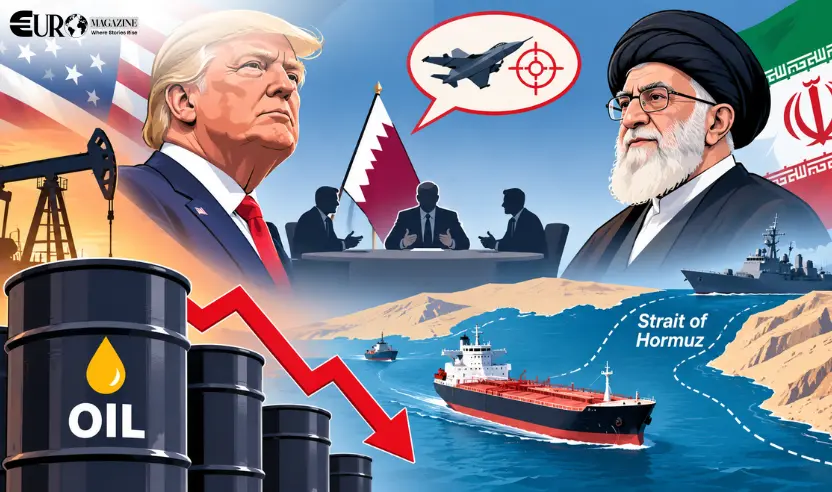
Global oil prices declined sharply on November 2, 2026, as renewed diplomatic efforts between Iran and the United States raised hopes of reopening the Strait of Hormuz and reducing disruptions to international energy supplies. However, US President Donald Trump maintained that military action against Iran remained an option if negotiations failed.
Brent crude futures fell more than 4% to approximately $108.64 per barrel, while US West Texas Intermediate (WTI) dropped to around $99.71. The decline followed a strong rally in October, when geopolitical tensions pushed Brent to its highest level in six months.
Qatar Leads Diplomatic Efforts
Iranian representatives held discussions with Qatari mediators over a possible framework to end the ongoing conflict. The negotiations focused on conditions that could allow the Strait of Hormuz to reopen and reduce restrictions affecting regional oil shipments.
Iranian Foreign Minister Abbas Araghchi said consultations through mediators were continuing, with Tehran presenting its conditions and proposals. However, the discussions ended without a confirmed breakthrough, and further diplomatic engagement remained necessary.
Iran has previously demanded an end to the US naval blockade of its ports, sanctions relief and a halt to fighting across regional fronts as part of a potential agreement.
Trump Keeps Military Options Open
Despite expressing optimism about negotiations, Trump has not ruled out renewed military strikes against Iran. He indicated that discussions were progressing but questioned Tehran's reliability and suggested that the United States was prepared to take further action if necessary.
US Secretary of State Marco Rubio also said that no final decision had been made regarding additional military operations.
Meanwhile, Israeli Prime Minister Benjamin Netanyahu reportedly urged Trump to consider fresh strikes after the November 3 US midterm elections. Trump has indicated that he would prefer to give diplomatic efforts more time before making a decision.
Strait of Hormuz Remains Critical to Oil Supply
The Strait of Hormuz continues to be a major concern for global energy markets. The waterway normally handles approximately one-fifth of worldwide oil consumption, making it one of the most important routes for international crude and fuel shipments.
Shipping activity has been heavily disrupted since the conflict began in late February 2026. Reports of attacks on vessels and concerns about further military escalation have kept supply risks elevated.
Abu Dhabi National Oil Company (ADNOC) chief executive Sultan Al Jaber has also warned that global oil inventories have been significantly depleted during the conflict.
Oil Market Outlook Remains Uncertain
The latest decline reflects optimism about a possible diplomatic solution rather than a confirmed reopening of the Strait of Hormuz. Goldman Sachs has warned that continued disruptions to Gulf oil production could push prices significantly higher, with its analysts highlighting the possibility of Brent reaching $140 per barrel in 2027 under a prolonged supply-shortfall scenario.
For energy-importing countries, sustained lower oil prices could ease fuel costs and inflationary pressure. However, the market remains highly sensitive to negotiations, shipping security and decisions from Washington and Tehran.
Until a formal agreement is reached and shipping through Hormuz stabilises, geopolitical developments are likely to remain the dominant influence on global oil prices.
Read more news:-




























Comments
Be the first to share your thoughts.
Leave a comment
Join the conversation. Your email address will not be published.