

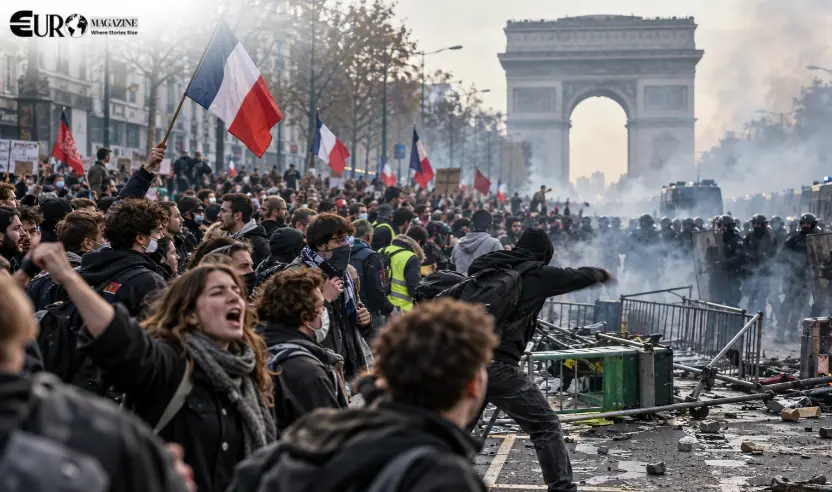
France has faced some of its most serious unrest in years as protests over rising living costs, declining public services and government spending cuts escalated into violent clashes across the country. Hundreds of thousands of people joined demonstrations on October 17, with violence, looting and damage to public buildings reported in several cities. The unrest has intensified pressure on President Emmanuel Macron’s government as it attempts to reduce public spending and address the country’s budget deficit.
Spending Cuts Trigger Wider Public Discontent
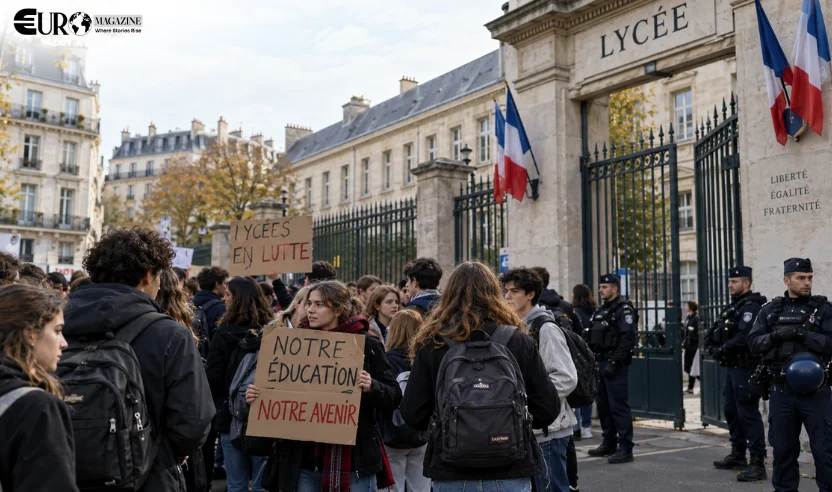
The protests began with students raising concerns about poor school facilities, teacher shortages and deteriorating educational conditions. The movement soon expanded as trade unions, public-sector workers and other groups joined demonstrations over the cost of living, wages and the quality of public services.
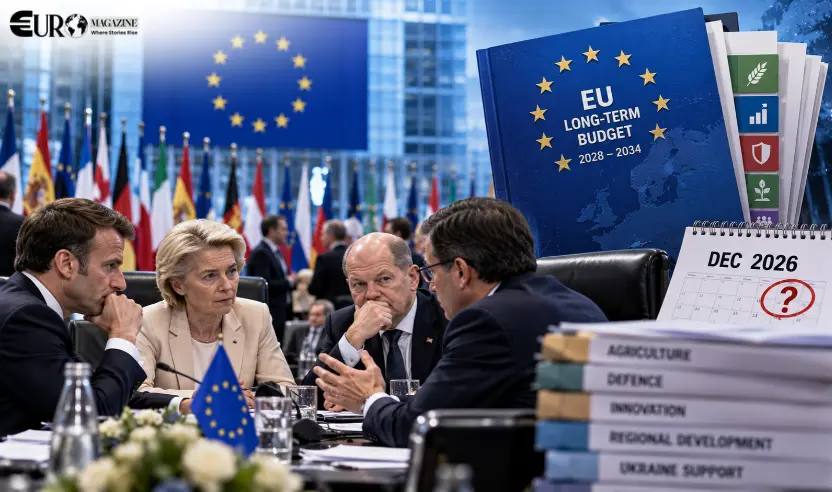
The government’s proposed 2027 budget includes around €54 billion in spending cuts and tax measures aimed at reducing France’s budget deficit. However, unions and protesters argue that further restraint could place additional pressure on households and already stretched public services.
Violent Clashes Spread Across Major Cities
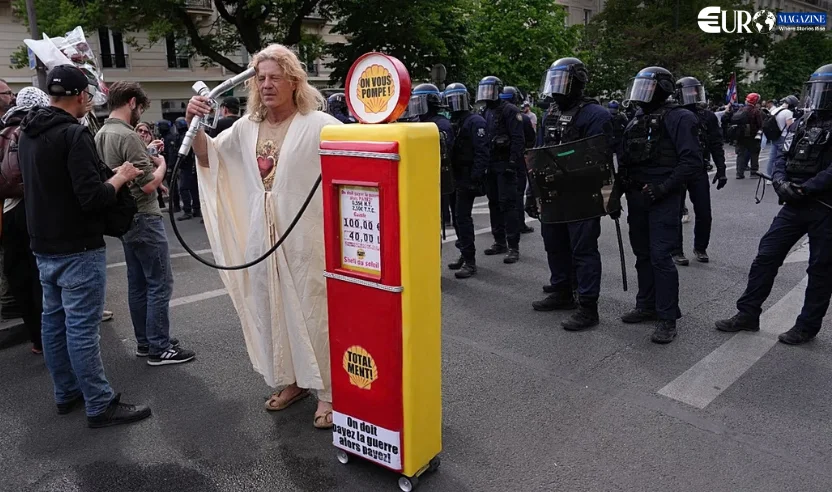
Demonstrations took place in Paris and cities including Marseille, Lyon and Limoges. While many people marched peacefully, some groups clashed with police, looted shops and damaged public buildings.
Limoges’ historic city hall was badly damaged by fire, while incidents of vandalism and attacks on businesses were reported elsewhere. Authorities made thousands of arrests as security forces attempted to control the unrest. President Macron condemned the violence but acknowledged that peaceful protesters had legitimate concerns.
Government Faces Pressure Over Public Finances
The unrest highlights the difficult balance facing France’s government: reducing public debt while responding to public demands for better services and stronger household purchasing power.
France has struggled with persistent budget pressures, and efforts to reduce spending have become a source of political conflict. Public-sector unions have also raised concerns about wage restraint and the resources available to schools and other essential services.
The government has blamed violent groups and criminal elements for attacks during the demonstrations, while union representatives argue that public anger reflects deeper frustration over spending priorities and living conditions.
Political Tensions Could Deepen Ahead of Elections
The unrest has renewed comparisons with France’s Yellow Vest movement, which began in 2018 over fuel taxes and developed into a wider protest against living costs and inequality.
With the next presidential election approaching in 2027, the demonstrations add to an already tense political environment. The government must now manage public anger, restore order and pursue its budget plans without further escalating social tensions.
The coming weeks will be important in determining whether negotiations with unions and protesters can ease the crisis or whether opposition to spending cuts will lead to further demonstrations.
Read more news:-




























Comments
Be the first to share your thoughts.
Leave a comment
Join the conversation. Your email address will not be published.