

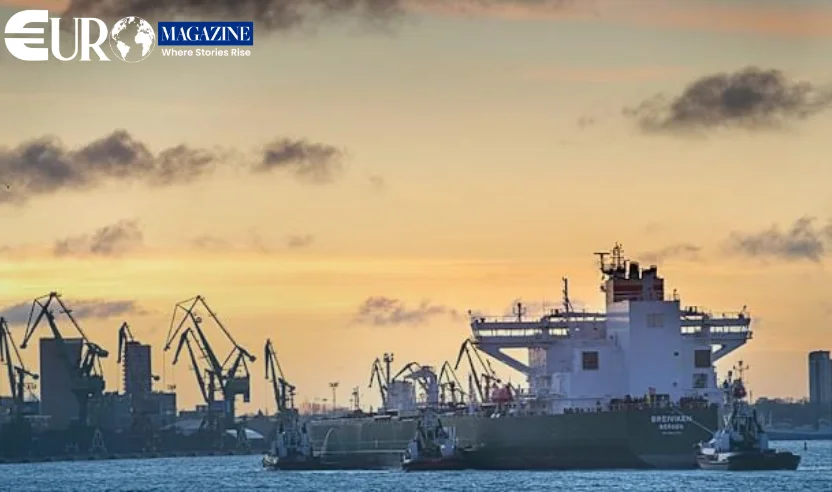
Norway’s crude oil export revenues surged in March, driven by higher global prices following supply disruptions linked to the Iran war and the closure of the Strait of Hormuz, official data showed. Exports of crude oil reached 57.4 billion Norwegian kroner (approximately €5.16 billion) in March, marking a 67.9% increase compared with the same period last year, according to Statistics Norway.
The rise comes as oil prices climbed sharply during the month, with the average price reaching 1,014 kroner per barrel — equivalent to about $107.5 — the highest monthly level recorded since September 2023.
Supply shock lifts prices
Analysts attributed the surge to supply constraints in global markets following the disruption of shipping routes through the Strait of Hormuz, a critical corridor for energy exports.
“The closure of the Strait of Hormuz has caused a significant supply shock in the oil market, contributing to elevated prices and record export values,” analyst Jan Olav Rorhus said in a statement.
The strait typically handles around 20% of global crude oil and liquefied natural gas flows under normal conditions.
Europe’s energy demand boosts exports
Norway, Western Europe’s largest producer of oil and gas excluding Russia, has benefited from increased demand across European markets amid ongoing supply uncertainty.
The spike in export revenues reflects both higher prices and sustained demand as countries seek alternative energy sources during the geopolitical crisis.
Political reaction in the US
The surge in Norway’s oil revenues also drew attention from US President Donald Trump, who commented on Europe’s energy situation in a post on social media.
“Europe is desperate for energy, and yet the United Kingdom refuses to open North Sea oil,” Trump said, adding that Norway is profiting from current market conditions.
Oil wealth underpins economy
Norway’s economy remains closely tied to its oil and gas sector, with revenues from exports contributing significantly to national income.
The country channels much of its energy income into its sovereign wealth fund, the largest in the world, with assets estimated at more than $2 trillion. The fund was established to support long-term economic stability and future public spending.
Market outlook
While export revenues have surged, analysts caution that the gains are closely linked to ongoing geopolitical tensions. Any easing of the Iran conflict or reopening of key shipping routes could reduce price pressures in global markets.






























Comments
Be the first to share your thoughts.
Leave a comment
Join the conversation. Your email address will not be published.