

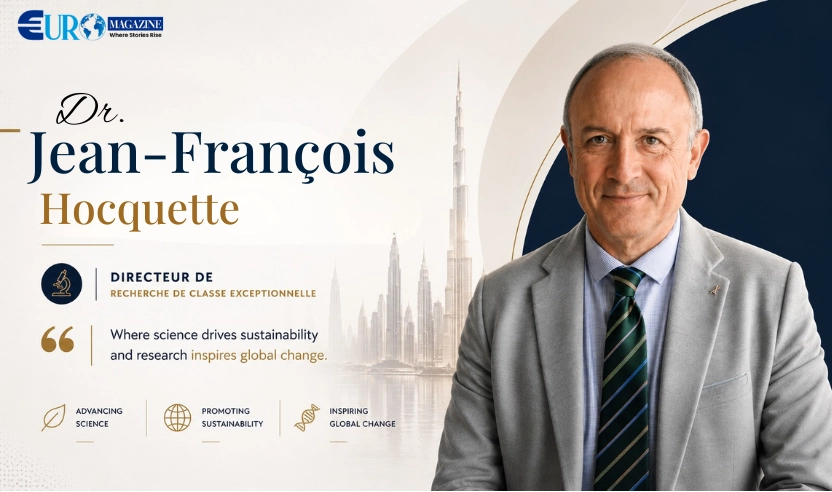
Some leaders build careers within the boundaries of science, while others use science to reshape the future of society itself. Dr. Jean-François Hocquette belongs firmly to the latter. At a time when global food systems are being challenged by climate change, sustainability concerns, ethical debates, and evolving consumer expectations, he has dedicated his life to creating balanced, evidence-based solutions that connect scientific innovation with human values.
From pioneering holistic food quality frameworks to advancing international standards for sustainable meat production, Dr. Hocquette’s journey reflects a rare combination of scientific rigor, visionary thinking, and collaborative leadership. His work goes far beyond laboratories and research papers; it influences global discussions around food sustainability, animal welfare, nutrition, and responsible agricultural transformation. Through decades of research, leadership roles, and international partnerships, he continues to champion a future where food systems are not only efficient, but also ethical, transparent, and socially meaningful.
As “Directeur de Recherche de Classe Exceptionnelle” at INRAE and a globally recognized voice in food science, Dr. Hocquette has consistently challenged oversimplified narratives surrounding livestock, sustainability, and emerging food technologies. Instead of choosing sides in polarized debates, he advocates for thoughtful, data-driven dialogue that respects both scientific facts and societal realities. His holistic approach to food quality and sustainability has earned international recognition and positioned him among the leading contributors shaping the future of responsible food systems.
In this insightful journey feature, readers will discover how Dr. Jean-François Hocquette transformed scientific curiosity into global impact, built influential collaborations across continents, and used research as a tool to bridge industry, policy, and society. His story offers valuable perspectives not only for scientists and researchers, but also for leaders seeking to create sustainable solutions in an increasingly complex world.
A Scientific Journey Rooted in Purpose
For Dr. Jean-François Hocquette, the journey into food science began with a deep curiosity about agriculture and the systems that nourish societies. With an early ambition to become an agricultural engineer, he pursued advanced studies in agronomy, endocrinology, and animal nutrition before joining INRAE, France’s National Research Institute for Agriculture, Food and the Environment. Over the decades, his scientific path evolved into a mission centered on one of the defining challenges of modern society: shaping sustainable and responsible food systems for the future.
Today, as “Directeur de Recherche de Classe Exceptionnelle” at INRAE, he combines scientific rigor with a broader societal perspective, focusing on the intersection of food quality and sustainability. His work reflects a holistic vision of food systems where scientific advancement must also align with human values, ethical considerations, and cultural realities.
Throughout his career, Dr. Hocquette has consistently emphasized that food cannot be reduced to simple nutrient intake or industrial efficiency. Instead, he views food as an essential part of culture, pleasure, health, and social connection. This perspective has shaped his long-standing commitment to building integrated frameworks that reconcile consumer expectations, agricultural sustainability, and scientific innovation.
Building a Holistic Framework for Sustainable Food Systems
One of the defining contributions of Dr. Jean-François Hocquette’s career has been his contribution to the development of the “One Quality” framework with his colleagues, an approach initially focused on eating quality and later expanded through the European INTAQT project. Rather than evaluating food through a single criterion, the framework promotes a multi-dimensional assessment system that considers among others sensory quality, consumer satisfaction, environmental impact, farm efficiency, nutrition, and animal welfare simultaneously.
This vision emerged from his recognition that the future of food systems requires balance rather than polarization. As global populations continue to grow and climate concerns intensify, he believes sustainable food production must remain scientifically grounded while also addressing ethical expectations and consumer trust.
His research has therefore focused on translating complex scientific data into practical tools capable of improving food systems at both industry and policy levels. By integrating different scientific disciplines and encouraging collaborative research, he has worked to establish more comprehensive ways of evaluating sustainability and food quality in real-world contexts.
Leading Research Through Collaboration and Global Partnerships
Dr. Hocquette’s scientific career spans more than three decades at INRAE, where he has held numerous leadership positions across research, international cooperation, and scientific governance. He previously directed the Research Unit on Herbivores, leading initiatives aimed at improving the sustainability of livestock systems while balancing environmental responsibility, economic viability, animal welfare, and product quality.
In addition to his institutional responsibilities, he has cultivated a broad international network of scientific collaborations. His involvement with organizations such as the European Federation of Animal Science, the World Association for Animal Production, and the French Association for Animal Production has allowed him to bridge local expertise with global research initiatives. He currently serves as scientific officer in charge of INRAE international relationships with Oceania and as President of the French Association for Animal Production and remains actively engaged in international scientific partnerships focused on livestock production and sustainable agriculture.
His collaborative philosophy is deeply reflected in his scientific work. Rather than approaching research as an individual pursuit, he consistently promotes multidisciplinary dialogue and collective scientific inquiry. Most of his publications are collaborative efforts that combine perspectives from multiple researchers and scientific disciplines, reinforcing his belief that advancing public interest must always outweigh personal recognition.
Turning Scientific Data into International Standards
A major area of Dr. Hocquette’s work has focused on using data-driven methodologies to improve food quality assessment and consumer confidence. His research contributed significantly to the development of the International Meat Research 3G Foundation’s predictive system for beef eating quality, which compiles interoperable global datasets to establish scientifically validated quality standards.
This international database integrates sensory quality data from multiple countries, including France, Poland, Ireland, New Zealand, South Africa, the United Kingdom, and the United States. The resulting predictive model has attracted attention from meat companies around the world and has become an important reference point for improving consistency and transparency in meat quality evaluation.
The impact of this work extends beyond academia. The 3G prediction system later became recognized as a UNECE standard, strengthening its influence within international trade and food quality assurance systems. In addition, the framework has supported commercial innovations such as France’s premium OR ROUGE beef brand and Poland’s national beef quality initiative, “Polska Wołowina.”
By combining scientific precision with practical implementation, Dr. Hocquette has demonstrated how research can move beyond laboratories to create measurable improvements across industries and markets.
Advocating for Balanced Conversations on Livestock and Sustainability
In an era where discussions around livestock production are often highly polarized, Dr. Jean-François Hocquette advocates for balanced, evidence-based dialogue rooted in scientific integrity. He acknowledges that debates surrounding meat production, environmental sustainability, and alternative proteins have become increasingly emotional and politically charged, often oversimplifying highly complex systems.
Through his publications and public engagement, he has sought to challenge misinformation while promoting nuanced scientific understanding. His recent reviews on livestock sustainability and “cultured meat” emphasize the importance of rigorous lifecycle assessments, transparent methodologies, and fair comparisons between emerging food technologies and traditional agricultural systems.
Rather than advocating for the elimination of livestock farming, he believes the future lies in responsible transformation. Grazing systems, sustainable animal production practices, and holistic agricultural management continue to hold significant environmental, nutritional, and socio-economic value when approached thoughtfully and scientifically.
For Dr. Hocquette, the role of scientists is not to fuel ideological conflict, but to provide objective facts that help societies make informed decisions. He strongly supports constructive debate, provided discussions remain respectful, evidence-based, and open to scientific scrutiny.
Honors Reflecting Scientific Excellence and Global Influence
The international scientific community has consistently recognized Dr. Jean-François Hocquette’s contributions to animal science, food quality research, and sustainable agriculture. Over the course of his career, he has received numerous prestigious honors reflecting both the impact and longevity of his work.
Among his recent recognitions are the Outstanding Scientist Award in Animal Science (2025) and the Agricultural Outstanding Scientist Award (2025). He was also honored with the EAAP Distinguished Service Award (2025), acknowledging his long-standing contributions to international animal science collaboration.
His achievements additionally include multiple Lifetime Achievement Awards from international scientific organizations, as well as honors from the American Society of Animal Science, including the Meats Research Award and the Animal Growth and Development Award.
Further reinforcing his reputation within the scientific community, Dr. Hocquette is a member of the French Academy of Agriculture and the French Meat Academy, institutions recognized for upholding scientific rigor and expert guidance in agricultural and food sciences.
Most recently, he received in 2026 the Distinguished Research Award from the American Meat Science Association. He was also recognized at the SERD Sustainability Awards 2026 under the “People Well-Being” category for contributions aligned with SDG 1, SDG 2, and SDG 3.
Shaping the Future of Food Science Leadership
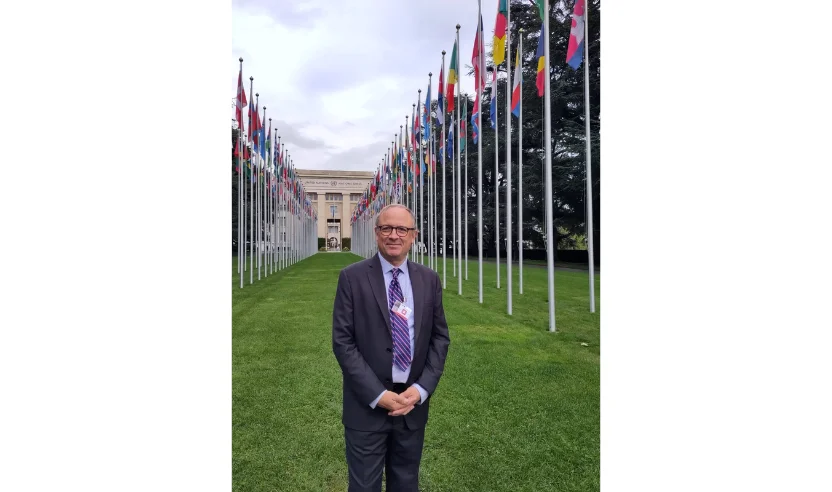
Looking toward the future, Dr. Jean-François Hocquette encourages emerging scientists and industry leaders to adopt a truly interdisciplinary perspective when addressing global food challenges. He believes the future of food innovation depends not only on technological progress, but also on understanding the social, cultural, and ethical dimensions of consumption.
He consistently emphasizes that sustainable food systems cannot be built through isolated scientific silos. Instead, meaningful progress will emerge from collaboration between technology, environmental science, agriculture, economics, and the social sciences.
For the next generation, his message is grounded in calm, constructive leadership. Complex societal challenges should not be approached with fear or division, but with patience, scientific integrity, and a willingness to bridge differing perspectives. Through this philosophy, Dr. Hocquette continues to shape a future where science serves not only innovation, but also humanity and the broader public good.
A Lasting Vision for Responsible Food Systems
Dr. Jean-François Hocquette’s journey stands as a powerful reminder that the future of food cannot be shaped through isolated thinking or short-term solutions. In a world increasingly divided by polarized debates around sustainability, agriculture, and food innovation, he continues to advocate for a more balanced, collaborative, and scientifically grounded approach. His work demonstrates that meaningful progress emerges when research is guided not only by technological advancement, but also by responsibility toward people, animals, culture, and the environment.
Across decades of leadership, research, and international collaboration, Dr. Hocquette has consistently transformed complex scientific challenges into practical frameworks capable of influencing industries, policies, and global conversations. Whether through pioneering holistic food quality systems, advancing international standards, or encouraging evidence-based dialogue around livestock and sustainability, his contributions continue to leave a lasting impact on the global food ecosystem.
What makes his journey especially compelling is the philosophy that drives it. Rather than approaching science as a pursuit of individual recognition, he views it as a collective responsibility dedicated to serving society. His commitment to collaboration, intellectual integrity, and interdisciplinary thinking has enabled him to bridge the gap between scientific innovation and real-world implementation in ways that benefit both industry and humanity.
As the world navigates the future of sustainable food systems, Dr. Jean-François Hocquette’s work offers an important blueprint for the next generation of researchers, policymakers, and industry leaders. His story is not only one of scientific excellence, but also of thoughtful leadership rooted in dialogue, balance, and long-term vision. Through his continued efforts, he reminds us that the future of food must ultimately be built on knowledge, cooperation, and a deep understanding of the human experience behind every system we create.
- LinkedIn - Dr. Jean-François Hocquette
Read More Articles:-















Comments
Be the first to share your thoughts.
Leave a comment
Join the conversation. Your email address will not be published.