

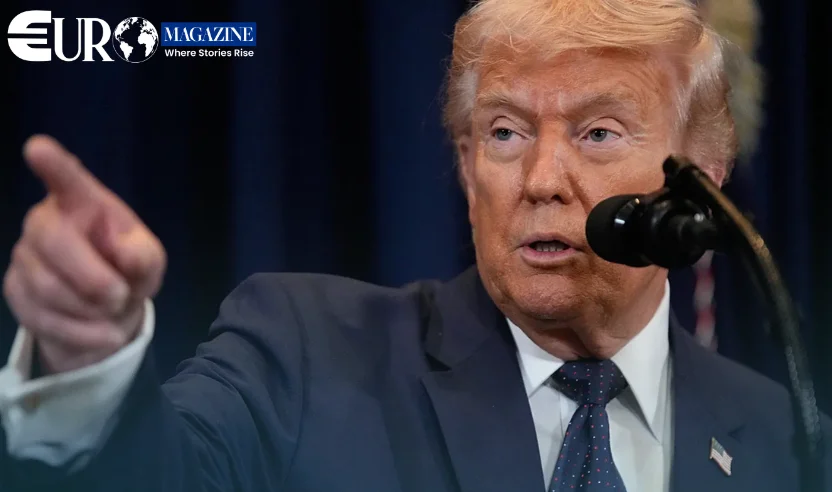
Global oil prices declined sharply after US President Donald Trump stated that ongoing negotiations with Iran were moving forward in a “constructive manner,” raising hopes that tensions surrounding the Strait of Hormuz could ease in the coming weeks.
Crude oil futures fell by more than five percent during early trading after the comments, with investors responding positively to the possibility of improved stability in one of the world’s most critical energy corridors. West Texas Intermediate crude dropped to nearly $91 per barrel, while Brent crude also recorded significant losses, trading below $99 per barrel.
The decline follows weeks of heightened volatility in global energy markets caused by escalating tensions between the United States, Israel, and Iran. Oil prices had surged sharply earlier this year after conflict in the region disrupted shipping activity and raised concerns over global supply shortages.
In a social media statement, President Trump said discussions with Iran were progressing in an “orderly and constructive manner,” while also indicating that the United States would not rush into a final agreement. The remarks strengthened market expectations that diplomatic efforts may eventually lead to the reopening of the Strait of Hormuz, a vital maritime route responsible for transporting a substantial share of the world’s oil supply.
The Strait of Hormuz has remained under severe pressure since Iran imposed restrictions on shipping traffic earlier this year following military escalations in the region. The disruption significantly reduced Middle Eastern oil exports and contributed to one of the largest energy supply shocks in recent years.
Although market sentiment improved after Trump’s latest comments, analysts remain cautious. Investors have previously reacted positively to diplomatic signals, only for geopolitical tensions to intensify again shortly afterward. The uncertainty has continued to create strong swings in energy prices and broader financial markets.
Despite the recent pullback, oil prices remain considerably higher than levels seen before the conflict escalated. Industry experts note that energy markets are likely to remain highly sensitive to developments involving Iran, the United States, and regional security conditions in the Gulf.
The latest decline in crude prices also provided relief to global equity markets, particularly in Asia, where many economies rely heavily on imported energy. Lower oil costs are generally viewed as positive for inflation control, manufacturing activity, and consumer spending.
At the same time, the United States confirmed that its blockade on Iranian ports and vessels would remain active until a formal agreement is fully negotiated and signed. This indicates that while diplomatic progress may be underway, major geopolitical and economic risks still remain unresolved.
Financial analysts believe the coming weeks will be critical for both energy markets and global investors as negotiations continue. Any concrete agreement regarding shipping access through the Strait of Hormuz could significantly reshape oil supply expectations and global economic sentiment moving forward.




























Comments
Be the first to share your thoughts.
Leave a comment
Join the conversation. Your email address will not be published.