

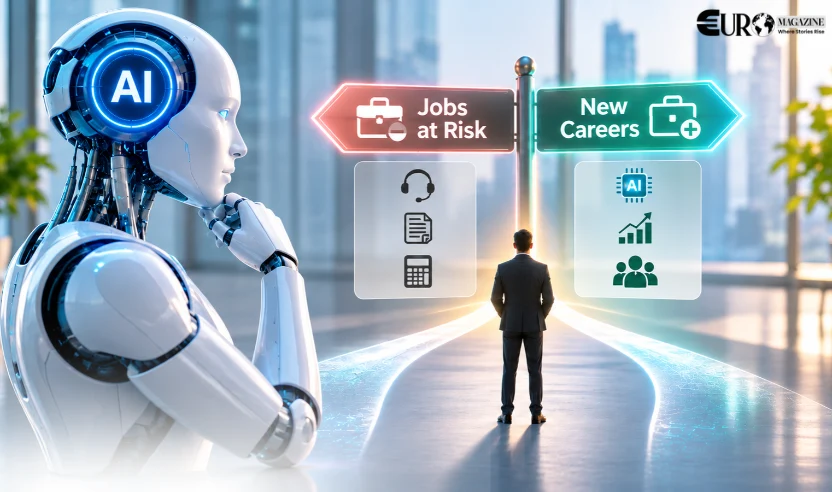
Artificial intelligence is changing the way people work across industries. From finance and healthcare to marketing, education, manufacturing, and customer service, AI is increasingly being used to automate tasks, analyze information, and improve productivity.
This rapid development has raised an important question: Will AI replace human jobs, or will it create new career opportunities?
The reality is that both outcomes are possible. Some repetitive roles may decline as automation improves, while new professions and areas of employment will emerge. Many existing jobs will also change, requiring employees to develop new skills and learn how to work alongside AI.
The future of employment will depend not only on what technology can do but also on how people and businesses adapt to it.
AI Is More Likely to Replace Tasks Than Entire Jobs
Most professions involve a combination of responsibilities. Some tasks are repetitive and predictable, while others require experience, creativity, communication, and professional judgment.
For example, AI can help accountants process invoices, organize financial records, and prepare reports. However, interpreting financial information, advising clients, and evaluating business risks still require professional expertise.
Similarly, marketers can use AI to generate content ideas and campaign drafts, but understanding customer behaviour, brand positioning, and audience expectations requires human input.
This suggests that AI is more likely to transform individual job responsibilities than eliminate every profession completely.
Which Jobs Are Most Vulnerable to AI?
Jobs involving repetitive, standardized, and predictable tasks are generally more exposed to automation.
Some areas experiencing increasing automation include:
- Data entry: AI can extract information from documents, invoices, and forms with limited manual involvement.
- Administrative work: Scheduling, preparing basic reports, organizing files, and writing routine emails can increasingly be automated.
- Basic customer support: AI chat systems can handle common questions, order updates, and simple troubleshooting.
- Routine content production: AI can generate product descriptions, basic social media captions, and standard content drafts.
- Basic bookkeeping: Transaction categorization, invoice processing, and routine financial reporting can be supported by automated systems.
However, this does not mean every job in these fields will disappear. Many professionals may move towards more complex responsibilities that require problem-solving, communication, and decision-making.
Why AI Cannot Easily Replace Every Profession
Although AI can process information quickly, it has limitations when work involves human relationships, unpredictable situations, and responsibility.
Several capabilities remain particularly important:
- Human judgment: Professionals must evaluate situations, consider risks, and make decisions when there is no straightforward answer.
- Trust and relationships: Doctors, lawyers, consultants, teachers, and financial advisors often depend on long-term relationships with the people they serve.
- Emotional intelligence: Understanding people's feelings, managing disagreements, and responding sensitively are essential in many professions.
- Creativity and context: AI can generate ideas, but humans provide cultural understanding, personal experience, and strategic direction.
- Physical adaptability: Electricians, nurses, mechanics, plumbers, and construction workers often deal with unpredictable real-world situations that require practical problem-solving.
AI can support these professionals, but replacing every aspect of their work remains difficult.
AI Is Creating New Career Opportunities
The growth of artificial intelligence is also creating demand for professionals who can develop, manage, implement, and evaluate AI systems.
Some emerging career areas include:
- AI and machine learning engineering
- Data science and data engineering
- Cybersecurity
- AI product management
- AI governance and compliance
- Automation consulting
- Robotics
- AI implementation and workflow design
These opportunities are not limited to technology companies. Banks need professionals who understand AI and finance, healthcare organisations need people who can connect medical knowledge with intelligent systems, and marketing teams need specialists who can combine automation with customer understanding.
Professionals who combine AI knowledge with experience in their existing industries may gain a competitive advantage.
The Rise of AI-Enabled Professionals
The future workforce is unlikely to be divided simply between people who use AI and those who do not. Instead, AI may become a regular part of everyday professional responsibilities.
A designer can use AI to develop initial concepts, a financial analyst can process complex datasets more efficiently, and a teacher can prepare learning materials for different student needs.
In these situations, AI supports the professional rather than replacing their entire role.
This also creates a new workplace challenge. Employees who know how to use AI effectively may become more productive than those who continue performing every task manually.
The ability to combine technology with human expertise could become an important factor in career growth.
Could AI Reduce Entry-Level Job Opportunities?
Entry-level positions may experience significant changes as AI takes over some basic responsibilities.
Traditionally, junior employees gained experience through tasks such as research, data preparation, document review, basic reporting, and routine administrative work. These responsibilities helped them understand their industries and gradually develop professional skills.
AI can now assist with many of these activities, which may reduce demand for certain junior tasks.
However, entry-level careers are unlikely to become irrelevant. Instead, companies may need to provide more practical training, mentorship, supervised projects, and opportunities for young professionals to develop decision-making skills.
The challenge will be ensuring that employees can still gain the experience needed to progress into senior positions.
Human Skills Will Become More Valuable
As AI handles more repetitive and technical responsibilities, human capabilities may become increasingly important.
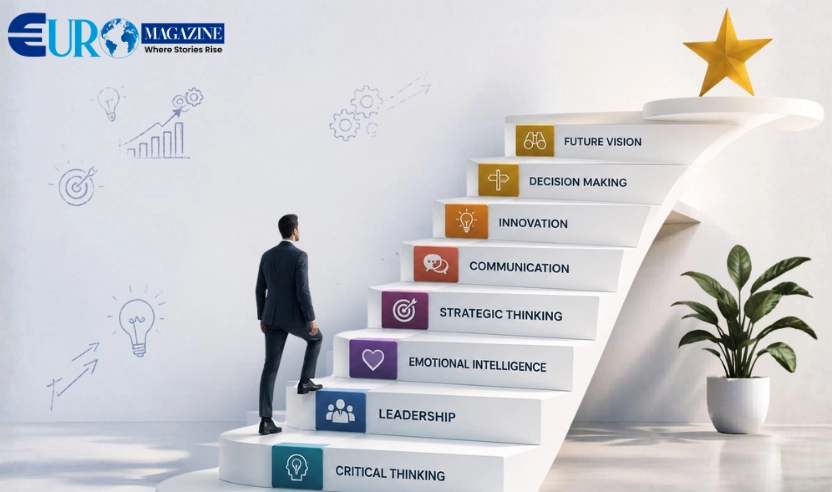
Professionals should focus on developing skills such as:
- Critical thinking: Evaluating information and identifying inaccurate or incomplete AI-generated results.
- Communication: Explaining ideas clearly, managing conversations, and working with different stakeholders.
- Leadership: Providing direction, building trust, and managing teams through uncertainty.
- Creativity: Developing original ideas and understanding what audiences and customers actually need.
- Adaptability: Learning new tools and adjusting to changing workplace requirements.
- Industry expertise: Applying practical knowledge and experience to situations where AI-generated information needs human interpretation.
These skills can help employees remain valuable in workplaces where technology is becoming more advanced.
What Should Employees Do to Prepare for an AI-Driven Future?
Employees do not necessarily need to change careers or become AI engineers to remain relevant. A practical approach is to understand how AI affects their current profession and identify ways to use it effectively.
Start by recognizing which responsibilities can be automated and which require human judgment. Learn relevant AI tools and use the time saved to strengthen skills that create greater professional value.
Employees should also invest in continuous learning, industry knowledge, problem-solving, communication, and professional relationships.
The goal should not be to compete with AI at tasks it performs efficiently. Instead, professionals should learn how to use technology to improve their work and deliver better results.
The Future of Work Will Be Human and AI Together
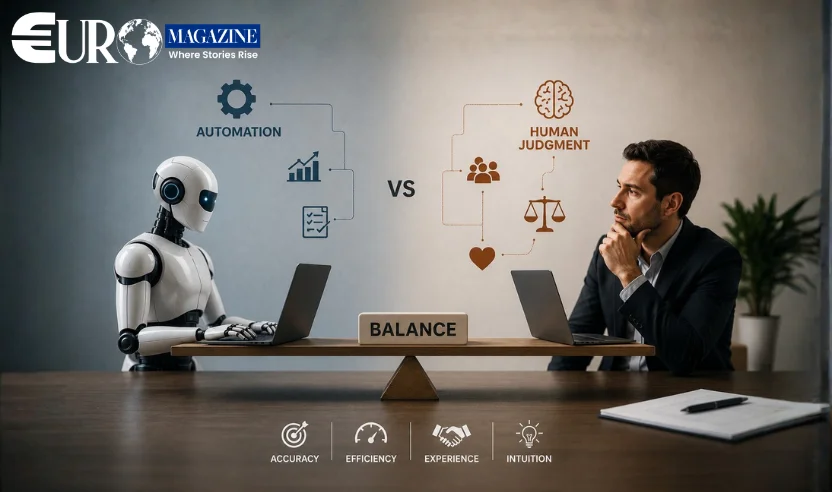
Artificial intelligence is likely to reshape employment rather than bring an end to human work. Technology can process information, automate workflows, identify patterns, and support routine decisions. Humans remain important for leadership, accountability, creativity, relationships, and professional judgment.
Organisations that combine these strengths may become more productive and competitive. Employees who understand their industries and know how to use AI effectively may also find new opportunities for growth.
Final Thoughts: Will AI Replace Jobs or Create New Careers?
Artificial intelligence will do both. Some repetitive roles will face pressure, existing professions will change, and new career opportunities will continue to emerge.
The most important shift will be the changing nature of valuable work. Employees who rely only on predictable tasks may face greater competition from automation. Those who combine industry expertise, critical thinking, creativity, communication, and AI knowledge may be better prepared for the future.
Instead of asking only, "Will AI replace my job?", professionals should consider a more useful question:
"How can I use AI to become more capable, productive, and valuable in my profession?"
The ability to adapt and work alongside technology will play an important role in shaping the next generation of careers.
Frequently Asked Questions
Can AI completely replace human workers?
AI can automate certain repetitive tasks, but many professions still require human judgment, communication, creativity, trust, and accountability.
Which jobs are most vulnerable to AI?
Jobs involving repetitive data processing, routine administration, basic customer support, bookkeeping, and standardized content production are more exposed to automation.
Will AI create new careers?
Yes. AI is creating opportunities in areas such as machine learning, cybersecurity, data science, automation, robotics, AI governance, and product management.
Will AI reduce entry-level jobs?
Some traditional junior responsibilities may be automated. However, companies may create new ways for young professionals to gain experience through mentorship, practical projects, and supervised learning.
What skills will remain valuable in an AI-driven workplace?
Critical thinking, communication, creativity, leadership, adaptability, emotional intelligence, and industry expertise are likely to remain important.
Should employees learn how to use AI?
Yes. Understanding relevant AI tools and how they affect a profession can help employees improve productivity, adapt to workplace changes, and identify new career opportunities.
You can also read:-































Comments
Be the first to share your thoughts.
Leave a comment
Join the conversation. Your email address will not be published.