

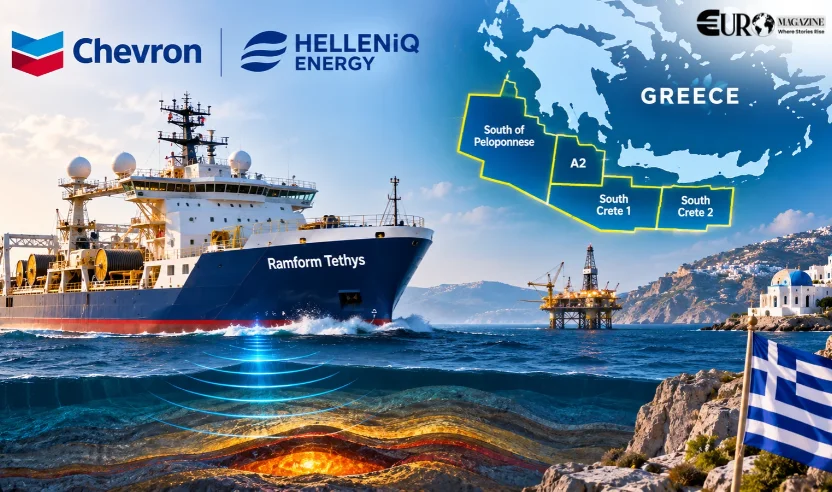
US energy giant Chevron and its Greek partner HELLENiQ ENERGY are preparing to begin offshore oil and gas exploration surveys in Greek waters, marking a significant step in the country's efforts to identify domestic energy resources.
The seismic surveys are expected to begin on November 20, 2026, in offshore areas south of the Peloponnese peninsula. The programme will collect geological data to assess the potential presence of commercially recoverable oil and natural gas deposits.
According to Greece's Environment and Energy Minister Stavros Papastavrou, the survey vessel Ramform Tethys has arrived in the region, with the initial operations expected to continue until January 31, 2027.
Four Offshore Exploration Blocks
Chevron and HELLENiQ ENERGY secured exploration rights for four offshore blocks: South Crete 1, South Crete 2, South of Peloponnese and Block A2. Together, the areas cover approximately 47,000 square kilometres.
Under the agreement, Chevron holds a 70% operating interest, while HELLENiQ ENERGY owns the remaining 30%.
The initial phase involves seismic surveys, which use sound waves to map underground geological structures. The findings will help the consortium identify promising locations for potential future drilling.
Greece Seeks to Reduce Energy Dependence
Greece currently relies heavily on imported natural gas to meet domestic energy demand. Discovering commercially viable offshore reserves could strengthen its energy security and reduce dependence on foreign suppliers.
The government also hopes that domestic gas production could help position Greece as an important energy supplier to other European countries, particularly as the European Union works to reduce its reliance on Russian energy.
Drilling Decisions Will Depend on Survey Results
The seismic programme does not guarantee that commercially recoverable oil or gas reserves exist in the exploration areas. The collected data must first be analysed before the companies can decide whether further exploration and drilling are economically viable.
The broader exploration programme includes additional surveys south of Crete, expected during 2027. Any potential discoveries will require further technical assessment, investment and regulatory approvals before production can begin.
The project represents a major expansion of Greece's offshore exploration activities and could influence the country's long-term position in the eastern Mediterranean energy market.
Read more news:-






























Comments
Be the first to share your thoughts.
Leave a comment
Join the conversation. Your email address will not be published.