

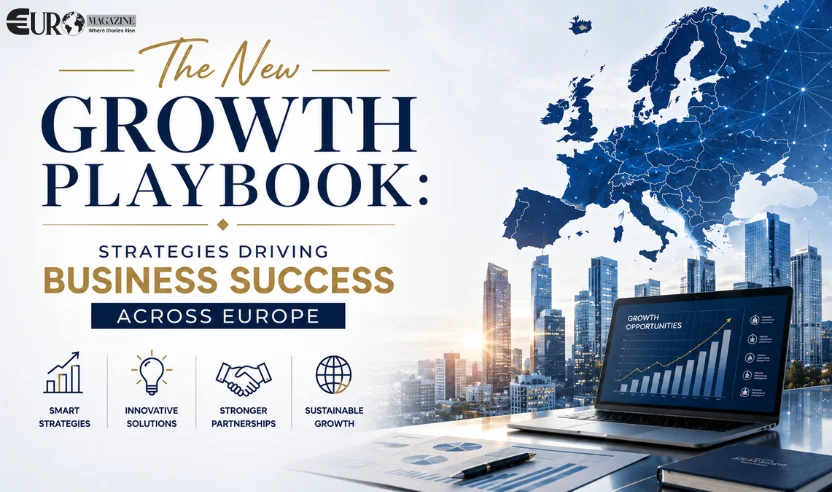
Growth has always been a defining objective for businesses, but the path to achieving it has changed dramatically. Across Europe, organizations are operating in an environment where traditional growth models are being challenged by economic uncertainty, technological disruption, evolving consumer expectations, workforce transformation, and increasing pressure to operate sustainably. In this new reality, success is no longer determined solely by scale, market share, or financial performance. Instead, it is increasingly shaped by an organization's ability to adapt, innovate, and create long-term value.
The businesses leading Europe into the future are not simply responding to change—they are building strategies around it. They understand that growth in today's environment requires more than ambitious targets and aggressive expansion plans. It requires resilience, agility, strategic leadership, and a willingness to rethink established ways of operating.
From multinational corporations and family-owned enterprises to high-growth startups and mid-sized innovators, companies across Europe are rewriting the rules of business success. Their experiences offer valuable lessons for leaders seeking to navigate an increasingly complex and competitive marketplace.
Why Traditional Growth Models Are No Longer Enough
For decades, many businesses relied on relatively predictable growth drivers. Expanding into new markets, increasing production capacity, acquiring competitors, and reducing operational costs were often enough to strengthen market position and improve profitability.
However, today's business environment is significantly different. Economic fluctuations, shifting geopolitical dynamics, digital disruption, changing consumer behavior, and rapid technological advancements have created a landscape where certainty is increasingly difficult to achieve.
Organizations can no longer rely solely on past formulas for success. The speed at which industries are evolving means that competitive advantages can disappear quickly if businesses fail to adapt. Market leaders are increasingly recognizing that growth is not a destination but an ongoing process of evolution.
As a result, a new growth playbook is emerging—one built on flexibility, innovation, customer-centricity, and long-term strategic thinking.
Strategy One: Building Agility Into the Core of the Business
One of the most significant characteristics of successful European companies is their ability to adapt quickly. Agility has evolved from a management buzzword into a critical business capability.
Organizations that respond effectively to market changes are often better positioned to capitalize on opportunities while minimizing risks. Rather than relying on rigid structures and lengthy decision-making processes, leading companies are empowering teams, streamlining operations, and encouraging faster responses to changing circumstances.
This shift is influencing every aspect of business operations. Product development cycles are becoming shorter. Decision-making is becoming more data-driven. Organizational structures are becoming more flexible. Businesses are prioritizing responsiveness over bureaucracy.
Agility is particularly valuable in industries where customer expectations and competitive dynamics evolve rapidly. Companies that can identify trends early and adjust accordingly often gain a meaningful advantage over slower-moving competitors.
Strategy Two: Leveraging Technology as a Growth Enabler
Technology continues to be one of the most powerful drivers of business transformation across Europe. However, the most successful organizations view technology not as an end goal but as a tool for creating value.
Digital transformation initiatives are helping companies improve operational efficiency, strengthen customer relationships, enhance decision-making, and identify new revenue opportunities. Artificial intelligence, automation, cloud computing, advanced analytics, and digital platforms are becoming integral components of modern business strategies.
Organizations are increasingly using technology to simplify processes, reduce operational friction, and improve productivity. At the same time, digital tools are enabling businesses to deliver more personalized and responsive customer experiences.
The most effective technology investments are those that align with broader business objectives. Rather than adopting new tools simply because they are available, successful companies focus on technologies that solve meaningful problems and support long-term growth ambitions.
Strategy Three: Putting the Customer at the Center of Decision-Making
One of the defining characteristics of modern business success is a deep understanding of customer needs. In an increasingly competitive marketplace, companies that consistently deliver exceptional customer experiences are often able to differentiate themselves from competitors.
Today's customers expect convenience, transparency, personalization, and responsiveness. Whether purchasing products, accessing services, or interacting with brands online, consumers have more choices than ever before.
European businesses are responding by investing in customer insights, improving service delivery, and creating more personalized experiences across every stage of the customer journey. Data analytics and digital platforms are helping organizations better understand customer behavior, preferences, and expectations.
Companies that prioritize customer value are often rewarded with stronger loyalty, higher retention rates, and sustainable long-term growth.
Strategy Four: Investing in People as a Competitive Advantage
While technology continues to transform industries, people remain at the heart of organizational success. Europe's leading businesses recognize that talent is one of the most valuable assets they possess.
Workforce expectations have changed considerably in recent years. Employees increasingly seek flexibility, professional development opportunities, meaningful work, and supportive workplace cultures. Organizations that fail to address these expectations may struggle to attract and retain top talent.
Forward-thinking companies are investing in leadership development, employee well-being, skills training, and continuous learning initiatives. Rather than viewing workforce development as a cost, they see it as a strategic investment in future performance.
Businesses that create environments where employees can grow, innovate, and contribute meaningfully often benefit from stronger engagement, higher productivity, and improved organizational resilience.
Strategy Five: Embedding Sustainability Into Business Strategy
Sustainability is no longer a peripheral consideration for European businesses. It has become an increasingly important factor influencing investment decisions, consumer behavior, regulatory requirements, and corporate reputation.
Organizations across Europe are integrating sustainability into their core strategies. This includes reducing environmental impact, improving resource efficiency, strengthening supply chain transparency, and developing more sustainable products and services.
Importantly, sustainability is not simply about compliance. Many businesses are discovering that responsible practices can drive innovation, reduce costs, attract customers, and create new growth opportunities.
Companies that successfully align commercial objectives with environmental and social responsibility are often better positioned to build trust and maintain long-term competitiveness.
The Key Elements of Europe's New Growth Playbook
While growth strategies vary across industries, several themes consistently emerge among high-performing organizations:
-
Agility and adaptability in decision-making
-
Strategic use of technology and digital innovation
-
Strong focus on customer experience
-
Investment in workforce development
-
Commitment to sustainability and responsible growth
-
Data-driven decision-making
-
Operational resilience and risk management
-
Continuous innovation and improvement
-
Long-term strategic planning
-
Strong leadership and organizational culture
These elements are becoming essential components of modern business success.
Why Innovation Remains a Critical Growth Driver
Innovation has always played an important role in economic progress, but its importance is growing in an increasingly competitive environment. Companies that continuously innovate are often better equipped to respond to changing customer needs and emerging market opportunities.
Innovation is not limited to product development. It also includes business models, operational processes, customer experiences, and organizational practices. Many of Europe's most successful companies are fostering cultures that encourage experimentation, creativity, and calculated risk-taking.
Rather than waiting for disruption to occur, these organizations actively seek opportunities to reinvent themselves and create new sources of value.
The ability to innovate consistently is becoming one of the most important differentiators between companies that lead industries and those that struggle to keep pace.
Leadership's Role in Driving Sustainable Growth
No growth strategy can succeed without effective leadership. In today's business environment, leaders are expected to navigate uncertainty, inspire teams, manage transformation, and maintain a clear strategic vision.
Successful executives understand that growth requires balancing short-term performance with long-term priorities. They focus on building resilient organizations capable of adapting to change while remaining committed to their core purpose and values.
Leadership also plays a critical role in shaping organizational culture. Businesses that foster collaboration, accountability, innovation, and continuous learning are often better positioned to achieve sustainable success.
As the pace of change continues to accelerate, strong leadership will remain one of the most important drivers of business performance.
Looking Ahead
The future of business growth in Europe will not be defined by a single strategy or trend. Instead, it will be shaped by an organization's ability to combine innovation, agility, customer focus, workforce development, sustainability, and strategic leadership into a cohesive approach.
The companies thriving today are those that recognize growth is no longer simply about expanding operations or increasing revenue. It is about building organizations that can adapt, evolve, and create lasting value in an increasingly complex world.
Europe's leading businesses are demonstrating that success belongs to those willing to challenge assumptions, embrace change, and continuously reinvent themselves. Their experiences offer a blueprint for the next generation of business growth—one built not on short-term gains, but on resilience, innovation, and sustainable long-term success.
For organizations looking to strengthen their competitive position in the years ahead, the message is clear: the new growth playbook is already being written, and the most successful companies are those actively shaping its future.
You can also read:-













Comments
Be the first to share your thoughts.
Leave a comment
Join the conversation. Your email address will not be published.