

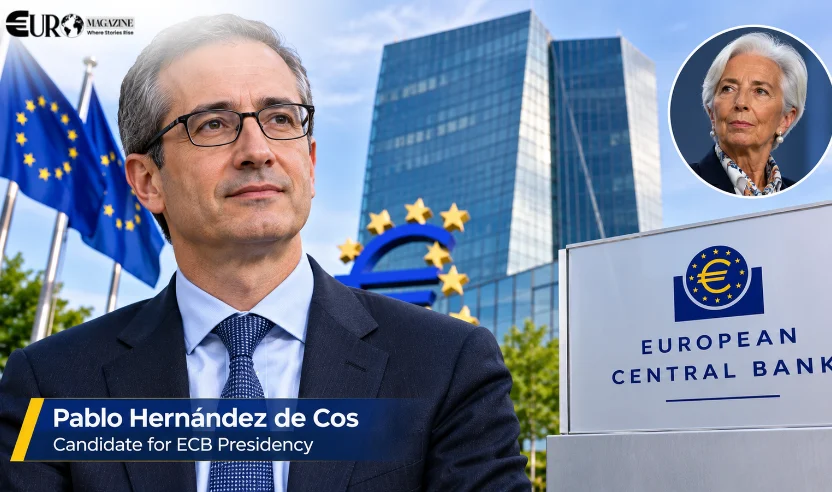
France and Germany are moving closer to an agreement to support Spain's Pablo Hernández de Cos as the next president of the European Central Bank (ECB), as European Union leaders work to finalise a major reshuffle of the institution's leadership.
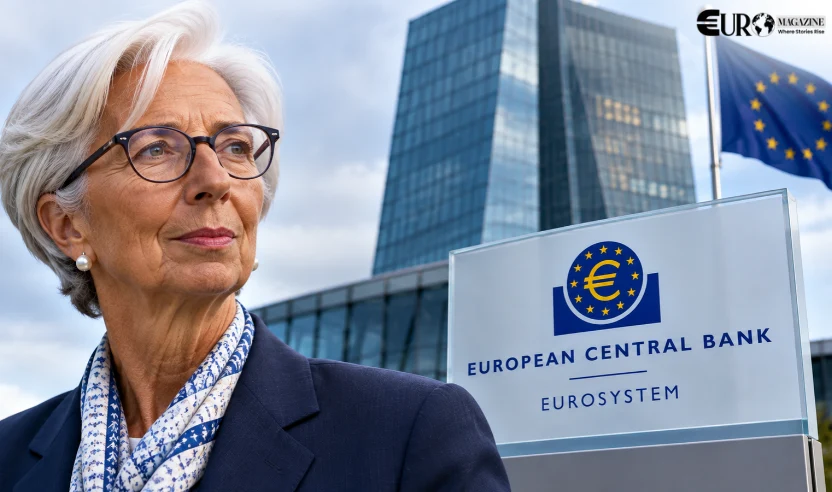
The discussions follow Christine Lagarde's announcement that she will leave the ECB presidency on February 7, 2027, before completing her eight-year term. Two candidates have been officially put forward to succeed her: Hernández de Cos, former governor of the Bank of Spain, and Klaas Knot, former head of the Dutch central bank.
France and Germany Negotiate Key Positions
According to reports, French President Emmanuel Macron and German Chancellor Friedrich Merz are negotiating an arrangement that could give Hernández de Cos the presidency.
Under the proposed agreement, Germany could secure the ECB's chief economist position, while France may receive the market operations portfolio currently held by Germany's Isabel Schnabel. The discussions also involve selecting candidates for other senior vacancies on the ECB's six-member Executive Board.
However, the agreement has not been finalised. Merz said discussions were progressing but indicated that he needed additional time to consult his coalition partners.
Two Candidates Compete for ECB Presidency
Hernández de Cos served as governor of the Bank of Spain from 2018 to 2024 and currently leads the Bank for International Settlements (BIS) as its general manager. He is recognised for his experience in monetary policy, financial regulation and international banking.
His rival, Klaas Knot, previously governed the Dutch central bank and has extensive experience in European monetary policymaking.
The Eurogroup confirmed both nominations, while European Council President António Costa is preparing consultations with the European Parliament and the ECB's Governing Council.
Final Decision Expected Through EU Process
European leaders aim to complete the appointments by the end of 2026. The selection process requires a recommendation from eurozone finance ministers, consultation with the European Parliament and the ECB, followed by a final appointment by EU leaders.
The leadership changes come at an important time for the eurozone, as the ECB continues to address inflation, economic growth and financial stability. The outcome will influence the institution's monetary policy leadership for the coming years.
Read more news:-


























Comments
Be the first to share your thoughts.
Leave a comment
Join the conversation. Your email address will not be published.