


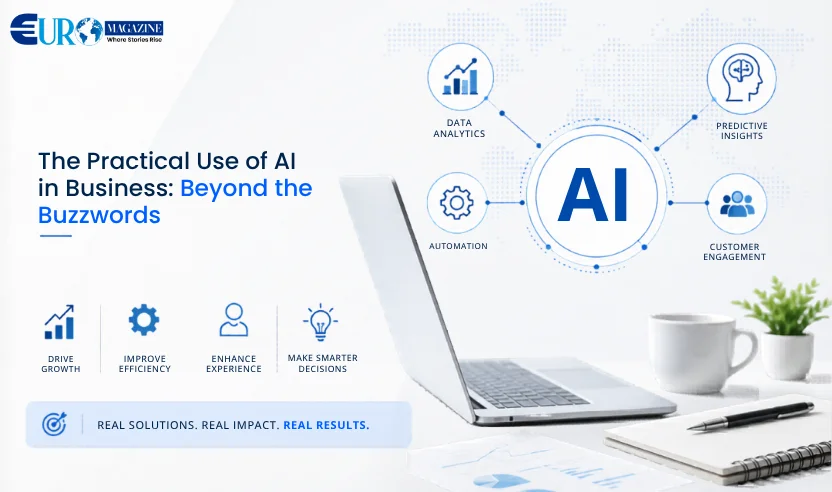
Artificial intelligence has become one of the most discussed topics in modern business. Over the past few years, headlines have alternated between predictions of unprecedented economic transformation and warnings about disruption across industries. Amid the excitement, however, a more important question has emerged for business leaders: beyond the hype, how is artificial intelligence actually being used to create value?
Across Europe, the answer is becoming increasingly clear. While public conversations often focus on futuristic possibilities, many organizations are quietly integrating AI into everyday operations to solve practical business challenges. Rather than viewing artificial intelligence as a standalone technology initiative, companies are using it as a tool to improve productivity, streamline workflows, enhance customer experiences, and support better decision-making.
From manufacturing plants in Germany and logistics networks in the Netherlands to financial institutions in France and retail businesses across the continent, AI is gradually becoming embedded within core business functions. The organizations seeing the greatest benefits are not necessarily those making the biggest investments. Instead, they are the companies approaching AI with clear objectives, realistic expectations, and a focus on measurable outcomes.
As Europe continues its digital transformation journey, artificial intelligence is moving from experimental projects to a practical business capability. Understanding how leading companies are using it today offers valuable insights into where the future of business is headed.
The Shift From Curiosity to Business Application
Only a few years ago, many organizations viewed artificial intelligence as an emerging technology with uncertain practical value. While there was significant interest in its potential, adoption was often limited to pilot programs or experimental initiatives.
That situation has changed considerably. Business leaders are no longer asking whether AI will influence their industries. They are asking where it can create the greatest impact and how quickly it can be implemented.
The shift has been driven by several factors. Advances in computing power, improved accessibility of AI tools, growing volumes of business data, and increased competitive pressure have made artificial intelligence more practical and affordable than ever before.
As a result, companies are increasingly focusing on specific use cases rather than broad technological ambitions. Instead of attempting large-scale transformations overnight, many organizations are identifying areas where AI can solve existing problems and deliver immediate value.
This pragmatic approach is helping businesses achieve results while reducing the risks often associated with major technology initiatives.
Improving Operational Efficiency Through Automation
One of the most common applications of artificial intelligence across Europe involves improving operational efficiency. Organizations are using AI-powered systems to automate repetitive processes, reduce administrative workloads, and improve overall productivity.
In many businesses, employees spend significant amounts of time on routine tasks such as data entry, document processing, scheduling, reporting, and information management. AI technologies are increasingly being used to handle these activities more efficiently, allowing employees to focus on work that requires human judgment, creativity, and strategic thinking.
The benefits extend beyond time savings. Automation can also reduce errors, improve consistency, and accelerate workflows across departments. For businesses operating in competitive markets, even modest improvements in efficiency can generate meaningful advantages.
Companies that successfully automate routine processes often find that they can serve customers more effectively, respond faster to market changes, and allocate resources more strategically.
Enhancing Decision-Making With Data-Driven Insights
Modern businesses generate enormous amounts of data every day. Customer interactions, sales transactions, supply chain activities, financial records, and operational metrics all contribute to a growing volume of information.
The challenge for many organizations is not collecting data but extracting meaningful insights from it.
Artificial intelligence is helping businesses address this challenge by analyzing large datasets more quickly and accurately than traditional methods. Advanced algorithms can identify patterns, trends, and opportunities that might otherwise remain hidden.
Executives are increasingly using AI-powered analytics to support decisions related to inventory management, customer behavior, pricing strategies, financial forecasting, and resource allocation.
By transforming raw information into actionable intelligence, AI is helping organizations make more informed decisions and respond more effectively to changing market conditions.
This capability is becoming particularly valuable in industries where speed and accuracy can significantly influence business performance.
How AI Is Transforming Customer Experience
Customer expectations continue to evolve, and businesses are under constant pressure to deliver faster, more personalized, and more responsive experiences.
Artificial intelligence is playing an increasingly important role in helping organizations meet these expectations. Companies are using AI to analyze customer preferences, predict purchasing behavior, personalize recommendations, and improve service interactions.
Many businesses have implemented intelligent chat systems capable of handling routine customer inquiries around the clock. These systems allow customer support teams to focus on more complex issues while ensuring that customers receive timely assistance.
Retailers are using AI to recommend products based on browsing behavior and purchasing history. Financial institutions are leveraging predictive analytics to better understand customer needs. Service providers are improving response times through automated support systems.
The objective is not simply to reduce costs but to create more meaningful and efficient customer interactions. Businesses that successfully combine technology with human expertise are often able to strengthen customer satisfaction and loyalty.
AI in Manufacturing and Supply Chain Management
Manufacturing remains one of Europe's most important economic sectors, and artificial intelligence is increasingly influencing how production facilities operate.
Manufacturers are using AI-powered systems to monitor equipment performance, identify maintenance requirements before failures occur, and optimize production schedules. Predictive maintenance alone can significantly reduce downtime while improving operational reliability.
Supply chain management is another area experiencing substantial transformation. Businesses are using artificial intelligence to forecast demand, optimize inventory levels, improve logistics planning, and identify potential disruptions before they affect operations.
These capabilities are helping organizations become more agile and resilient in an environment where supply chain stability remains a critical concern.
The ability to anticipate challenges and respond proactively is becoming a significant competitive advantage.
The Areas Where European Businesses Are Seeing the Greatest Impact
While AI applications vary by industry, several areas consistently deliver measurable business value:
-
Process automation and workflow optimization
-
Customer service enhancement
-
Predictive analytics and forecasting
-
Supply chain and logistics management
-
Fraud detection and risk assessment
-
Marketing personalization
-
Inventory and demand planning
-
Financial analysis and reporting
-
Cybersecurity monitoring
-
Employee productivity support
Organizations focusing on these practical applications often achieve faster returns on investment than those pursuing more ambitious but less clearly defined initiatives.
Why Human Expertise Still Matters
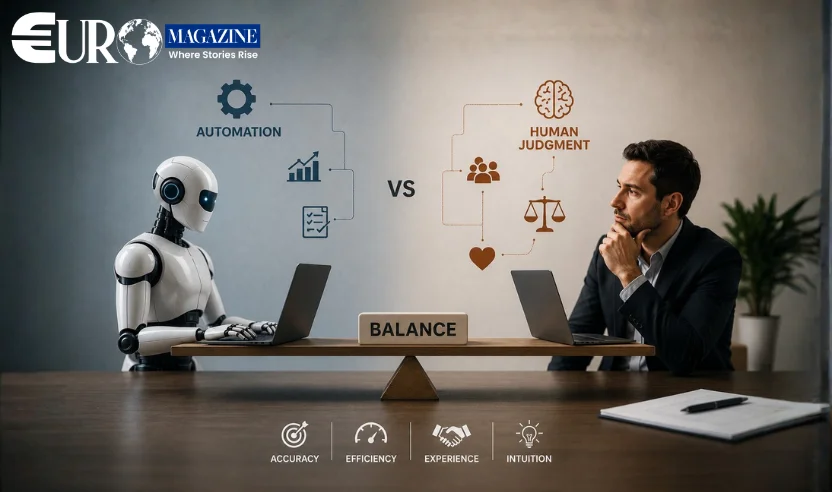
Despite rapid technological advancement, artificial intelligence is not replacing the need for human leadership and expertise. In fact, many successful AI implementations demonstrate the opposite.
Technology performs best when combined with human insight, creativity, ethical judgment, and strategic decision-making. While AI can process information and identify patterns, it cannot fully replicate the contextual understanding and relationship-building skills that remain essential in business.
Leading organizations recognize that successful adoption depends on preparing employees to work alongside new technologies rather than viewing automation as a substitute for talent.
Many companies are investing in training programs designed to help employees develop the skills needed to use AI effectively. These efforts ensure that technology becomes an enabler of productivity rather than a source of disruption.
The businesses achieving the greatest success are those that view AI as a partnership between human capability and technological innovation.
Challenges Companies Must Navigate
Although the benefits of artificial intelligence are significant, implementation is not without challenges.
Organizations must address issues related to data quality, cybersecurity, regulatory compliance, employee readiness, and ethical considerations. Poorly planned AI initiatives can create inefficiencies rather than eliminate them.
Business leaders must also manage expectations. Artificial intelligence is a powerful tool, but it is not a universal solution. Success often depends on selecting the right applications, establishing clear objectives, and measuring outcomes carefully.
Companies that approach AI strategically are more likely to achieve sustainable results than those pursuing technology simply because it is popular.
Looking Ahead
The conversation surrounding artificial intelligence is gradually shifting from speculation to practical business impact. Across Europe, organizations are moving beyond experimentation and integrating AI into everyday operations in ways that improve efficiency, strengthen decision-making, and support growth.
The most successful companies are not necessarily those making the largest investments in technology. They are the organizations that clearly understand their objectives and use artificial intelligence to solve real business challenges.
As adoption continues to expand, AI is likely to become as fundamental to business operations as cloud computing, digital communication, and data analytics. The companies that learn how to use it effectively today will be better positioned to compete in an increasingly digital and data-driven economy.
For European businesses, the future of artificial intelligence is no longer about possibility. It is about execution, value creation, and the ability to translate technological innovation into meaningful business results.
You can also read:-































Comments
Be the first to share your thoughts.
Leave a comment
Join the conversation. Your email address will not be published.