

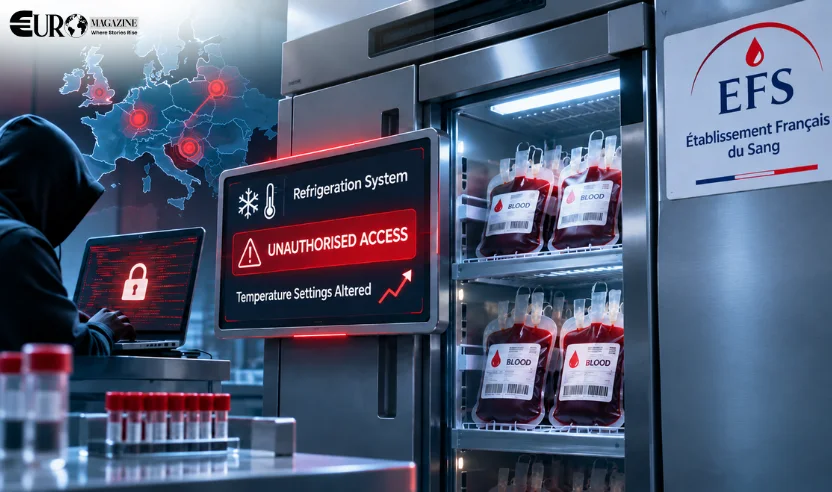
A wave of cyberattacks targeting refrigeration systems across Europe has reached the healthcare sector, with hackers compromising cold-storage monitoring systems at three facilities operated by France's national blood service. The incident has raised concerns about the security of internet-connected infrastructure responsible for protecting essential medical supplies.
The French Blood Establishment (EFS) confirmed that attackers altered temperature and defrosting settings at three regional facilities overnight between November 2 and November 3, 2026. The affected systems were used to store plasma products and biological samples.
Authorities said the attack was detected before any blood products or samples were damaged, and no disruption to blood collection or distribution services was reported.
Hackers Altered Cold-Storage Temperature Controls
According to EFS, the attackers accessed refrigeration equipment supplied through an external service provider and raised temperature and defrosting thresholds to extremely high levels.
The affected storage facilities held plasma intended for transfusions, as well as plasma used in the manufacturing of medicines. Some also stored samples for the organisation's biological research and testing activities.
Monitoring and alarm systems quickly identified abnormal settings, allowing staff to intervene. Depending on the circumstances, affected equipment was brought under control or disconnected, while stored products were transferred to other facilities.
The French Health Ministry confirmed that the situation was under control and remote access to the affected equipment had been disabled.
Attacks Spread Across European Supermarkets
The incident comes amid a broader wave of cyberattacks targeting commercial refrigeration systems across Europe.
Supermarkets and food retailers in countries including Sweden, Belgium, Finland, Ireland, Luxembourg and the Netherlands have reported incidents involving remotely altered refrigerator and freezer settings. Some equipment was reportedly programmed to raise temperatures significantly, resulting in large quantities of spoiled food.
The latest incidents follow an earlier attack in France in October, when hundreds of supermarket locations experienced refrigeration disruptions that caused substantial food losses.
The attacks have demonstrated how connected industrial equipment, traditionally considered separate from conventional computer networks, can become an entry point for cybercriminal activity.
Security Risks From Connected Infrastructure
Modern refrigeration systems increasingly rely on internet-connected controllers that allow businesses to monitor temperatures, manage energy consumption and receive maintenance alerts remotely.
However, poorly secured connections, outdated software and unpatched vulnerabilities can expose these systems to unauthorised access.
Cybersecurity specialists have urged businesses to review their refrigeration infrastructure, install available security updates, strengthen authentication and prevent industrial control equipment from being directly accessible through the public internet.
The incidents also highlight the importance of backup procedures and manual monitoring, particularly in facilities handling temperature-sensitive medical products.
Investigations Underway as European Authorities Respond
France's national cybersecurity agency, ANSSI, and the Health Ministry are investigating the blood-storage incident. Authorities are examining how attackers gained access, which systems were affected and whether the incidents across different European countries are connected.
No individual or group has claimed responsibility, and investigators have not established a confirmed motive.
The European Union has also stressed the importance of cooperation and information-sharing between member states as the attacks expose vulnerabilities in critical infrastructure.
Although the French blood service avoided losses, the incident highlights the potential consequences of cyberattacks extending beyond commercial operations into healthcare. Protecting connected refrigeration equipment is becoming an increasingly important part of safeguarding essential services and public health.
Read more news:-































Comments
Be the first to share your thoughts.
Leave a comment
Join the conversation. Your email address will not be published.