

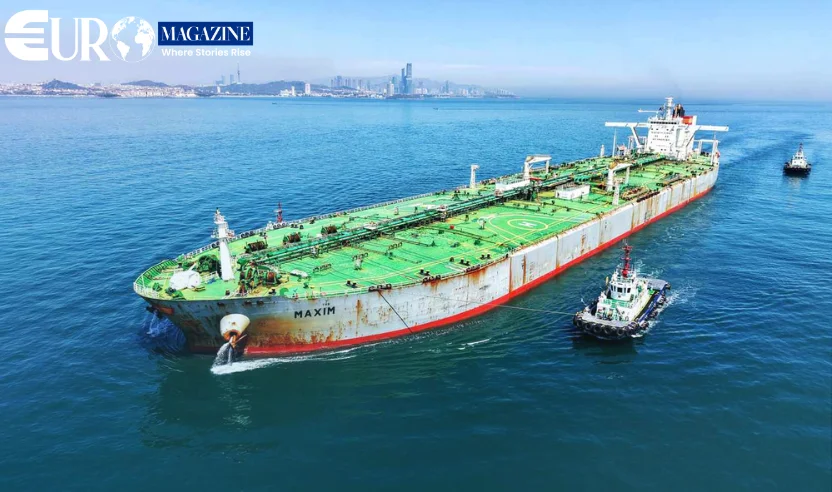
Global oil prices dropped sharply on Friday after Iran announced that the Strait of Hormuz had been fully reopened, easing concerns over supply disruptions during the ongoing ceasefire. In a statement shared on social media, Iran’s Foreign Minister Abbas Araghchi confirmed that the key shipping route was “completely open,” aligning with current ceasefire conditions. The Strait of Hormuz is a critical passage for global oil shipments, and any disruption has an immediate impact on energy markets.
Markets reacted quickly to the development. U.S. benchmark crude (WTI) fell more than 12 percent to around $82 per barrel, while Brent crude declined over 10 percent to approximately $88 per barrel within a short period of time.
The announcement also influenced broader financial markets. Major U.S. indices, including the S&P 500 and Nasdaq, moved higher, each gaining over 1 percent in early trading, while the Dow Jones Industrial Average rose by more than 1.7 percent.
U.S. President Donald Trump welcomed the reopening of the Strait but stated that the naval blockade on Iranian ports would remain in place until negotiations are fully concluded. He added that discussions between the two sides were progressing and could lead to a broader agreement, though no formal details have been released.
The reopening of the Strait is seen as a positive signal for global trade and energy stability. However, uncertainty remains around how quickly normal shipping volumes will resume and whether the ceasefire will hold in the coming weeks.
With limited trading time before the weekend, markets are continuing to assess the impact of the announcement and its implications for oil supply and geopolitical stability.






























Comments
Be the first to share your thoughts.
Leave a comment
Join the conversation. Your email address will not be published.