

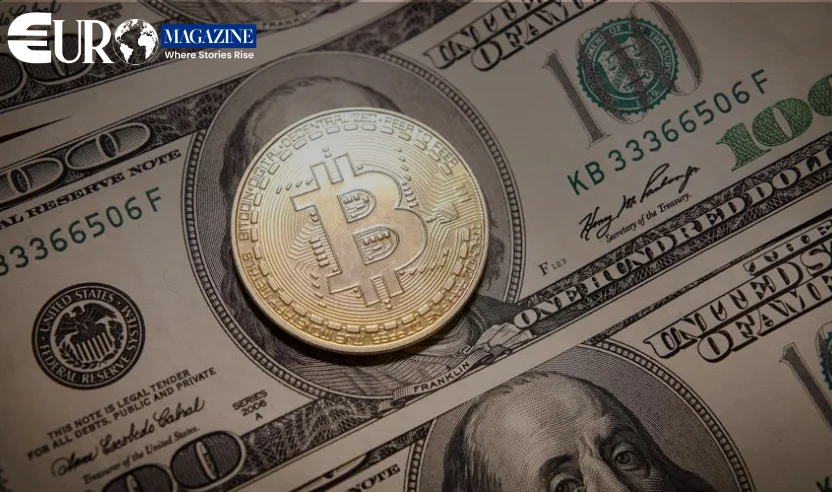
Bitcoin tumbled to its lowest level since February on Wednesday, extending a sharp decline that has wiped out more than a quarter of its value this month as long-term investors accelerated selling and uncertainty surrounding cryptocurrency legislation in the United States weighed on market sentiment.
The world's largest cryptocurrency fell to as low as $61,300 during trading before recovering some losses to trade near $63,000. The latest decline leaves Bitcoin down more than 25% from its monthly peak and over 30% lower compared with the beginning of the year.
The sell-off marks one of Bitcoin’s most challenging periods in recent years, particularly as other major risk assets have shown greater resilience.
Long-Term Investors Drive Market Decline
Market analysts say the latest wave of selling has been largely driven by long-term Bitcoin holders, a group traditionally viewed as a stabilizing force during periods of market volatility.
Blockchain data indicates that investors who had held their Bitcoin for at least 155 days sold approximately $2.4 billion worth of the cryptocurrency during the opening days of June. A significant share of those sales reportedly came from investors who purchased Bitcoin above the $90,000 level and had previously resisted selling despite months of declining prices.
The increase in selling pressure has raised concerns that confidence among long-term market participants may be weakening as the broader crypto market struggles to regain momentum.
Volatility Surges as Traders Seek Protection
The downturn has also triggered increased activity in crypto derivatives markets.
Investors have rushed to purchase protective options contracts amid growing uncertainty, pushing volatility indicators to their highest levels in months. Market participants are increasingly positioning themselves for larger price swings as concerns over regulatory developments and investor sentiment continue to grow.
Adding to the pressure, US-listed spot Bitcoin exchange-traded funds recorded their thirteenth consecutive day of investor withdrawals. Fund managers reported another $50 million in net outflows, highlighting continued caution among institutional investors.
US Crypto Legislation Faces Fresh Obstacles
Bitcoin’s decline comes as a closely watched cryptocurrency regulatory proposal faces mounting challenges in Washington.
The proposed Digital Asset Market Clarity Act, commonly known as the CLARITY Act, aims to establish a clearer regulatory framework for digital assets by dividing oversight responsibilities between the U.S. Securities and Exchange Commission and the Commodity Futures Trading Commission.
Although the legislation secured approval from the Senate Banking Committee in May, lawmakers still need to reconcile competing versions of the bill before it can advance further. Disagreements between congressional committees and a crowded legislative schedule have raised doubts about whether the measure can be passed before the summer recess.
The crypto industry has viewed the legislation as a critical step toward regulatory clarity and broader institutional adoption.
Industry Divisions Add Further Uncertainty
The debate over cryptocurrency regulation has also exposed growing tensions between traditional financial institutions and the digital asset sector.
Jamie Dimon, chief executive of JPMorgan Chase, has been among the most vocal critics of proposed stablecoin regulations. He argues that stablecoin issuers should be subject to the same regulatory standards as banks if they wish to offer financial products that compete directly with traditional institutions.
Several banking organizations, including community banks and credit unions, have echoed similar concerns, creating additional obstacles for lawmakers attempting to build consensus around digital asset regulation.
Lawmakers Remain Optimistic
Despite the challenges, some policymakers remain hopeful that progress can be achieved.
Cynthia Lummis, who chairs the Senate's digital assets subcommittee, recently stated that lawmakers are closer than ever to establishing a functional market structure for digital assets.
However, with limited legislative time available and numerous competing priorities on Capitol Hill, the future of the bill remains uncertain.
Market Watches Next Moves Closely
Investors are now closely monitoring both regulatory developments and on-chain activity for signs of market stabilization.
While Bitcoin has recovered slightly from its latest lows, analysts believe continued selling from long-term holders and delays in regulatory progress could keep pressure on the cryptocurrency market in the near term.
The coming weeks are expected to be crucial in determining whether Bitcoin can regain investor confidence or face further declines amid an increasingly uncertain market environment.































Comments
Be the first to share your thoughts.
Leave a comment
Join the conversation. Your email address will not be published.