

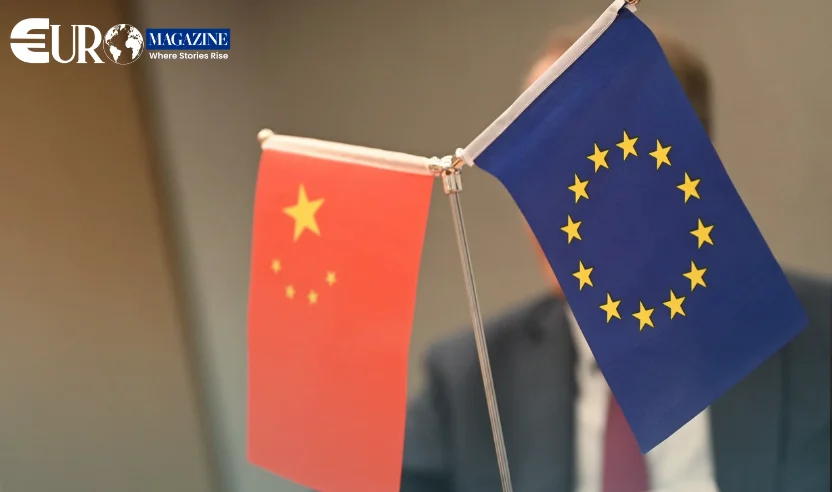
The European Union is preparing to strengthen its trade defence strategy with the development of a new diversification instrument aimed at reducing economic vulnerabilities and addressing its growing trade deficit with China.
Speaking after the European Council summit in Brussels, European Commission President Ursula von der Leyen announced that the Commission will begin work on new tools designed to help European industries reduce excessive dependence on specific foreign markets and supply chains.
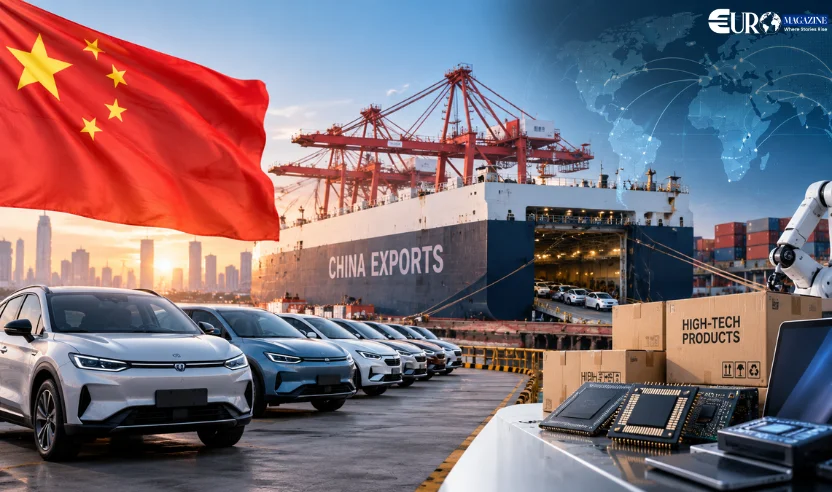
The initiative comes as European leaders increasingly express concern over the bloc's widening trade imbalance with China, which officials describe as economically unsustainable and strategically risky.
Brussels Signals Tougher Trade Approach
Von der Leyen said the European Union has already built a substantial set of trade defence mechanisms in recent years and must now use them more strategically to protect European economic interests.
According to EU officials, the proposed diversification instrument would encourage companies to broaden sourcing arrangements and reduce reliance on a limited number of suppliers or countries for critical components and industrial inputs.
The measure is expected to form part of a broader effort to strengthen Europe's economic resilience amid growing geopolitical tensions and supply chain disruptions.
While details remain under development, early discussions suggest the instrument could require businesses operating in sensitive sectors to diversify supply sources to prevent critical dependencies that could be exploited during economic or political disputes.
EU Leaders Back De-Risking Strategy
European Council President António Costa emphasized that the European Union remains committed to engagement with China but warned that current trade patterns require corrective action.
According to Costa, the bloc's trade deficit with China has reached approximately €1 billion per day, creating a situation that cannot be sustained indefinitely.
European leaders reiterated their support for a strategy of "de-risking, not decoupling," seeking to reduce vulnerabilities while maintaining economic ties and diplomatic dialogue with Beijing.
The approach reflects the EU's attempt to balance economic security concerns with the reality that China remains one of Europe's most important trading partners.
Diverging Views Among Member States
Despite broad political support for strengthening Europe's economic resilience, member states remain divided on how aggressively the EU should confront China.
Germany, whose export-driven economy maintains deep commercial links with the Chinese market, has traditionally favored a cautious approach. Spain has also pursued closer investment cooperation with Chinese companies and remains wary of measures that could trigger economic retaliation.
Diplomatic sources suggest many European governments continue to view stable relations with China as increasingly important, particularly amid uncertainty surrounding global trade dynamics and shifting policies from other major economies.
In contrast, France has emerged as one of the strongest advocates for tougher action against what it considers unfair competition, industrial overcapacity, and state-supported market distortions.
French President Emmanuel Macron welcomed the discussions at the summit, arguing that Europe must modernize its trade defence mechanisms and respond more rapidly when signs of unfair competition emerge.
Economic Security Becomes a Strategic Priority
European policymakers increasingly view economic security as a central pillar of the bloc's long-term competitiveness strategy.
Alongside new trade defence measures, leaders stressed the need to strengthen the EU's internal market, improve industrial competitiveness, and build greater resilience across critical sectors.
Officials also acknowledged that stronger trade actions could provoke retaliatory measures from Beijing, making it essential for the bloc to prepare for potential economic consequences.
Nevertheless, von der Leyen suggested that growing trade imbalances leave Europe with little choice but to act.
"The figures speak for themselves," she said, emphasizing the need to restore a more balanced and sustainable trading relationship.
Looking Ahead
The European Commission has not yet announced a formal timeline for presenting the diversification instrument. However, EU officials indicate that the proposal could be unveiled during President von der Leyen's annual State of the Union address later this year.
If adopted, the initiative would mark one of the most significant steps in the EU's evolving economic security agenda and could reshape how European businesses manage global supply chains in the years ahead.













Comments
Be the first to share your thoughts.
Leave a comment
Join the conversation. Your email address will not be published.