

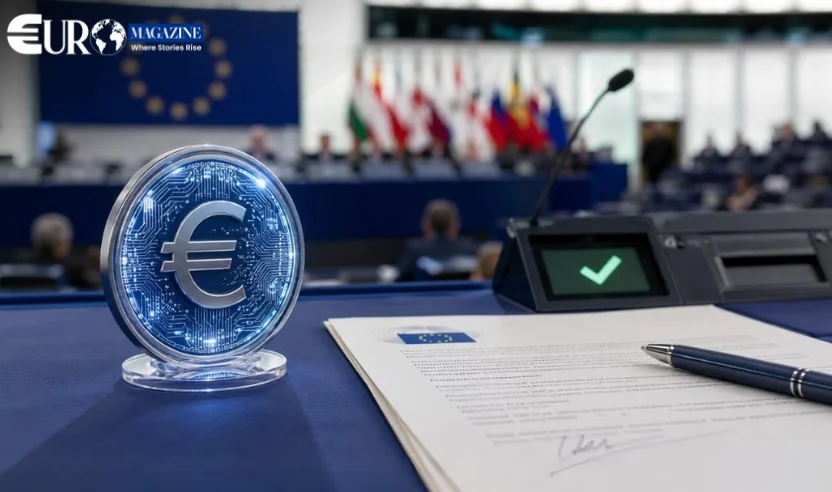
The European Parliament's Economic and Monetary Affairs Committee on Tuesday approved legislation supporting the creation of a digital euro, advancing the European Union's efforts to strengthen control over its payments infrastructure and reduce dependence on US-based payment providers.
The proposal would establish a digital version of the euro issued by the European Central Bank (ECB), allowing consumers to make electronic payments using central bank money alongside cash and traditional banking services.
The initiative comes as European policymakers seek to improve financial resilience amid growing geopolitical uncertainty. According to ECB data, Visa and Mastercard account for more than 60% of card payments across the euro area and dominate most cross-border card transactions within the bloc.
Under the proposed framework, consumers would be able to hold digital euros through approved digital wallets and use them for online and offline purchases. The ECB would provide the core infrastructure, while banks and payment service providers would manage customer-facing services.
Lawmakers said the system is intended to provide secure digital payments while maintaining privacy protections. The ECB has stated that it would not directly identify users through transaction data.
The proposal now moves toward a plenary vote in the European Parliament expected in early July. If approved, negotiations with the EU's 27 member states will begin before a final legislative agreement is reached.
European officials view the digital euro as a strategic project aimed at strengthening the bloc's financial sovereignty as digital payment systems become increasingly important to the global economy.
The ECB has previously indicated that a digital euro could be introduced later this decade, subject to legislative approval and technical development.






























Comments
Be the first to share your thoughts.
Leave a comment
Join the conversation. Your email address will not be published.