

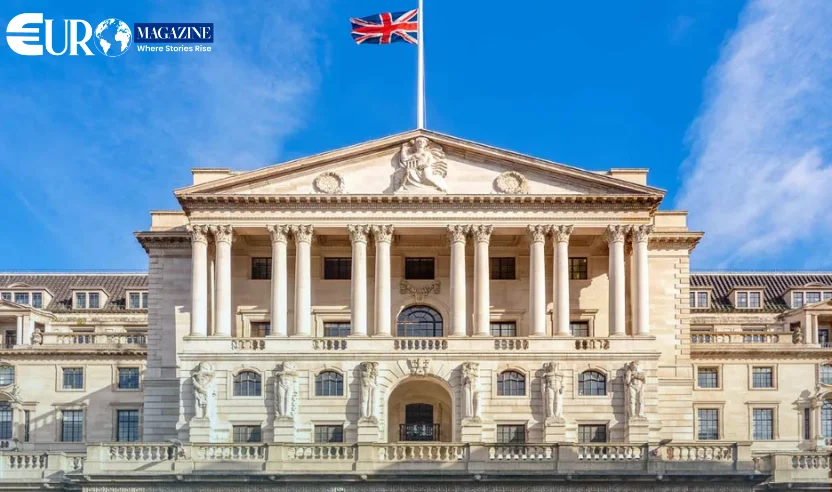
The Bank of England (BoE) has kept its benchmark interest rate unchanged at 3.75%, extending a pause in monetary policy as policymakers continue to assess inflation risks linked to higher energy prices and a slowing labour market.
The decision marks the fourth consecutive meeting in which the central bank has left rates unchanged, reflecting a cautious approach as inflation remains above the Bank's 2% target but shows signs of stabilisation.
The Monetary Policy Committee (MPC) voted to maintain the current rate after official data showed consumer price inflation remained at 2.8% in May, unchanged from April and below market expectations of 3.0%. The reading represents the lowest inflation level recorded since early 2025 and suggests that price pressures may be easing despite recent geopolitical tensions and energy market volatility.
Inflation Holds Steady Despite Energy Concerns
While headline inflation remained stable, underlying price trends presented a mixed picture.
Transport costs rose sharply during the month, driven by higher fuel prices and increased airfares, pushing transport inflation to 6.8%. However, food inflation slowed to 2.2%, while housing-related costs continued to moderate, helping offset broader price pressures.
The inflation outlook has been closely monitored since the outbreak of conflict involving Iran earlier this year, which triggered a surge in global oil and gas prices. Although energy markets have since cooled, policymakers remain cautious about the potential impact of elevated energy costs on households and businesses.
Bank of England Governor Andrew Bailey said recent declines in oil prices were encouraging but warned that energy costs remain higher than they were before the conflict began.
"The higher energy prices seen over recent months mean there is already inflationary pressure working its way through the economy," Bailey said. "Our responsibility is to ensure these pressures do not become embedded and push inflation sustainably above target."
Divided Vote Reflects Ongoing Inflation Risks
The decision to leave rates unchanged was not unanimous.
Two of the nine MPC members voted in favour of a quarter-point rate increase, highlighting continued concerns that higher energy costs could feed into broader inflation and wage growth.
Economists believe inflation could still move higher later this year as increased household energy bills begin to filter through the economy.
Market analysts noted that while inflation has remained below expectations in recent months, risks remain elevated due to ongoing geopolitical uncertainty and energy market fluctuations.
Labour Market Continues to Cool
Fresh labour market data released alongside the interest rate decision suggested that the UK job market continues to lose momentum, although conditions remain relatively resilient.
The unemployment rate unexpectedly declined to 4.9% in the three months to April from 5.0% in the previous quarter. However, payroll employment numbers fell during the same period, indicating a slowdown in hiring activity across the economy.
Wage growth remained firm, with regular pay excluding bonuses rising 3.4% year-on-year. Strong wage growth continues to be a key concern for policymakers, who fear that rising earnings could contribute to persistent inflation through higher consumer spending and business costs.
Analysts described the labour market data as mixed, suggesting that while economic activity is slowing, the slowdown has not yet become severe enough to justify immediate interest rate cuts.
Cautious Approach Likely to Continue
The combination of moderating inflation, resilient wage growth, and a gradually cooling labour market has left the Bank of England facing a delicate balancing act.
Policymakers are expected to remain cautious in the coming months as they assess whether inflation continues to move toward the 2% target or whether renewed energy and wage pressures require further policy action.
For now, the central bank appears content to keep borrowing costs unchanged while gathering additional evidence on the direction of the economy.
The latest decision underscores the Bank's commitment to controlling inflation while avoiding unnecessary pressure on economic growth as the UK navigates a challenging global environment.
























Comments
Be the first to share your thoughts.
Leave a comment
Join the conversation. Your email address will not be published.