

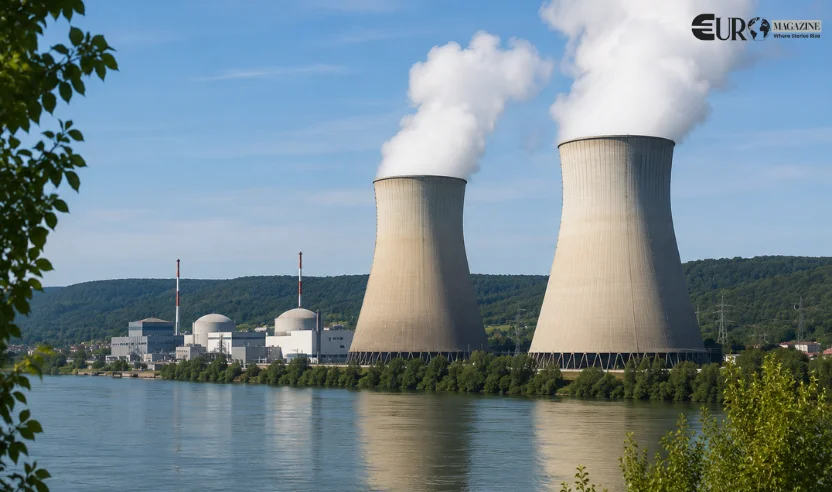
France has temporarily shut down three nuclear reactors and warned that several others could operate at reduced capacity as an intense heatwave continues to drive river temperatures higher across the country.
State-owned energy company Électricité de France (EDF) said the decision was taken to comply with environmental regulations that limit the temperature of water discharged from nuclear power plants into nearby rivers. The restrictions are designed to protect aquatic ecosystems during periods of extreme heat.
Nuclear facilities rely on river water to cool their reactors before returning the warmed water to the environment. As rivers become hotter during prolonged heatwaves, authorities impose stricter limits on water discharge to prevent additional stress on fish, plants, and other aquatic life.
EDF confirmed that Golfech Unit 2 (1,300 MW), Bugey Unit 3 (900 MW), and Chooz Unit 2 (1,450 MW) have been taken offline. Together, the three reactors represent approximately 3.65 gigawatts of electricity generation capacity, accounting for nearly 6% of France's installed nuclear power capacity.
The company also said that seven additional reactors may need to reduce electricity production depending on river conditions and changing weather forecasts.
EDF emphasized that the shutdowns are not linked to nuclear safety concerns. According to the utility, the reactors remain capable of operating safely under high-temperature conditions, while the temporary restrictions are solely intended to safeguard the environment.
Based on current forecasts, Bugey Unit 3 is expected to remain offline until July 19, Golfech Unit 2 until July 22, and Chooz Unit 2 until July 25. The company noted that these timelines could change if weather conditions improve or worsen.
The French government has already granted a temporary exemption allowing higher discharge temperatures at the Bugey Nuclear Power Plant to help maintain electricity supply and support the national power grid through July 20.
The reactor shutdowns come as France experiences its third major heatwave since May, with more than one-third of the country placed under the highest level of heat alert. Similar weather conditions in June also forced EDF to temporarily reduce nuclear generation.
Despite the recurring disruptions, EDF said the long-term impact of heatwaves on France's nuclear output remains relatively limited. Since 2000, production losses caused by high river temperatures and reduced river flows have averaged around 0.3% of the country's annual nuclear electricity generation.
To strengthen its energy infrastructure against future climate-related challenges, EDF is implementing a €8.7 billion climate adaptation programme over the next 15 years. The investment will focus on improving the resilience of nuclear, hydropower, and island energy systems, including new cooling technologies, enhanced flood management, and stronger electricity networks capable of withstanding increasingly extreme weather conditions.
Read more news:-


























Comments
Be the first to share your thoughts.
Leave a comment
Join the conversation. Your email address will not be published.