
whatsapp

Crypto Ownership Rises Across Europe as Retail Interest Strengthens

/media/Crypto_Ownership_Rises_Across_Europe_as_Retail_Interest_Strengthens.webp © Image Copyrights Title

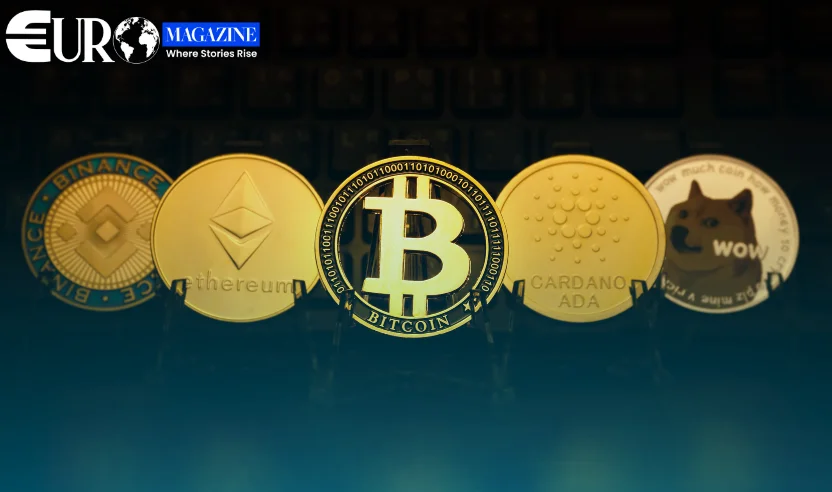
Crypto-asset ownership is steadily increasing across Europe, despite market volatility and a turbulent year for digital assets in 2025, according to recent industry and central bank data.

While cryptocurrencies faced sharp sell-offs earlier this year, notably following renewed trade tensions between the United States and China, longer-term trends show growing adoption across major European economies. More than 90% of adults in leading European countries are now aware of crypto-assets, highlighting the sector’s increasing mainstream visibility.

Data from the Web3 Industry in France and Europe report by Adan, based on early-2025 findings, shows that crypto ownership continues to expand even as prices fluctuate. A separate survey by the European Central Bank found that 9% of adults in the eurozone owned crypto-assets in 2024, up sharply from 4% in 2022.

Across the 20 eurozone countries, ownership levels range from around 6% in the Netherlands and Germany to 15% in Slovenia. Greece ranks just behind Slovenia, followed by Ireland, Croatia, Cyprus, Lithuania and Austria. While differences between countries are relatively modest, the upward trend is consistent across most of the region.

What’s driving the differences

According to James Sullivan, chief risk and compliance officer at BCB Group, national variations in crypto ownership are shaped by a mix of digital adoption, investor risk appetite, and local market structures.

Countries with strong financial innovation ecosystems and younger investor bases tend to lead adoption, he said, while regulatory clarity and economic conditions also play an important role. In markets where traditional investment options are limited, crypto-assets are often used more speculatively. Public awareness campaigns, such as those seen in Italy, have also helped lift participation.

Outside the eurozone, the United Kingdom continues to play a major role in global crypto activity. Sullivan noted that the UK ranked third worldwide for transaction volumes in 2024, behind only the United States and India.

Ownership more than doubles

Between 2022 and 2024, crypto ownership increased in nearly every eurozone country. The Netherlands was the only market where ownership remained unchanged, while comparable data for Croatia was unavailable for 2022. Greece and Lithuania recorded the largest gains, each rising by 10 percentage points over the two-year period. Several other countries, including Cyprus, Belgium, Ireland, Austria, Slovakia, Slovenia, Portugal and Italy, saw increases of seven points or more.

Sullivan said the broad-based rise signals renewed confidence among European retail investors, suggesting that the effects of the previous crypto downturn have faded.

A key factor behind the rebound is regulatory progress. The EU’s Markets in Crypto-Assets framework, known as MiCA, has introduced uniform rules for crypto-assets across the bloc, offering consumer protections that were previously lacking.

MiCA, which governs digital assets not covered by existing financial legislation, has helped position crypto as a recognised part of the financial system, Sullivan said, encouraging participation from investors who were previously cautious.

Still largely an investment asset

Despite rising ownership, crypto remains primarily an investment vehicle in Europe. ECB data shows that 64% of eurozone holders use crypto-assets mainly for investment, while just 16% use them for payments. Another 19% report using crypto for both purposes.

The Netherlands and Germany, despite having relatively low ownership rates, show the highest proportion of investment-focused users, at 90% and 82% respectively. France records the highest share of crypto used for payments, at 25%.

Sullivan said the imbalance underscores the speculative nature of the market. While stablecoins offer potential transactional benefits, everyday usage still lags far behind traditional payment methods such as cards and cash.

He added that wider adoption for payments will depend on how effectively MiCA supports euro-denominated stablecoins and integrates them into existing payment systems, an area that remains a priority for European regulators.


Commnets 0
Leave A Comment

Related Posts
© Shein Targets $27 Billion Hong Kong IPO as Europe Becomes a Critical Test

Shein Targets $27 Billion Hong Kong IPO as Europe Becomes a Critical Test

Shein is preparing for one of the most closely watched retail listings of the year, but the fast-fashion company will enter the public market carrying a valuation far below the level it commanded duri...

© Oil Prices Fall as Markets Await Sweeping U.S. Sanctions on Iran

Oil Prices Fall as Markets Await Sweeping U.S. Sanctions on Iran

Global oil prices moved lower on Monday as investors locked in some recent gains and waited for details of a sweeping new U.S. sanctions package targeting Iran....

© Giorgia Meloni Says She Expected Relations With Trump to Be Easier

Giorgia Meloni Says She Expected Relations With Trump to Be Easier

Italian Prime Minister Giorgia Meloni has acknowledged that her relationship with U.S. President Donald Trump has proved more difficult than she initially expected, despite areas of political agreemen...

© Bitcoin Climbs Above $70,000 as ETF Inflows and Lower U.S. Yields Lift Crypto Market

Bitcoin Climbs Above $70,000 as ETF Inflows and Lower U.S. Yields Lift Crypto Market

Bitcoin moved back above $70,000, reaching its strongest level in more than two months as falling U.S. Treasury yields, renewed institutional demand and improving regulatory sentiment brought buyers b...

© SK Hynix Shares Jump Over 12% After $28.6 Billion Buyback Plan

SK Hynix Shares Jump Over 12% After $28.6 Billion Buyback Plan

Shares of SK Hynix surged more than 12% in Seoul on Thursday, August 20, after the South Korean chipmaker unveiled a major 40 trillion won ($28.6 billion) share buyback and cancellation programme....

© European Bond Yields Hit Multi-Year Highs as Iran War Fuels Inflation Fears

European Bond Yields Hit Multi-Year Highs as Iran War Fuels Inflation Fears

European government bond yields climbed to multi-year highs as rising oil prices and continued uncertainty around the Iran conflict revived concerns over inflation and the possibility of tighter monet...

© Electric Car Adoption Accelerates Across Europe as Nordic Countries Lead

Electric Car Adoption Accelerates Across Europe as Nordic Countries Lead

Europe’s shift towards battery-electric cars is gathering pace, but the transition remains sharply divided between countries, with Nordic markets leading adoption while several southern and eastern Eu...

© EU Pushes for Payment Sovereignty as Digital Euro and Local Networks Gain Ground

EU Pushes for Payment Sovereignty as Digital Euro and Local Networks Gain Ground

Europe is accelerating efforts to reduce its dependence on US-controlled payment networks as policymakers increasingly view financial infrastructure as a strategic issue rather than simply a question ...

© Google Reshuffles AI Leadership as Gemini Race Intensifies

Google Reshuffles AI Leadership as Gemini Race Intensifies

Google has reorganized its artificial intelligence leadership as it looks to strengthen Gemini and compete more aggressively with rivals such as OpenAI and Anthropic....

© Wall Street Backs Nvidia’s $500 Billion AI Infrastructure Financing Push

Wall Street Backs Nvidia’s $500 Billion AI Infrastructure Financing Push

Nvidia CEO Jensen Huang is pushing a new model for financing the global artificial intelligence boom, with some of Wall Street’s biggest investment firms preparing to treat AI infrastructure as a majo...

© Revolut Secures Full French Banking Licence as European Expansion Accelerates

Revolut Secures Full French Banking Licence as European Expansion Accelerates

Revolut has secured a full banking licence in France, giving the digital finance company a new regulatory base for its expanding operations across Western Europe....

© Poland Becomes EU’s Sixth-Largest Economy as GDP Reaches €923 Billion

Poland Becomes EU’s Sixth-Largest Economy as GDP Reaches €923 Billion

Poland has become the sixth-largest economy in the European Union, with its nominal gross domestic product reaching approximately €923 billion in 2025, placing it behind only Germany, France, Italy, S...

© Wizz Air Reports €183.3 Million Quarterly Operating Loss

Wizz Air Reports €183.3 Million Quarterly Operating Loss

Wizz Air has reported a quarterly operating loss of €183.3 million, as rising fuel expenses and softer airfares weighed on the European low-cost airline’s financial results....

© Trump Administration’s $1.22 Billion RWE Deal Pushes Offshore Wind Buybacks Near $4 Billion

Trump Administration’s $1.22 Billion RWE Deal Pushes Offshore Wind Buybacks Near $4 Billion

The Trump administration has reached a $1.22 billion agreement with German energy company RWE that will see the group give up three offshore wind leases in the United States, pushing the value of simi...

© Infineon Posts Record Revenue as AI Data-Centre Demand Accelerates

Infineon Posts Record Revenue as AI Data-Centre Demand Accelerates

German semiconductor manufacturer Infineon Technologies reported record quarterly revenue as growing investment in artificial intelligence infrastructure strengthened demand for its power-management c...

© Apple Pay Launches in the Philippines With Support From Four Major Banks

Apple Pay Launches in the Philippines With Support From Four Major Banks

Apple Pay has officially launched in the Philippines, allowing eligible customers to make contactless payments using an iPhone, Apple Watch, iPad or Mac at participating stores, applications and websi...

© Visa to Acquire BioCatch for $2.4 Billion to Strengthen AI Fraud Protection

Visa to Acquire BioCatch for $2.4 Billion to Strengthen AI Fraud Protection

Global payments leader Visa has agreed to acquire Israeli cybersecurity company BioCatch for $2.4 billion in cash, strengthening its fraud prevention capabilities as financial institutions face a grow...

© Eurozone Inflation Rises to 2.9% as Energy Costs Drive Price Pressures

Eurozone Inflation Rises to 2.9% as Energy Costs Drive Price Pressures

Inflation across the eurozone accelerated to 2.9% in July, ending June's brief slowdown as higher energy prices pushed consumer costs upward across the currency bloc, according to preliminary figures ...

© Eurozone Inflation Rises to 2.9% in July as Energy Costs Accelerate

Eurozone Inflation Rises to 2.9% in July as Energy Costs Accelerate

Annual inflation across the eurozone accelerated to 2.9% in July, reversing June's slowdown as higher energy prices pushed consumer costs higher, according to preliminary data released by Eurostat on ...

© Eurozone Growth Surpasses Forecasts in Q2 2026 as Ireland Tops Europe’s Fastest-Growing Economies

Eurozone Growth Surpasses Forecasts in Q2 2026 as Ireland Tops Europe’s Fastest-Growing Economies

The eurozone economy expanded more strongly than expected during the second quarter of 2026, with Ireland emerging as Europe's fastest-growing economy as preliminary data pointed to greater resilience...