
whatsapp

From ‘Moscow gold’ to record reserves: Spain’s gold, then and now

/media/From_Moscow_gold_to_record_reserves_Spains_gold_then_and_now.webp © Image Copyrights Title

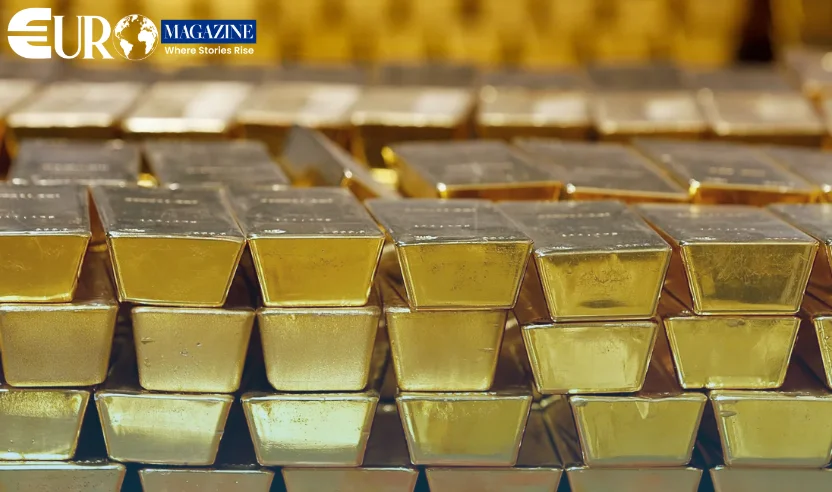
At the end of 2025, Banco de España reported gold and foreign exchange reserves valued at nearly €94 billion, the highest level since comparable records became available.

The rise was driven mainly by strong international demand for gold, which continued to be viewed as a safe-haven asset amid geopolitical tensions and financial uncertainty, despite recent market volatility.

In Spain, however, gold carries meaning beyond balance sheets. It is also deeply linked to history, particularly the long-debated episode known as “Moscow gold,” one of the most controversial chapters of the country’s 20th-century past.

Gold before the Civil War

Before 1936, Spain’s gold reserves were not exceptional by global standards, but they were sufficient to provide the country with limited room for international financial manoeuvre.

Historians note that while Spain was far from being a major economic power, its gold reserves allowed a degree of financial flexibility within the international system of the time.

Gold sent abroad during the war

That margin disappeared with the outbreak of the Spanish Civil War. Diplomatic isolation and the Non-Intervention policy left the Republican government with few options to finance military supplies.

In response, most of the Bank of Spain’s gold reserves were transferred abroad, primarily to the Soviet Union, to pay for weapons, equipment and logistical support. In October 1936, around 510 tonnes of gold were shipped from Cartagena.

Historians emphasise that the transfer was a documented and deliberate decision taken by the Republic’s authorities under wartime conditions, rather than a clandestine operation.

Debunking the ‘return the gold’ narrative

Later research has challenged long-standing claims that the gold should have been returned.

Studies show the gold was spent during the war through documented payments, allowing the Republican government to continue fighting for nearly three years. From this perspective, the transfer functioned as wartime financing rather than theft or plunder.

A smaller portion of gold was also sold to France, though that episode never gained the same symbolic significance.

A tool of post-war propaganda

After the war, the Franco regime used the “Moscow gold” narrative extensively in political messaging, portraying it as evidence of betrayal and foreign exploitation.

While the issue featured heavily in domestic discourse, it gained little traction internationally. British authorities regarded it as a bilateral matter, and Soviet officials consistently stated that no Spanish gold remained unaccounted for.

Where Spain’s gold is today

Nearly nine decades later, Spain holds around 281 tonnes of gold, according to data from the World Gold Council.

The reserves are split between holdings at the Bank of Spain and deposits in the United States, the United Kingdom and Switzerland. These assets are unrelated to the gold transferred during the Civil War and reflect decades of modern monetary policy and European integration.

From survival tool to financial asset

The record valuation reached in 2025 does not represent the recovery of lost wartime gold. Instead, it reflects rising global gold prices.

Unlike in the 1930s, gold today no longer directly finances governments or backs national currencies. It now serves as a stabilising asset that supports confidence within the global financial system.

The contrast between 1936 and 2025 highlights a fundamental shift: once a resource tied to political survival, gold has become a strategic financial instrument shaped by markets rather than conflict.


Commnets 0
Leave A Comment

Related Posts
© Electric Car Adoption Accelerates Across Europe as Nordic Countries Lead

Electric Car Adoption Accelerates Across Europe as Nordic Countries Lead

Europe’s shift towards battery-electric cars is gathering pace, but the transition remains sharply divided between countries, with Nordic markets leading adoption while several southern and eastern Eu...

© EU Pushes for Payment Sovereignty as Digital Euro and Local Networks Gain Ground

EU Pushes for Payment Sovereignty as Digital Euro and Local Networks Gain Ground

Europe is accelerating efforts to reduce its dependence on US-controlled payment networks as policymakers increasingly view financial infrastructure as a strategic issue rather than simply a question ...

© Google Reshuffles AI Leadership as Gemini Race Intensifies

Google Reshuffles AI Leadership as Gemini Race Intensifies

Google has reorganized its artificial intelligence leadership as it looks to strengthen Gemini and compete more aggressively with rivals such as OpenAI and Anthropic....

© Wall Street Backs Nvidia’s $500 Billion AI Infrastructure Financing Push

Wall Street Backs Nvidia’s $500 Billion AI Infrastructure Financing Push

Nvidia CEO Jensen Huang is pushing a new model for financing the global artificial intelligence boom, with some of Wall Street’s biggest investment firms preparing to treat AI infrastructure as a majo...

© Revolut Secures Full French Banking Licence as European Expansion Accelerates

Revolut Secures Full French Banking Licence as European Expansion Accelerates

Revolut has secured a full banking licence in France, giving the digital finance company a new regulatory base for its expanding operations across Western Europe....

© Poland Becomes EU’s Sixth-Largest Economy as GDP Reaches €923 Billion

Poland Becomes EU’s Sixth-Largest Economy as GDP Reaches €923 Billion

Poland has become the sixth-largest economy in the European Union, with its nominal gross domestic product reaching approximately €923 billion in 2025, placing it behind only Germany, France, Italy, S...

© Wizz Air Reports €183.3 Million Quarterly Operating Loss

Wizz Air Reports €183.3 Million Quarterly Operating Loss

Wizz Air has reported a quarterly operating loss of €183.3 million, as rising fuel expenses and softer airfares weighed on the European low-cost airline’s financial results....

© Trump Administration’s $1.22 Billion RWE Deal Pushes Offshore Wind Buybacks Near $4 Billion

Trump Administration’s $1.22 Billion RWE Deal Pushes Offshore Wind Buybacks Near $4 Billion

The Trump administration has reached a $1.22 billion agreement with German energy company RWE that will see the group give up three offshore wind leases in the United States, pushing the value of simi...

© Infineon Posts Record Revenue as AI Data-Centre Demand Accelerates

Infineon Posts Record Revenue as AI Data-Centre Demand Accelerates

German semiconductor manufacturer Infineon Technologies reported record quarterly revenue as growing investment in artificial intelligence infrastructure strengthened demand for its power-management c...

© Apple Pay Launches in the Philippines With Support From Four Major Banks

Apple Pay Launches in the Philippines With Support From Four Major Banks

Apple Pay has officially launched in the Philippines, allowing eligible customers to make contactless payments using an iPhone, Apple Watch, iPad or Mac at participating stores, applications and websi...

© Visa to Acquire BioCatch for $2.4 Billion to Strengthen AI Fraud Protection

Visa to Acquire BioCatch for $2.4 Billion to Strengthen AI Fraud Protection

Global payments leader Visa has agreed to acquire Israeli cybersecurity company BioCatch for $2.4 billion in cash, strengthening its fraud prevention capabilities as financial institutions face a grow...

© Eurozone Inflation Rises to 2.9% as Energy Costs Drive Price Pressures

Eurozone Inflation Rises to 2.9% as Energy Costs Drive Price Pressures

Inflation across the eurozone accelerated to 2.9% in July, ending June's brief slowdown as higher energy prices pushed consumer costs upward across the currency bloc, according to preliminary figures ...

© Eurozone Inflation Rises to 2.9% in July as Energy Costs Accelerate

Eurozone Inflation Rises to 2.9% in July as Energy Costs Accelerate

Annual inflation across the eurozone accelerated to 2.9% in July, reversing June's slowdown as higher energy prices pushed consumer costs higher, according to preliminary data released by Eurostat on ...

© Eurozone Growth Surpasses Forecasts in Q2 2026 as Ireland Tops Europe’s Fastest-Growing Economies

Eurozone Growth Surpasses Forecasts in Q2 2026 as Ireland Tops Europe’s Fastest-Growing Economies

The eurozone economy expanded more strongly than expected during the second quarter of 2026, with Ireland emerging as Europe's fastest-growing economy as preliminary data pointed to greater resilience...

© BMW to Cut 8,000 Jobs in Global Cost-Saving Drive

BMW to Cut 8,000 Jobs in Global Cost-Saving Drive

BMW plans to reduce its global workforce by around 8,000 jobs as part of a major cost-cutting programme aimed at improving efficiency and strengthening long-term competitiveness, according to company ...

© Spain's Unemployment Rate Falls to Lowest Level Since 2008

Spain's Unemployment Rate Falls to Lowest Level Since 2008

Spain's unemployment rate dropped to its lowest level since 2008 during the second quarter of 2026, as strong seasonal hiring and continued labor market growth pushed employment to a new record, accor...

© JetBlue Unveils New Fare Structure Ahead of BlueFirst Domestic First-Class Launch

JetBlue Unveils New Fare Structure Ahead of BlueFirst Domestic First-Class Launch

JetBlue Airways has announced a major overhaul of its fare structure, introducing a simplified booking system and new ticket options as the airline prepares to launch its domestic first-class product,...

© Shein Reports $99 Million Quarterly Loss as Trump Tariffs Weigh on U.S. Sales

Shein Reports $99 Million Quarterly Loss as Trump Tariffs Weigh on U.S. Sales

Fast-fashion retailer Shein reported a $99 million net loss in the first quarter of 2026, reversing a $395 million profit recorded a year earlier, as higher U.S. import tariffs and slowing sales weigh...

© ECB Unveils Finalists for New Euro Banknote Designs

ECB Unveils Finalists for New Euro Banknote Designs

The European Central Bank (ECB) has unveiled the final shortlist of designs for the next generation of euro banknotes, giving European citizens the opportunity to help decide how the continent's commo...

© ECB Holds Interest Rates at 2.25% Amid Energy Price Uncertainty

ECB Holds Interest Rates at 2.25% Amid Energy Price Uncertainty

The European Central Bank (ECB) left its key interest rates unchanged on Thursday, maintaining the deposit facility rate at 2.25% as policymakers assessed the inflationary impact of renewed tensions i...