

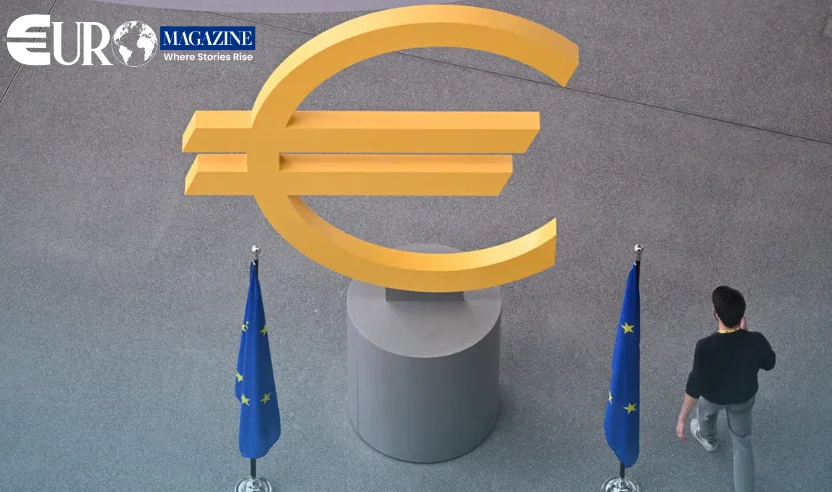
Fresh data released by Eurostat on Friday showed that the 21-member euro area slipped into negative territory between January and March, reversing the 0.2% growth recorded in the final quarter of 2025. The latest figures also represented a notable downgrade from earlier estimates that had suggested modest economic expansion.
On an annual basis, the eurozone economy grew by just 0.3%, significantly lower than the 1.2% growth rate recorded a year earlier. The slowdown highlights growing concerns about the region’s economic resilience amid persistent geopolitical tensions and elevated energy costs.
A major factor behind the decline was Ireland, which reported a sharp 12.1% quarterly contraction and a 16.8% year-on-year decline. However, economists have cautioned against interpreting Ireland’s figures as representative of broader eurozone conditions due to the country’s heavy reliance on multinational corporations, particularly within the pharmaceutical and technology sectors.
The decline is believed to be linked to an earlier surge in exports ahead of tariff-related deadlines, which temporarily boosted production and inflated previous growth figures. As those effects unwound, Ireland’s output fell sharply, exerting a significant impact on overall eurozone data.
Despite the headline contraction, several of the bloc’s largest economies recorded positive growth. Germany, Europe’s largest economy, expanded by 0.3% after a prolonged period of stagnation. Italy matched that pace with 0.3% growth, while Spain once again outperformed its regional peers, posting a robust 0.6% expansion.
France, however, continued to struggle, with economic output declining by 0.1% during the quarter, reflecting ongoing structural and demand-related challenges.
Eurostat’s breakdown showed that weaker international trade was one of the primary drags on growth, reducing overall economic output by 0.3 percentage points. Lower business investment also weighed on activity, subtracting an additional 0.1 percentage points from the quarterly result.
Energy market instability remains a key concern for policymakers and businesses across Europe. Rising oil and gas prices have increased production costs, weakened consumer confidence, and placed additional pressure on already fragile supply chains.
The continued disruption of global energy flows has added uncertainty to the region’s outlook, with higher fuel and utility costs feeding into broader inflationary pressures. Consumer inflation accelerated throughout the first quarter, moving above the European Central Bank’s target and increasing speculation about further monetary policy tightening.
Financial markets are now closely watching the European Central Bank’s upcoming policy meeting, where officials are expected to balance rising inflation against weakening economic growth. While inflation concerns may support additional interest rate increases, the latest contraction raises questions about how much further borrowing costs can rise without placing additional strain on economic activity.
Labour market data offered mixed signals. Employment across the eurozone increased slightly during the quarter, although the total number of hours worked declined, suggesting businesses remain cautious about future demand. Meanwhile, unemployment edged higher, indicating early signs of softening labour market conditions.
Looking ahead, economists warn that the eurozone faces a delicate balancing act. Persistent energy challenges, slowing global trade, and tighter financial conditions continue to threaten growth, while inflation remains elevated. The coming months will be critical in determining whether the region can return to modest expansion or faces a prolonged period of economic stagnation.




























Comments
Be the first to share your thoughts.
Leave a comment
Join the conversation. Your email address will not be published.