

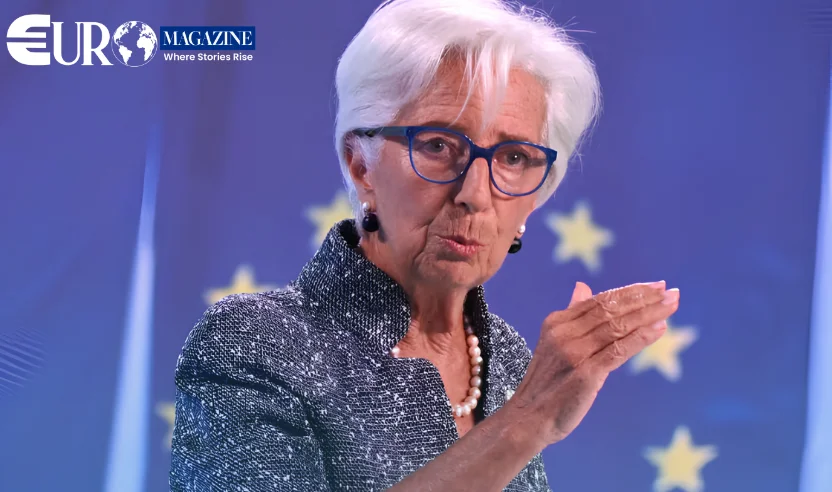
The European Central Bank (ECB) on Thursday raised interest rates for the first time in nearly three years, signaling a return to monetary tightening as inflationary pressures continue to build across the eurozone.
The ECB increased its key deposit facility rate by 25 basis points to 2.25%, while the main refinancing operations rate was raised to 2.40% and the marginal lending facility rate to 2.65%.
The decision comes as eurozone inflation climbed to 3.2% in May, its highest level since September 2023. Rising energy costs have been a major driver, with energy prices surging 10.9% year-over-year amid ongoing geopolitical tensions and supply concerns.
The latest move marks a significant shift from the easing cycle that characterized much of the ECB's policy approach throughout 2025. Policymakers indicated that persistent inflation risks now outweigh concerns about slowing economic growth.
The rate hike arrives at a challenging time for the eurozone economy. Official data showed that the region's economy contracted by 0.2% during the first quarter of 2026, raising concerns about stagflation—a combination of weak economic growth and elevated inflation.
Economists have warned that higher borrowing costs could further pressure households and businesses already facing increased fuel, energy, and living expenses. Mortgage holders and companies seeking financing are expected to feel the immediate impact of the ECB's decision.
Inflationary pressures have also broadened beyond energy costs. Core inflation, which excludes volatile food and energy prices, increased from 2.2% in April to 2.5% in May, suggesting that price increases are becoming more widespread across the economy.
Ahead of the meeting, several ECB officials signaled support for tighter monetary policy. Policymakers expressed concerns that prolonged inflation could become embedded in consumer and business expectations if left unchecked.
Market participants are already assessing the possibility of another interest rate increase later this year. Financial markets currently indicate a significant probability of a further hike during the ECB's September policy meeting if inflation remains above target levels.
The ECB continues to maintain that restoring price stability remains its primary objective, even as economic growth weakens across the 21-member eurozone.
Analysts believe future policy decisions will largely depend on the trajectory of inflation, energy markets, and broader economic conditions over the coming months.






























Comments
Be the first to share your thoughts.
Leave a comment
Join the conversation. Your email address will not be published.