

Hong Kong - Hong Kong-based CK Hutchison Holdings has threatened legal action against Danish shipping group A.P. Moller-Maersk after Panamanian authorities asked a Maersk subsidiary to temporarily operate two key ports at either end of the Panama Canal.
In a statement issued Thursday, CK Hutchison warned that any attempt by Maersk or its unit to run the ports without its consent could result in legal proceedings. The company also said it had formally notified Panama of a dispute under an investment protection treaty and would pursue national and international legal remedies.
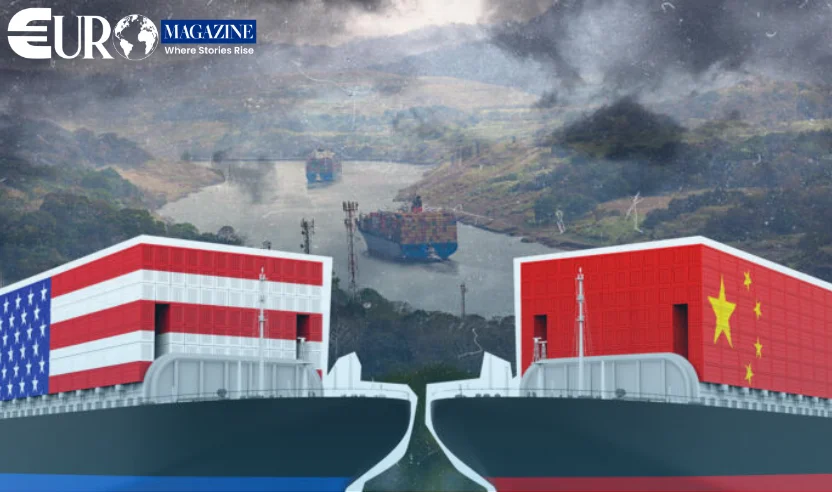
The conflict has emerged as a fresh flashpoint in U.S.–China relations, with Panama positioned at the center of the dispute.
Tensions escalated after Panama’s Supreme Court ruled last month that the concession granted to a CK Hutchison subsidiary to operate the ports was unconstitutional. The company rejected the ruling and initiated arbitration proceedings.
The controversy follows a previously negotiated $23 billion agreement under which CK Hutchison planned to sell its non-Chinese port operations to a BlackRock-led consortium. Beijing criticized the move, describing it as yielding to U.S. pressure, and the transaction stalled.
APM Terminals, Maersk’s port operating arm, reportedly stated it is not part of the legal dispute and had only offered to step in temporarily to ensure continuity of trade services. Shares of Maersk fell more than 3% in Copenhagen on Thursday.
The Panama Canal handles roughly 40% of U.S. container traffic annually, making control of its surrounding ports strategically significant. CK Hutchison’s subsidiary has operated the facilities since 1997, with a 25-year concession renewal granted in 2021.
Beijing has strongly criticized Panama’s court decision and warned of political and economic consequences. Reports indicate China has directed state-owned firms to pause new projects in Panama and consider rerouting shipping activity.
Analysts expect the dispute to be prolonged, adding strain to already tense U.S.–China relations marked by tariff conflicts, technology restrictions and geopolitical disagreements.
CK Hutchison said the continued operation of the ports ultimately depends on decisions by Panama’s authorities, which it does not control.