
whatsapp

Inside New York’s ‘Ghost Towers’: How Billionaires Use Luxury Skyscrapers to Park Wealth

  • 0
  • 135
/media/Inside_New_Yorks_Ghost_Towers_How_Billionaires_Use_Luxury_Skyscrapers_to_Park_Wealth.webp © Image Copyrights Title

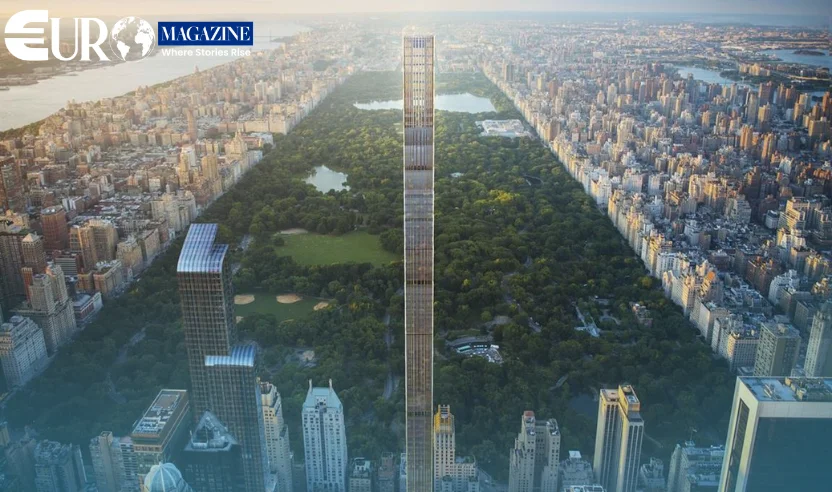
A stretch of ultra-luxury skyscrapers along Manhattan’s southern edge of Central Park, commonly known as Billionaires’ Row, has become a symbol of extreme wealth. Yet behind the glass façades and panoramic penthouses, many apartments remain dark for most of the year.

According to industry estimates, nearly half of the units in the seven tallest residential towers in New York City are currently unoccupied. That includes Central Park Tower, completed in 2020 and the tallest residential building in the Western Hemisphere at more than 470 metres.

Development of the area accelerated in the early 2010s, with landmark projects such as One57, 432 Park Avenue and 220 Central Park South coming to market within the same decade. Units were often priced at an average of $30 million (€25.2 million), targeting a narrow pool of global ultra-high-net-worth buyers.

Despite record-breaking sales, a significant portion of apartments remain unsold or rarely occupied. In 2023, Central Park Tower still had dozens of unsold units. By early 2025, developer Extell reportedly refinanced 18 unsold residences with a $270 million loan, reflecting ongoing challenges in fully selling out the building.

Real Estate as a Financial Vault

For many billionaires, these properties function less as homes and more as secure financial instruments.

Luxury apartments in Manhattan are widely regarded among the ultra-rich as “safe haven” assets, comparable to gold or blue-chip art. Wealth can be parked in US dollar-denominated property, providing insulation against inflation, currency volatility and political instability in other regions.

The properties also serve as collateral. Owners can leverage their apartments to access liquidity without selling, preserving both capital and prestige.

Another factor is anonymity. Units are frequently purchased through limited liability companies (LLCs), obscuring the true owner’s identity. For high-profile individuals, this structure limits public scrutiny and reduces visibility of cross-border wealth flows.

The result is what some observers call the “ghost tower” phenomenon: apartments that remain unlit and uninhabited for much of the year. For ultra-wealthy owners, rental income is often insignificant compared to the risks of tenant management or potential wear and tear on pristine interiors.

Keeping a property empty ensures it remains in near-perfect condition, ready for resale or financing when needed.

An Exclusive but Elusive Community

Billionaires’ Row is arguably one of the most exclusive residential clusters in the world. Yet it is not a traditional neighbourhood in the social sense. Many owners rarely overlap, spending only brief periods in their Manhattan residences before returning to estates in the Hamptons, villas in Europe, or properties in Asia.

High-profile buyers have included hedge fund founder Ken Griffin, who purchased a record-setting $238 million penthouse at 220 Central Park South in 2019, and Michael Dell, who bought a penthouse at One57 for $100.5 million in 2014, then the most expensive residential sale in New York City.

Other notable owners include Bill Ackman and Daniel Och, alongside international buyers such as Saudi businessman Fawaz Alhokair, Hong Kong investor Silas Chou and British musician Sting.

Yet for every identifiable owner, dozens more remain shielded behind corporate entities, reinforcing the area’s reputation for opacity.

Inside these towers, staff often outnumber residents at any given time. Buildings operate with 24-hour concierge services, security personnel and private amenities maintained in constant readiness, even when the owners have not visited for months or years.

Political Scrutiny Intensifies

The concentration of wealth in largely empty luxury towers has drawn renewed attention amid fiscal pressures in New York City.

Mayor Zohran Mamdani recently unveiled his first preliminary budget since taking office, warning of a $5.4 billion (€4.5 billion) shortfall. His proposal includes a potential 2 percent increase in personal income taxes for residents earning more than $1 million annually.

As a second option, Mamdani floated a 9.5 percent increase in the city’s property tax rate, raising the average from 12.28 percent to roughly 13.45 percent. The measure would affect more than three million residential units and 100,000 commercial properties across the five boroughs.

Business groups and property owners argue that higher taxes could dampen investment and push costs onto renters. The mayor, however, maintains that the wealthiest New Yorkers must contribute more to address inherited fiscal gaps and sustain essential services.

Why It Matters

The phenomenon of under-occupied luxury towers highlights a broader tension in global cities: the intersection of extreme wealth, housing supply constraints and municipal finances.

While Billionaires’ Row represents some of the most valuable square footage on Earth, its dimly lit skyline has come to symbolise a growing debate about affordability, taxation and the social function of property ownership.

For now, Manhattan’s ghost towers remain both monuments to global capital and flashpoints in the politics of inequality.


Related Posts
© Four Years On: The Heavy Economic Cost of Russia’s War in Ukraine

Four Years On: The Heavy Economic Cost of Russia’s War in Ukraine

Kyiv — As Ukraine marks four years since Russia launched its full-scale invasion on Feb. 24, 2022, the conflict has evolved into a prolonged test of economic endurance, placing severe financial strain...

  • 120
© HSBC Annual Pre-Tax Profit Falls 7%, Revenue Rises as Results Beat Estimates

HSBC Annual Pre-Tax Profit Falls 7%, Revenue Rises as Results Beat Estimates

London — HSBC reported a 7.4% decline in annual pre-tax profit, even as revenue rose 4% and both figures exceeded market expectations, the bank said Wednesday....

  • 115
© Oil Prices Steady as Trump Weighs Possible Strike on Iran

Oil Prices Steady as Trump Weighs Possible Strike on Iran

Oil prices remained stable on Friday after US President Donald Trump said he was considering a limited military strike against Iran over its nuclear programme....

  • 104
© EU Seeks Clarity After US Supreme Court Blocks Trump Tariffs

EU Seeks Clarity After US Supreme Court Blocks Trump Tariffs

Brussels: The European Commission is seeking clarification from the White House after the US Supreme Court ruled that President Donald Trump exceeded his authority in imposing sweeping tariffs....

  • 107
© EU Seeks Clarity from White House After US Supreme Court Tariff Ruling

EU Seeks Clarity from White House After US Supreme Court Tariff Ruling

Brussels: The European Commission is seeking clarification from the White House after the US Supreme Court struck down sweeping tariffs imposed by US President Donald Trump....

  • 137
© Trump Announces New 10% Global Tariff After Supreme Court Ruling

Trump Announces New 10% Global Tariff After Supreme Court Ruling

Washington: US President Donald Trump announced a new 10% global tariff on imports shortly after the US Supreme Court ruled that his earlier sweeping tariffs exceeded presidential authority....

  • 131
© eBay to Buy Depop in €1bn Deal to Target Gen Z Shoppers

eBay to Buy Depop in €1bn Deal to Target Gen Z Shoppers

US online marketplace eBay has agreed to acquire second-hand fashion platform Depop from Etsy for approximately $1.2 billion (€1.0 billion) in cash, the companies announced on Wednesday....

  • 126
© Airbus Posts Record Year as US Political Support Boosts Boeing

Airbus Posts Record Year as US Political Support Boosts Boeing

European aerospace giant Airbus reported a record financial performance in 2025, underscoring strong global demand for commercial aircraft. However, growing political support in Washington for US riva...

  • 129
© EU Agrees Process to Select Customs Authority Host

EU Agrees Process to Select Customs Authority Host

The European Parliament and the Council of the European Union have agreed on a detailed procedure to choose the host country for the future European Customs Authority, a new decentralised agency aimed...

  • 134
© Telefónica and Liberty Global to Buy UK Fibre Firm Netomnia for €2.3bn

Telefónica and Liberty Global to Buy UK Fibre Firm Netomnia for €2.3bn

Telefónica and Liberty Global, alongside investment firm InfraVia, have agreed to acquire UK alternative network provider Netomnia in a deal valuing its parent company, Substantial Group, at £2 billio...

  • 167
© EU ‘Won’t Shy Away’ From New Russia Sanctions if G7 Fails to Align

EU ‘Won’t Shy Away’ From New Russia Sanctions if G7 Fails to Align

The European Union is prepared to move ahead with tougher sanctions on Russia even if G7 partners fail to reach a coordinated agreement, European Economy Commissioner Valdis Dombrovskis said on Tuesda...

  • 156
© European Parliament Pushes for Full Ban on Russian Steel Imports

European Parliament Pushes for Full Ban on Russian Steel Imports

Brussels - The European Parliament is intensifying efforts to impose a full ban on Russian steel imports, setting the stage for high-level negotiations with EU member states next week as the bloc mark...

  • 122
© Japan Narrowly Avoids a Technical Recession in 2025, Government Report Shows

Japan Narrowly Avoids a Technical Recession in 2025, Government Report Shows

Tokyo - Japan narrowly sidestepped a technical recession at the end of 2025, with official data showing the economy expanded at an annualised rate of just 0.2 percent in the fourth quarter....

  • 139
© Analysis: Will Big Tech’s Colossal AI Spending Crush Europe’s Data Sovereignty?

Analysis: Will Big Tech’s Colossal AI Spending Crush Europe’s Data Sovereignty?

Brussels - The world’s largest technology companies are preparing to spend more than $700 billion on artificial intelligence infrastructure in 2026, marking a 75 percent increase from the previous yea...

  • 164
© Top Personal Income Tax Rates in Europe: Who Pays the Most in 2026?

Top Personal Income Tax Rates in Europe: Who Pays the Most in 2026?

Top personal income tax rates across Europe vary sharply in 2026, with a clear divide between high-tax Northwestern countries and lower-tax Eastern economies....

  • 209
© European Software Stocks Slide as AI Fears Deepen Sector Sell-Off

European Software Stocks Slide as AI Fears Deepen Sector Sell-Off

Europe’s software sector is under heavy pressure as a global sell-off triggered by artificial intelligence concerns spreads from the United States to European markets....

  • 371
© Metals Retreat After Reports That Trump May Soften Aluminium Tariffs

Metals Retreat After Reports That Trump May Soften Aluminium Tariffs

Global metals markets slid Friday as investors reacted to reports that U.S. President Donald Trump may roll back some tariffs on aluminium and other metal goods, prompting a pullback across key indust...

  • 160
© Eurozone Ends 2025 with €12.6bn Trade Surplus as Exports Stay Resilient

Eurozone Ends 2025 with €12.6bn Trade Surplus as Exports Stay Resilient

The Eurostat reported that the eurozone closed 2025 with a €12.6 billion trade surplus in December, reflecting continued export strength despite softer performances in key industrial sectors....

  • 262
© Greece Bets on LNG Corridor to Power Europe’s Post-Russia Energy Future

Greece Bets on LNG Corridor to Power Europe’s Post-Russia Energy Future

Athens - Greece is positioning itself as a central gateway for Europe’s energy security, as the European Union accelerates plans to eliminate Russian oil and gas imports by 2028....

  • 182
© U.S.–China Tensions Rise as Panama Canal Port Dispute Deepens

U.S.–China Tensions Rise as Panama Canal Port Dispute Deepens

Hong Kong - Hong Kong-based CK Hutchison Holdings has threatened legal action against Danish shipping group A.P. Moller-Maersk after Panamanian authorities asked a Maersk subsidiary to temporarily ope...

  • 154
Commnets 0
Leave A Comment