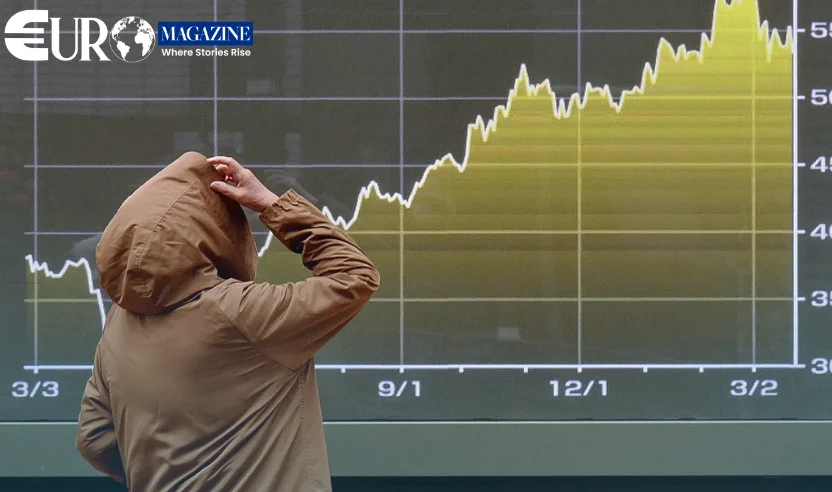

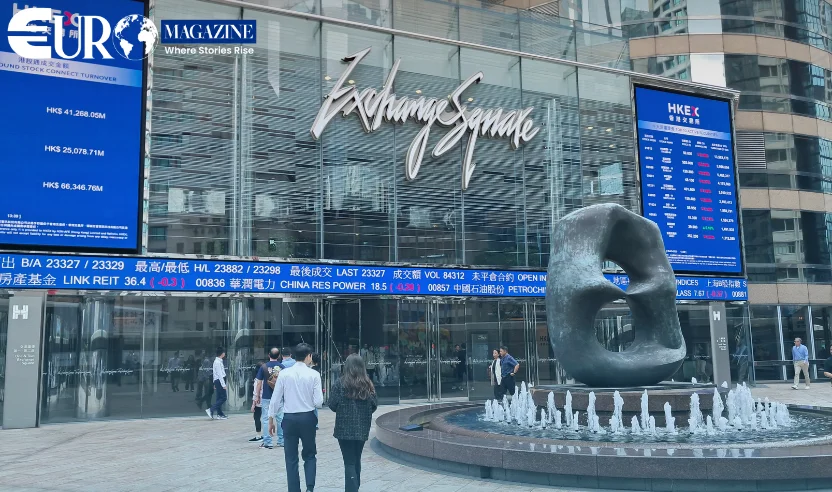
Hong Kong-listed Chinese technology stocks slid into bear market territory on Thursday, reversing last year’s rally as concerns over potential tax hikes and growing uncertainty around artificial intelligence weighed on investor sentiment.
The Hang Seng Tech Index fell more than 1 percent, taking the index to just over 20 percent below its October peak. The benchmark has now declined for six consecutive sessions, marking a sharp shift in market momentum.
Investors cited fears of a possible increase in value-added tax (VAT) on internet services as a key driver of the sell-off. The concerns follow a VAT hike already introduced on certain telecom services, prompting speculation that online platforms could face similar measures.
The anxiety briefly extended to online gaming and other digital transactions, amplifying worries of renewed policy pressure on a sector that has already endured years of regulatory tightening. Chinese officials on Tuesday dismissed speculation that a new levy would be imposed on the gaming industry.
“The recent sell-off is driven by concerns over a possible VAT increase on internet services, online gaming and other online transactions,” said Qi Wang, investment strategist at UOB Kay Hian. He noted that the concerns stem from the recent VAT increase applied to parts of the telecom sector.
Global AI Volatility Adds Pressure
The downturn in Chinese tech stocks has coincided with heightened volatility across global technology markets, driven by fears that advances in artificial intelligence could disrupt traditional software business models.
“It’s a barrage of negative news globally,” said Phelix Lee, senior equity analyst at Morningstar.
He pointed to reports that AI developers are introducing tools capable of automating professional tasks, fuelling concerns among software and legal technology firms. Broader risk aversion has also intensified amid reports of tensions between Nvidia and OpenAI, weighing on the global AI hardware trade.
Some Investors See a Healthy Pullback
Despite the sharp decline, some market participants view the sell-off as a corrective move rather than the start of a prolonged downturn.
“I regard the action as a healthy pullback,” said Lorraine Tan, director of equity research for Asia at Morningstar. She added that the weakness appears concentrated in sectors that had previously outperformed and may have exceeded fair valuations.
Other asset managers argue that the underlying fundamentals of Chinese technology companies remain intact, even as near-term catalysts are limited.
“Catalysts have been somewhat lacking for the sector,” said Vey-Sern Ling, managing director at Union Bancaire Privée.
He noted that recent regulatory noise affecting areas such as travel and e-commerce appears to be sector-specific rather than systemic. “Fundamentally, nothing has changed to derail our positive outlook,” Ling said, adding that valuations remain supportive and that AI could still provide longer-term growth catalysts.