
Athens - Greece is positioning itself as a central gateway for Europe’s energy security, as the European Union accelerates plans to eliminate Russian oil and gas imports by 2028.
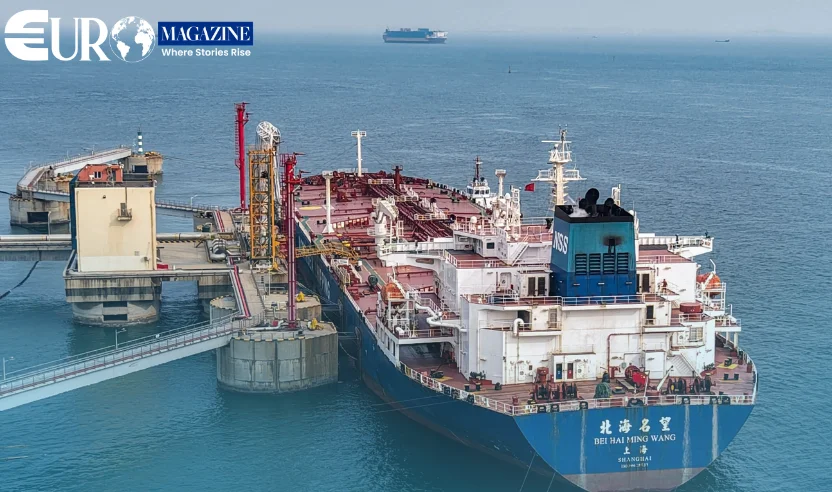
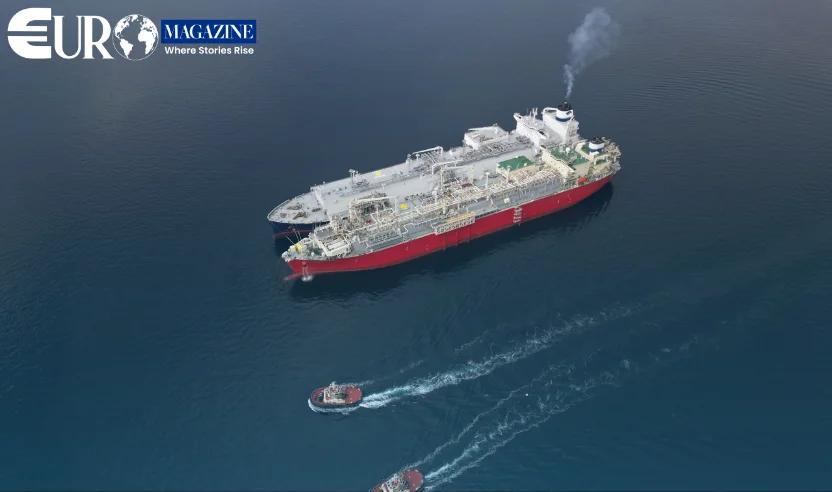
At the heart of this strategy is the northern Greek city of Alexandroupolis, where the Floating Storage and Regasification Unit (FSRU) began commercial operations in October 2024. Once considered a peripheral region, Thrace is now emerging as a strategic energy crossroads.
The Alexandroupolis FSRU has a maximum regasification capacity of 5.5 billion cubic metres (bcm) per year, enabling liquefied natural gas (LNG) imports to enter the European grid. Together with Greece’s Revithoussa LNG terminal, it forms part of the so-called “Vertical Corridor,” a pipeline network connecting Greece to Bulgaria, Romania and further into central and eastern Europe.
The corridor is designed to supply markets including Ukraine, Hungary, Slovakia and Moldova, helping to fill an estimated 35 bcm annual gas shortfall in the region by 2030 following the phase-out of Russian supplies.
Despite the EU’s push for renewable energy, natural gas is expected to remain part of the energy mix as a transitional fuel to stabilise electricity grids and support industry.
To strengthen its role, Greece is planning a second floating LNG terminal, named FSRU Thrace, near the existing Alexandroupolis unit. The project, led by Gastrade, has received environmental approval but faces funding challenges, with construction costs estimated at nearly €600 million.
Debate over financing gas infrastructure has intensified in Brussels. The European Commission has taken a cautious stance on supporting new gas projects, citing climate goals. However, several member states argue that gas infrastructure remains necessary to secure energy supplies during the transition.
The United States has signalled interest in supporting the expansion. US financial institutions, including EXIM and the US International Development Finance Corporation, are considering backing the second FSRU, viewing it as a channel for increased US LNG exports to Europe.
A meeting hosted by the US Department of Energy later this month will focus on strengthening the Vertical Corridor, with participation from European officials and energy ministers from central and eastern Europe.
As Europe reshapes its energy map, the Alexandroupolis LNG hub is emerging as a key test case for balancing energy security, geopolitical strategy and climate policy.