

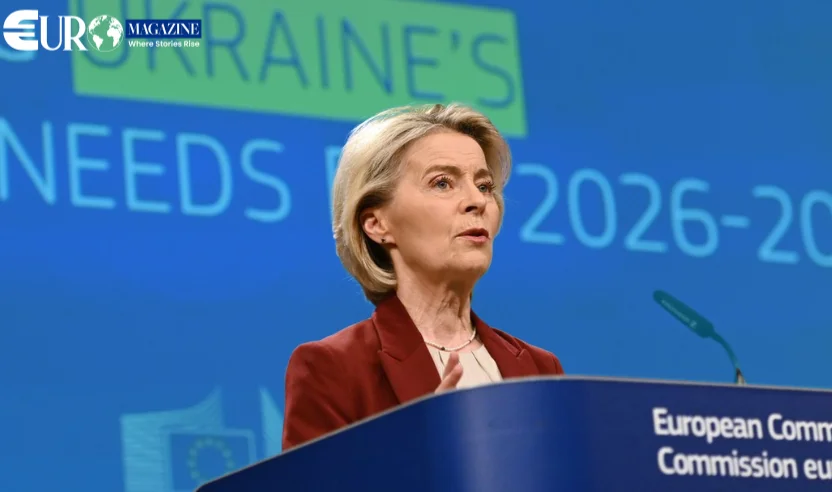
Brussels: European Union member states have approved a major financial support package for Ukraine, committing 90 billion euros (about $105.5 billion) in aid for 2026 and 2027, EU Council President Antonio Costa said on Friday.
“We have a deal,” Costa wrote on social media, confirming that the agreement had been finalized after months of negotiations among EU governments.
The funding package comes as Ukraine continues to seek sustained international backing amid Russia’s ongoing invasion, which began in 2022. EU leaders have faced growing pressure to secure long-term financial assistance to help Kyiv stabilize its economy and maintain basic government functions.
Funding Structure and Key Decisions
EU governments had spent months debating whether to use 210 billion euros of frozen Russian assets, most of which are held in Belgium, to support Ukraine. However, concerns over legal risks and potential litigation led leaders to abandon that option.
Instead, the bloc agreed to raise funds through joint borrowing backed by the EU budget, a move aimed at ensuring financial stability while avoiding legal uncertainty.
“Ukraine will only repay this loan once Russia pays reparations,” Costa said, adding that Europe’s political and financial support for Ukraine would continue. He also stressed that a ceasefire and negotiated peace remain the only path forward.
Belgium’s Prime Minister Bart De Wever had earlier warned that using frozen Russian assets would require clear legal guarantees, citing risks that could expose Belgium to lawsuits.
Continued Support Amid Diplomatic Efforts
The newly approved package builds on existing EU assistance programs. Under the Ukraine Facility and related schemes, the EU has already provided around 6 billion euros in bridge financing, along with 18.1 billion euros in loans this year through a Group of Seven, led initiative.
Since the start of the war, total EU support to Ukraine has exceeded 187 billion euros, according to official estimates.
The agreement also comes as European leaders seek to influence diplomatic efforts aimed at ending the conflict. In late November, U.S. and Ukrainian officials met in Geneva to discuss a revised peace framework, though significant differences reportedly remain over territorial and security issues.
For now, the EU’s latest commitment provides Ukraine with a financial backstop as the war enters another year and geopolitical negotiations continue.