
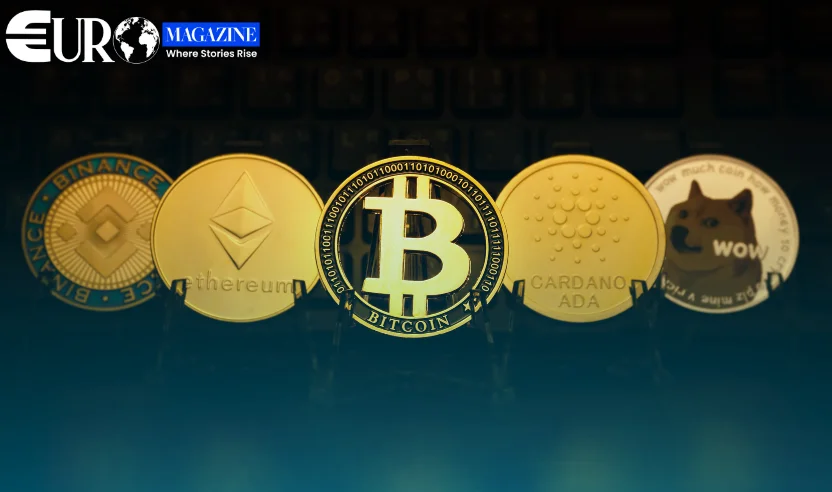
Crypto-asset ownership is steadily increasing across Europe, despite market volatility and a turbulent year for digital assets in 2025, according to recent industry and central bank data.
While cryptocurrencies faced sharp sell-offs earlier this year, notably following renewed trade tensions between the United States and China, longer-term trends show growing adoption across major European economies. More than 90% of adults in leading European countries are now aware of crypto-assets, highlighting the sector’s increasing mainstream visibility.
Data from the Web3 Industry in France and Europe report by Adan, based on early-2025 findings, shows that crypto ownership continues to expand even as prices fluctuate. A separate survey by the European Central Bank found that 9% of adults in the eurozone owned crypto-assets in 2024, up sharply from 4% in 2022.
Across the 20 eurozone countries, ownership levels range from around 6% in the Netherlands and Germany to 15% in Slovenia. Greece ranks just behind Slovenia, followed by Ireland, Croatia, Cyprus, Lithuania and Austria. While differences between countries are relatively modest, the upward trend is consistent across most of the region.
What’s driving the differences
According to James Sullivan, chief risk and compliance officer at BCB Group, national variations in crypto ownership are shaped by a mix of digital adoption, investor risk appetite, and local market structures.
Countries with strong financial innovation ecosystems and younger investor bases tend to lead adoption, he said, while regulatory clarity and economic conditions also play an important role. In markets where traditional investment options are limited, crypto-assets are often used more speculatively. Public awareness campaigns, such as those seen in Italy, have also helped lift participation.
Outside the eurozone, the United Kingdom continues to play a major role in global crypto activity. Sullivan noted that the UK ranked third worldwide for transaction volumes in 2024, behind only the United States and India.
Ownership more than doubles
Between 2022 and 2024, crypto ownership increased in nearly every eurozone country. The Netherlands was the only market where ownership remained unchanged, while comparable data for Croatia was unavailable for 2022. Greece and Lithuania recorded the largest gains, each rising by 10 percentage points over the two-year period. Several other countries, including Cyprus, Belgium, Ireland, Austria, Slovakia, Slovenia, Portugal and Italy, saw increases of seven points or more.
Sullivan said the broad-based rise signals renewed confidence among European retail investors, suggesting that the effects of the previous crypto downturn have faded.
A key factor behind the rebound is regulatory progress. The EU’s Markets in Crypto-Assets framework, known as MiCA, has introduced uniform rules for crypto-assets across the bloc, offering consumer protections that were previously lacking.
MiCA, which governs digital assets not covered by existing financial legislation, has helped position crypto as a recognised part of the financial system, Sullivan said, encouraging participation from investors who were previously cautious.
Still largely an investment asset
Despite rising ownership, crypto remains primarily an investment vehicle in Europe. ECB data shows that 64% of eurozone holders use crypto-assets mainly for investment, while just 16% use them for payments. Another 19% report using crypto for both purposes.
The Netherlands and Germany, despite having relatively low ownership rates, show the highest proportion of investment-focused users, at 90% and 82% respectively. France records the highest share of crypto used for payments, at 25%.
Sullivan said the imbalance underscores the speculative nature of the market. While stablecoins offer potential transactional benefits, everyday usage still lags far behind traditional payment methods such as cards and cash.
He added that wider adoption for payments will depend on how effectively MiCA supports euro-denominated stablecoins and integrates them into existing payment systems, an area that remains a priority for European regulators.