
China has formally transformed its southern island province of Hainan into a fully fledged free trade port, marking one of the most ambitious economic experiments undertaken by the Chinese Communist Party in decades.
New legislation that took effect in December 2025 established Hainan as a separate customs zone, introducing a sweeping regulatory framework designed to boost trade, investment, and foreign participation. The move runs counter to a global shift toward protectionism, as many major economies tighten trade rules and investment screening.
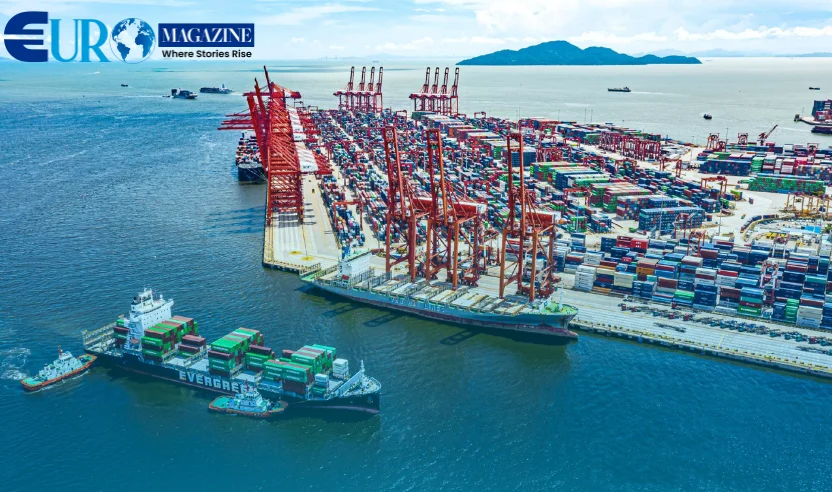
Covering more than 35,000 square kilometres, Hainan is now the largest free trade port in the world by area, slightly bigger than Belgium and roughly fifty times the size of Singapore. Chinese officials are positioning the province as a long-term solution to what they describe as “growing uncertainties in the global economy.”
A structural shift, not a policy tweak
According to state-run Xinhua, the introduction of “special customs operations” represents a fundamental restructuring of how the province engages with international markets. The new system is designed to make Hainan one of the most business-friendly jurisdictions globally, while preserving Beijing’s broader economic oversight.
China has previously used special economic zones to test market-oriented reforms, beginning in the late 1970s as part of its open-door policy. In 2020, the government announced plans to elevate Hainan from a conventional SEZ into a strategic trade and investment hub capable of rivaling Hong Kong, Singapore, and Dubai.
The authorities aim for full institutional maturity by 2035, with ambitions for Hainan to achieve “strong global influence” by the middle of the century.
Two-line customs system
At the core of Hainan’s new framework is a “two-line” customs system. The first line separates the province from the global market, where most trade barriers have been removed and a significantly expanded zero-tariff list applies to raw materials, equipment, and consumer goods.
The second line governs trade between Hainan and mainland China. There, standard customs duties and controls remain in place to protect domestic markets.
However, manufacturers are offered a powerful incentive: goods that achieve at least 30% value-added within Hainan can enter mainland China duty-free. The policy is intended to encourage on-island processing rather than simple transshipment.
For example, imported Australian beef can enter Hainan without tariffs. If processed and packaged locally, it can then be sold across mainland China under the same exemptions.
Tax, regulation, and access advantages
Beyond customs rules, Hainan’s appeal lies in its broader regulatory environment. The province applies a flat corporate tax rate of 15%, lower than rates in Hong Kong, Singapore, and mainland China.
Companies operating in Hainan can also benefit from looser regulations in key sectors. Pharmaceuticals and medical devices approved by recognised regulators abroad may be used locally even if they remain restricted on the mainland.
Internet access rules are also more flexible. Firms registered in Hainan can apply for broader connectivity, allowing them to bypass restrictions associated with China’s nationwide online controls.
Financial liberalisation is another pillar of the strategy. Foreign companies can open special bank accounts in Hainan with capital flows exempt from mainland foreign-exchange controls, while overseas universities are permitted to establish campuses without a Chinese partner.
Gateway to Asia-Pacific markets
Visa-free entry to Hainan has been expanded from 59 to 86 countries, including the United States, Germany, Australia, and several Middle Eastern and South American nations. Visitors may stay for up to 30 days for business, tourism, or medical purposes.
As global trade tensions persist, Beijing appears to be positioning Hainan as a strategic “pressure valve”, offering low taxes, minimal tariffs, and broad market access while reinforcing China’s role as a central player in Asia-Pacific commerce.